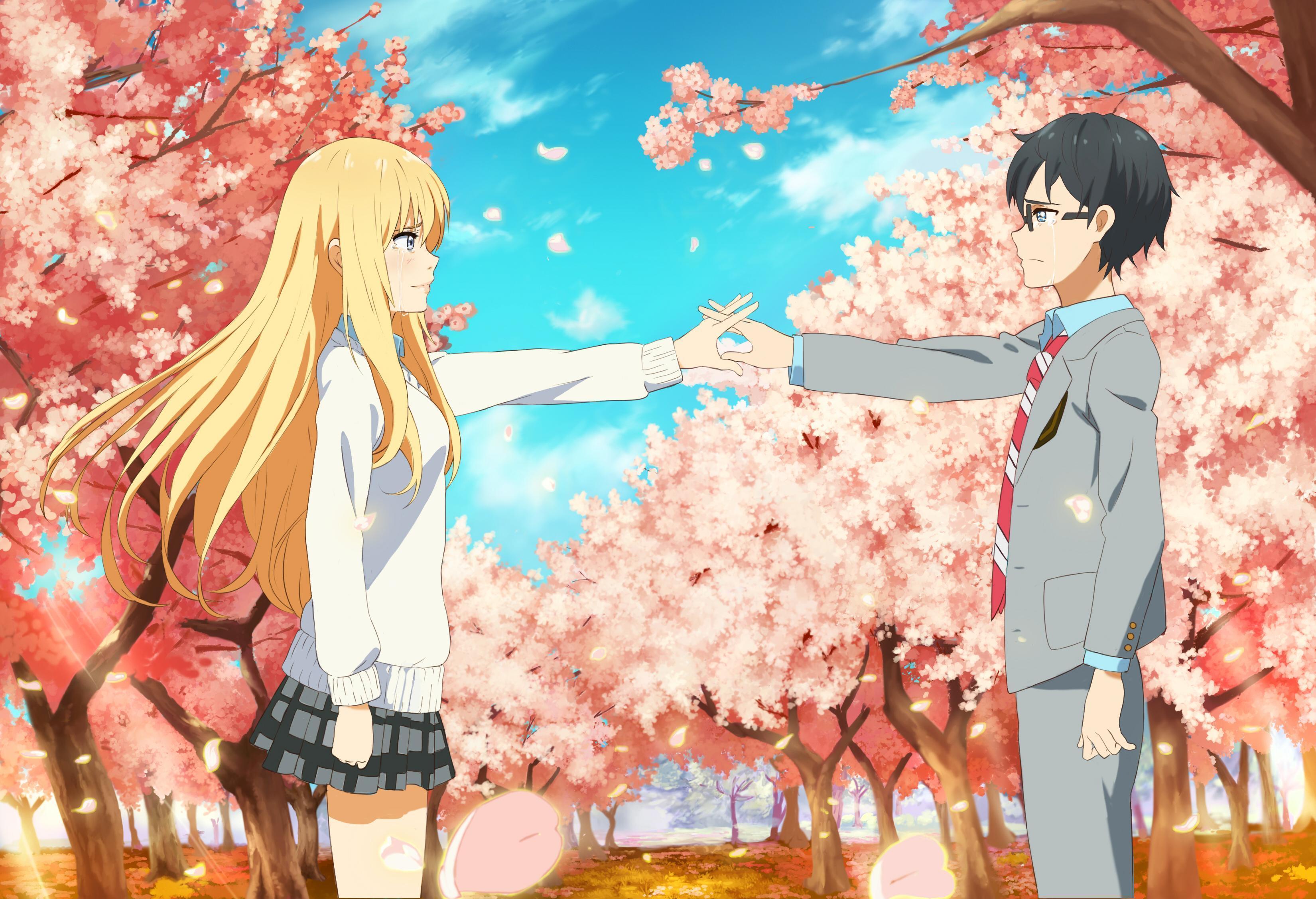
It's been a few years since the Your Lie in April movie hit screens, and honestly, the discourse around it is still kind of a mess. If you've spent any time in anime circles, you know the drill. People either treat the 2016 live-action adaptation like a masterpiece or they act like it’s a total insult to the original manga by Naoshi Arakawa. There isn't much middle ground. But if we’re being real, the film is its own weird, beautiful, and deeply flawed beast that deserves a look outside the shadow of the anime series.
Kousei Arima is a prodigy. Or he was. Then his mom died, and the world went quiet. You know the story—the "Human Metronome" who can't hear the notes he’s playing anymore. Then comes Kaori Miyazono, a violinist who treats a musical score like a suggestion rather than a rulebook. It’s a heavy story. It deals with trauma, terminal illness, and the crushing weight of expectation. Cramming all that into a two-hour film? Yeah, it’s a lot.
Does the Your Lie in April movie actually capture the magic?
When Takehiko Shinjo stepped up to direct this, he had a massive mountain to climb. The anime is famous for its vibrant, almost neon color palette and those long, internal monologues that make you feel like you're living inside Kousei’s anxiety. Movies don't usually work like that. If a character spends ten minutes thinking while staring at a piano in a live-action film, the audience goes to get popcorn.
The film makes a choice right out of the gate: it ages the characters up. In the source material, they’re middle schoolers. In the Your Lie in April movie, they’re in high school. This actually works. There’s something about the "tragic first love" trope that feels a bit more grounded when the characters are seventeen rather than fourteen. It gives the stakes a bit more weight, even if some purists hated the change.
Kento Yamazaki plays Kousei. If you’ve watched any Japanese live-action adaptations in the last decade, you’ve seen this guy. He’s basically the king of the genre. Some say he’s typecast, but honestly? He nails the "hollowed-out" look. There’s a specific scene where he’s sitting at the piano during a competition and the sound starts to drop out—the way his hands shake is genuinely uncomfortable to watch. It’s not the stylized, shaky-cam animation of the show. It’s just a kid having a panic attack in a suit.
The Kaori Problem
Suzy Hirose had the hardest job in the world playing Kaori. In the manga, Kaori is a manic pixie dream girl with a secret. She’s loud. She’s violent. She’s sunshine. In live action, if you play that too straight, it comes off as incredibly annoying or just plain fake.
Hirose brings a more subdued energy. She’s still the spark plug that forces Kousei back into the light, but there’s a flicker of exhaustion in her eyes from the start. It’s a different interpretation. It feels less like a cartoon and more like a girl who knows her time is running out and is desperately trying to finish a to-do list before the lights go off.
The Music and the Sound of Silence
We have to talk about the performances. You can’t have a Your Lie in April movie without the music. It’s the spine of the whole thing. The film uses a lot of the same classical heavy hitters—Beethoven’s "Kreutzer" Sonata and Saint-Saëns’ "Introduction and Rondo Capriccioso."
Here is where the movie actually beats the anime for me.
In an anime, the "playing" is a series of beautiful stills or looped animations. In the movie, you see the physical toll. You see the sweat. You see the way a violinist’s neck gets red from the friction of the chin rest. The film doesn't shy away from the physicality of being a musician. It’s grueling. It’s not just "magic colors flying out of a piano." It’s muscle memory fighting against a breaking mind.
The cinematography by Mitsuru Komiyama is also worth a mention. They shot a lot of it in Kamakura. If you've ever been there, you know that coastal light is something else. The film uses that natural, hazy glow to make everything feel like a memory while it’s still happening. It’s pretty, but it’s a "sad" pretty. Like a sunset that you know is leading into a very cold night.
Why some fans still can't stand it
The pacing is the biggest gripe. You’re taking 22 episodes of television and cutting it down to 122 minutes. Stuff gets lost. The side characters—Tsubaki and Watari—get pushed to the periphery. In the anime, Tsubaki’s realization that she’s losing her childhood friend to another girl is heartbreaking. In the movie, she’s kind of just... there. She’s the girl next door who looks sad sometimes.
Watari gets it even worse. He’s basically a plot device to get Kousei and Kaori in the same room. If you’re a fan of the "friend group" dynamic, the movie is going to let you down. It’s a laser-focused romance. It’s about two people. Everyone else is just background noise.
Also, the CGI.
Look, Japanese live-action films don't always have Hollywood budgets. There are moments where they try to visualize the music—the "underwater" feeling Kousei gets—and the visual effects look a bit dated. It’s not a dealbreaker, but it can pull you out of the moment if you’re used to Marvel-level rendering. But honestly? The emotional performances usually carry it through those clunky bits.
Facts and Figures: The Production Reality
The film was a massive hit in Japan. It debuted at number three at the box office, raking in about 245 million yen in its opening weekend. That's not small change. It eventually cleared over 1.4 billion yen.
Critics were split. The Japan Times gave it a somewhat middling review, noting that it leans heavily into "seishun" (youth) movie tropes. But that’s what it is! It’s not trying to be Citizen Kane. It’s trying to make you cry into your popcorn while remembering your first crush.
One thing people often forget is that the actors actually had to learn the basics of their instruments. They weren't becoming concert masters, obviously, but they spent months on finger positioning and posture. Yamazaki, in particular, was praised by the musical consultants for his "piano hands." It matters. When an actor looks like they’ve never seen a piano before, the immersion breaks. Here, it holds up.
Looking Back at the Legacy
Is it the definitive version of the story? No. The manga is the foundation, and the anime is the aesthetic peak. But the Your Lie in April movie acts as a really solid "greatest hits" album. It hits the emotional beats that matter.
The ending—without spoiling it for the three people who don't know—is handled with a lot of grace. It’s less about the tragedy and more about the legacy of the person left behind. It’s about how we carry people with us in the things we create. Whether that’s a song, a drawing, or just the way we walk down the street.
What to do if you're planning a watch
If you're going to dive into the film, go in with a fresh head. Don't sit there with a checklist of what the anime did better. You'll just ruin it for yourself.
- Watch for the performances: Focus on Hirose and Yamazaki. Their chemistry is what makes the movie move.
- Listen to the soundtrack: Even if the visuals occasionally falter, the audio engineering on the classical pieces is top-tier.
- Check out the locations: If you’re a travel nerd, the Kamakura backdrops are stunning and very faithful to the real-life spots that inspired the manga.
- Keep tissues handy: Seriously. Even if you know what's coming, the live-action medium makes the "letter scene" feel incredibly raw.
The movie doesn't replace the anime. It complements it. It’s a shorter, punchier version of a story that remains one of the most effective tear-jerkers in modern Japanese media. It reminds us that even if a song ends, the fact that it was played at all is what really counts.
If you want to see the locations for yourself, a trip to Kamakura is surprisingly easy from Tokyo. You can visit the actual railway crossing and the parks featured in the film. It's a pilgrimage many fans still make today, proving that the story's impact hasn't faded. Grab a copy of the soundtrack, find a quiet spot, and just let the music do the talking.
Actionable Steps for Fans:
- Compare the scores: Listen to the film's soundtrack versus the anime's. Notice the different emphasis on "breath" and physical movement in the movie's recording.
- Location Hunt: Use Google Maps to find the "Your Lie in April" spots in Kamakura. Most are within walking distance of the Enoshima Electric Railway.
- Read the Manga Post-Watch: If the movie felt too fast, go back to Arakawa’s original work. The pacing in the panels provides the internal depth the film sometimes lacks.



