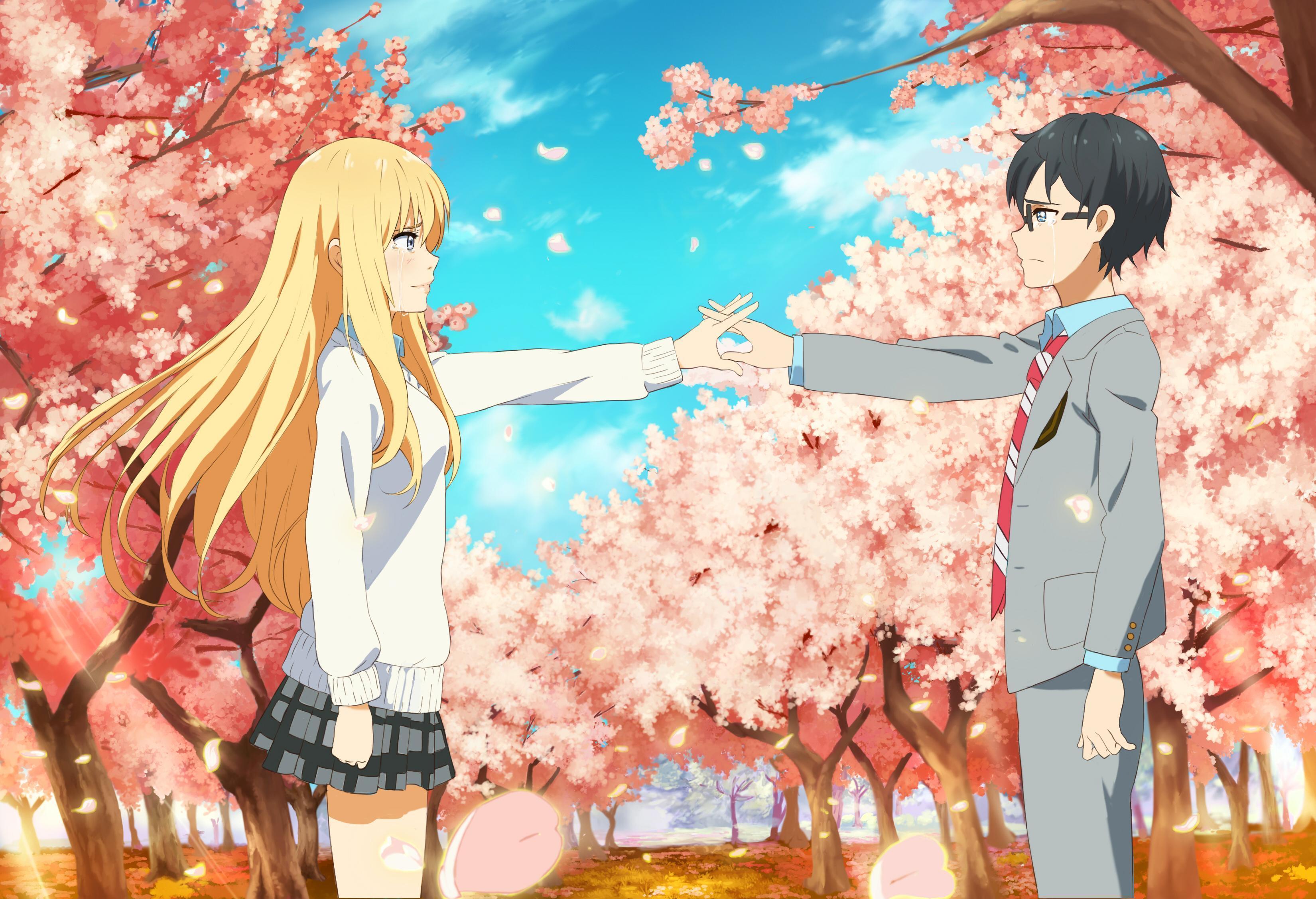
If you’ve spent any time in the anime community, you already know the emotional damage Shigatsu wa Kimi no Uso can inflict. It’s legendary. So, when the Your Lie in April movie—the live-action one—finally hit theaters back in 2016, the skepticism was palpable. How do you take a story that relies so heavily on the vibrant, hyper-stylized world of animation and squeeze it into a two-hour runtime with real people?
Honestly, it’s a tall order.
People usually have two reactions when you mention the live-action version. They either loved the performances by Kento Yamazaki and Suzu Hirose, or they felt it was a rushed shadow of the 22-episode masterpiece. Both are valid. But if you're looking at the Your Lie in April movie as a replacement for the anime, you're basically setting yourself up for disappointment. It’s a different beast entirely. It’s a condensed, slightly more grounded take on Kousei Arima’s trauma and Kaori Miyazono’s chaotic, beautiful intervention in his life.
The Problem With Time: One Movie vs. Two Seasons
Let’s be real. The biggest hurdle for the Your Lie in April movie was always going to be the pacing.
The original manga by Naoshi Arakawa and the subsequent A-1 Pictures anime adaptation had room to breathe. We spent hours watching Kousei struggle with the ghost of his mother. We saw the slow-burn realization of Tsubaki’s feelings. In the film directed by Takehiko Shinjo, you don’t get that luxury. You get 122 minutes. That’s it.
This means the movie has to sprint.
Because of this, the secondary characters—specifically Tsubaki Sawabe and Ryota Watari—get pushed to the sidelines. In the anime, Tsubaki’s realization that she’s losing her childhood friend to a world of music she can’t enter is heartbreaking. In the Your Lie in April movie, she’s mostly there to provide exposition and look sad in the background of a few scenes. It’s a necessary evil of filmmaking, but it changes the DNA of the story. The narrative shifts from a group of friends navigating adolescence to a laser-focused melodrama about two specific musicians.
Kento Yamazaki and Suzu Hirose: A Different Kind of Chemistry
Kento Yamazaki was basically the "Prince of Live-Action" in the mid-2010s. If there was a shoujo manga being adapted, he was probably the lead. Some critics felt his portrayal of Kousei was a bit too stoic, but if you look at the source material, Kousei is withdrawn. He’s literally deaf to his own music because of psychological trauma.
Yamazaki captures that "gray" world Kousei lives in quite well.
Then there’s Suzu Hirose.
Playing Kaori Miyazono is a trap for most actresses. If you play her too manic, she’s annoying. If you play her too soft, you lose the "force of nature" element that drives the plot. Hirose manages to find a middle ground. While she doesn't have the literal glowing aura of her animated counterpart, her energy on screen provides the necessary contrast to Yamazaki’s muted performance.
One thing the Your Lie in April movie does exceptionally well is the musical performance scenes. They didn't just fake it with bad hand movements. The actors underwent months of training to look like they were actually playing the violin and piano. It adds a layer of physical realism that’s often missing from these kinds of adaptations. When Kaori is flailing her bow during the first competition, you can see the strain. It’s messy. It’s supposed to be.
Why the Ending Still Hits (Even if You Know it's Coming)
We need to talk about the "Lie" itself.
Even if you’ve seen the anime five times, the way the Your Lie in April movie handles the final letter is still a gut punch. There’s something about seeing a human face—Hirose’s face—reflecting those final moments that hits differently than a drawing. The film leans heavily into the "human" aspect of the tragedy.
It strips away the surrealist imagery of the anime—no more cats or underwater visuals—and replaces them with the cold reality of a hospital room and the stark beauty of a Japanese spring.
For some, this makes the story too "safe." It turns a unique psychological drama into a standard tear-jerker. But for a mainstream audience in Japan, this was the goal. The film was a massive commercial success because it translated the niche appeal of classical music anime into a universal story about grief and young love.
Breaking Down the Visual Language
The anime used color as a narrative device. Kousei’s world was desaturated until Kaori arrived. The movie tries to replicate this with cinematography.
The early scenes have a cool, almost clinical blue tint. As Kaori enters the frame, the lighting shifts toward warmer, golden tones. It’s subtle. Probably too subtle for some, but it shows that Shinjo was paying attention to the themes of the original work.
Is it a masterpiece? No. Is it a faithful emotional resonance? Surprisingly, yes.
Misconceptions About the Changes
A lot of fans were annoyed that the movie aged the characters up slightly. In the manga/anime, they are middle schoolers (about 14). In the Your Lie in April movie, they are high schoolers.
Honestly? This was a smart move.
Middle schoolers in Japan aren't usually that independent, and the heavy emotional weight of the story feels slightly more believable when the characters are 16 or 17. It also allows the actors to perform without looking like "adults playing dress-up," which is a common problem in J-Drama adaptations.
The Cultural Impact of the Live-Action Version
You can't ignore the numbers. The film grossed over 1.4 billion yen.
It introduced a whole new demographic to the story—people who would never watch an anime but would go see a Kento Yamazaki movie. It also boosted the sales of the manga long after the anime had finished airing.
When we evaluate the Your Lie in April movie, we have to look at it through the lens of Japanese cinema culture. These adaptations aren't meant to replace the original; they are meant to be a "celebration" of the IP. They are a way for fans to see their favorite moments recreated in "real life," and for the studio to capitalize on a proven story.
Real-World Locations and Real-World Stakes
One of the perks of a live-action film is the use of real locations. The movie was filmed in places like Kamakura and the Nerima Ward in Tokyo.
Seeing the iconic bridge or the concert halls in high-definition photography adds a sense of place that animation sometimes abstracts. It grounds the story in the real world, which arguably makes the tragedy feel more "possible." You realize that Kaori’s illness isn't just a plot point; it's a thing that happens to real teenagers in real towns.
Actionable Steps for Watching (or Re-watching)
If you're planning to dive into the Your Lie in April movie, don't go in blind. Here is the best way to approach it to actually enjoy yourself:
- Ditch the comparison mindset. If you spend the whole time thinking, "The anime did this better," you’ll hate it. Treat it as a "Cover Version" of your favorite song. It’s the same lyrics, but a different singer and a different tempo.
- Focus on the score. The movie uses a beautiful orchestral score that highlights the classical pieces (Beethoven, Chopin, Kreisler) while adding new emotional cues. Listen to the way the piano sounds slightly "thinner" when Kousei is struggling; it’s a great piece of sound design.
- Watch for the subtle acting. Kento Yamazaki’s performance is all in the eyes. Watch his reactions during the scenes where he’s alone in the practice room. It’s much more nuanced than the "shouting" we often get in anime performances.
- Check out the "making-of" clips. If you can find the behind-the-scenes footage of the piano and violin training, it will give you a massive appreciation for the effort put into the performance scenes. They didn't just use hand doubles for everything.
- Keep tissues ready for the letter scene. Seriously. Even if you know what the "lie" is, the cinematic framing of that final sequence is designed to break you. Don't fight it.
The Your Lie in April movie isn't a perfect adaptation, but it is a sincere one. It captures the heart of the "Spring" that changed Kousei's life, even if it had to cut a few chapters to get there. Whether you're a hardcore fan or a newcomer, it’s a piece of the franchise that deserves a fair shake. Just remember: it’s not about how long the story is, it’s about how much it resonates while the music is still playing.



