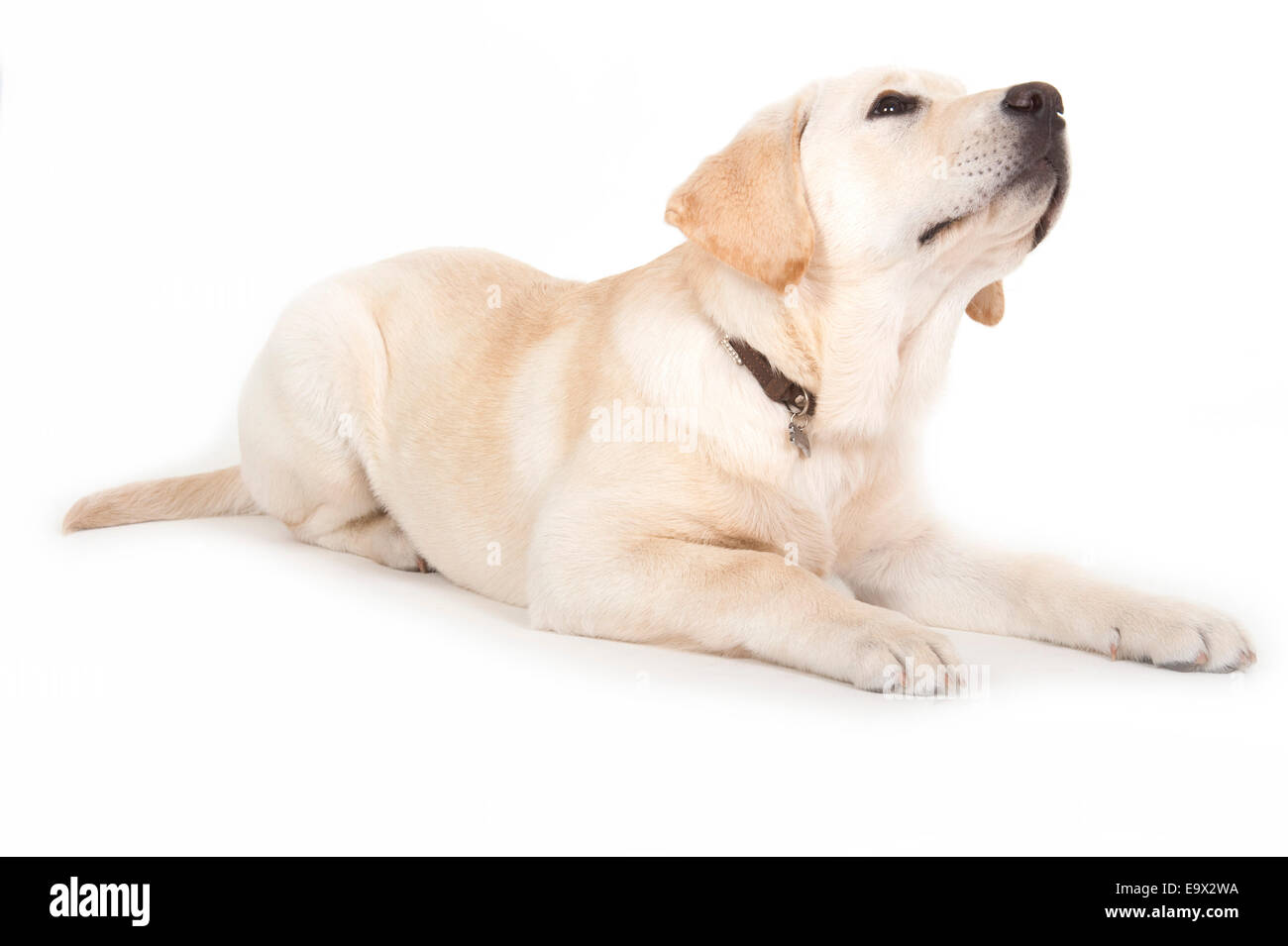
The floor is wet. Again. You just took him out ten minutes ago, but there he is, looking at you with those melting brown eyes while a puddle forms on the rug. Welcome to the reality of owning a labrador puppy 3 months old. It’s a weird, exhausting, and strangely beautiful liminal space where the tiny potato you brought home at eight weeks has officially transformed into a leggy, biting, hyper-intelligent land shark.
Twelve weeks. It’s a massive milestone.
Most people think the first month is the hardest, but honestly? Month three is when the real work starts. This is the age where their immune system is finally toughening up, their brain is firing on all cylinders, and they start testing every single boundary you’ve spent weeks trying to set. You aren't just raising a dog anymore; you’re managing a toddler with predatory instincts and a stomach that acts like a black hole.
The Physical Shift: Why Your Labrador Puppy 3 Months Old Looks So Gangly
If you look at your Lab right now, you’ll probably notice they look a bit... off. Their ears seem way too big for their head. Their legs are growing faster than their torso. This is the "clumsy" phase. According to the American Kennel Club (AKC), a male Lab at 12 weeks usually weighs somewhere between 20 and 25 pounds, while females are often slightly smaller, ranging from 15 to 22 pounds.
But don't get hung up on the scale.
What matters is the growth plate health. Because Labs are prone to hip and elbow dysplasia, you have to be careful. You might want to take them on a three-mile hike to tire them out. Don't. Veterinary experts, including those at UC Davis School of Veterinary Medicine, warn that repetitive, high-impact exercise at three months can cause permanent joint damage. Stick to short, leash-walking sessions and plenty of "brain games" instead.
The Mouth of a Dragon
Teething. It’s the bane of every Lab owner’s existence. At 12 weeks, those needle-sharp deciduous teeth are starting to wiggle, and the adult molars are pushing up underneath. It hurts. They aren't biting you because they're aggressive; they're biting you because your forearm feels like a giant, soft chew toy that relieves gum pressure.
Pro tip: Wet a washcloth, twist it into a rope, freeze it, and let them gnaw on it. The cold numbs the gums, and the texture satisfies the urge to destroy.
Sleep, Routine, and the Myth of the "Lazy Lab"
People see adult Labradors sleeping by the fireplace and assume that’s the default setting. It isn't. At three months, a Lab has two speeds: "Frenetic Chaos" and "Dead to the World."
They need a lot of sleep. Like, 18 to 20 hours a day.
If your labrador puppy 3 months old is acting like a complete demon—zooming around the room, growling at nothing, and snapping at your heels—they are almost certainly overtired. It’s counterintuitive, but a Lab that won't settle usually needs a crate nap, not more play.
- Establish a "forced nap" schedule. Two hours in the crate, one hour out.
- Use a high-quality puppy kibble. Brands like Purina Pro Plan Puppy or Royal Canin Labrador Puppy are specifically formulated to manage the rapid growth of large breeds.
- Watch the protein-to-calcium ratio. Too much calcium can actually force the bones to grow too fast, which is a recipe for skeletal issues later in life.
The Socialization Window Is Closing Fast
We talk about the "critical socialization period" a lot in the dog world. For a Labrador, this window starts closing around 14 to 16 weeks. You are right at the finish line. If you haven't introduced your puppy to different surfaces, sounds, and types of people, the time is literally right now.
But here’s what most people get wrong.
Socialization isn't just about meeting people. It’s about neutrality. You don't want your Lab to think every person they see is a best friend they need to jump on. You want them to see a person on a bicycle and think, "Oh, that’s a thing that exists," and then look back at you for a treat.
Real-World Exposure Checklist
- Noises: Vacuum cleaners, hair dryers, thunder recordings, and heavy trucks.
- Surfaces: Wet grass, gravel, slippery kitchen tiles, and metal grates.
- People: People in hats, people with umbrellas, people with beards, and kids (always supervised).
- Handling: Touch their paws, look in their ears, and lift their tail. Your vet will thank you later.
Training a Labrador Puppy 3 Months Old: It's Not All "Sit" and "Stay"
Labs are smart. Scary smart. They are bred to work, which means if you don't give them a job, they will find one—usually involving the deconstruction of your baseboards.
At three months, their attention span is about as long as a TikTok video. Keep sessions short. Five minutes of intense focus is better than thirty minutes of boredom. Focus on "Leave It." For a breed that is essentially a walking vacuum cleaner, "Leave It" is a literal life-saver. Whether it’s a dropped grape (toxic!) or a piece of discarded gum on the sidewalk, a solid "Leave It" is the most important command you’ll ever teach.
- Stop using bowls. Feed them through puzzle toys like a Kong or a Snuffle Mat.
- Work on "Place" training. Teach them that staying on a specific rug or bed equals high-value rewards.
- Avoid "fetch" with heavy balls for now. Their necks and joints aren't ready for the "whiplash" stop-and-turn movements.
Potty Training Reality Check
If your labrador puppy 3 months old is still having accidents, don't panic. Their bladder control is physically limited. The general rule is they can hold it for one hour for every month of age, plus one. So, at three months, four hours is the absolute max—and that’s when they’re sleeping. When they’re active? It’s more like every 30 to 45 minutes.
If they have an accident, it’s your fault for not watching the clock. Sorry, but it’s true.
Health Red Flags to Watch For
While Labs are generally hardy, they have their quirks. At 12 weeks, you’ve likely finished your second round of vaccinations (Distemper, Parvo, etc.). Until they get that third round, be careful where you walk them. High-traffic dog parks are still a no-go.
Watch out for "The Limp."
If you notice your puppy limping after a nap, it could just be "panosteitis" (growing pains), but it could also be an early sign of joint issues. Always consult your vet. Also, keep an eye on their stool. Labs are notorious for picking up parasites like Giardia or Coccidia because they insist on eating everything in the backyard, including mud and bird droppings.
The Emotional Toll on You (The Human)
"Puppy Blues" are real.
You’re tired. Your hands are covered in scratches. Your house smells slightly like an enzyme cleaner. It’s okay to feel frustrated. Remember that your Labrador isn't trying to give you a hard time; they are having a hard time. They are trying to navigate a human world with a canine brain that is currently being flooded with hormones and growth signals.
Essential Next Steps for Your 12-Week-Old Lab
Stop worrying about whether they can "shake paws" and focus on the foundations that actually matter for a long, healthy life.
First, get a solid handle on their weight. You should be able to feel their ribs easily, like the back of your hand, but not see them sticking out. Obesity is the number one silent killer of Labradors, and it often starts with "he’s just so cute" extra treats at three months old.
Second, finalize your vet schedule for the 16-week shots. This is usually when the Rabies vaccine happens, and it’s the "all-clear" for you to start exploring the wider world together.
Finally, start practicing "alone time." Separation anxiety is a massive issue for this breed. Even if you're home all day, put the puppy in their crate or a puppy-proofed room for an hour while you go into another part of the house. They need to learn that you leaving isn't a crisis.
Transition your focus from "survival" to "structure." A labrador puppy 3 months old thrives on a predictable schedule. Feed at the same time, train at the same time, and sleep at the same time. The more boring your routine is, the more confident and calm your dog will become. Focus on the "Leave It" command today—it's the most functional skill they can possess at this stage of development.



