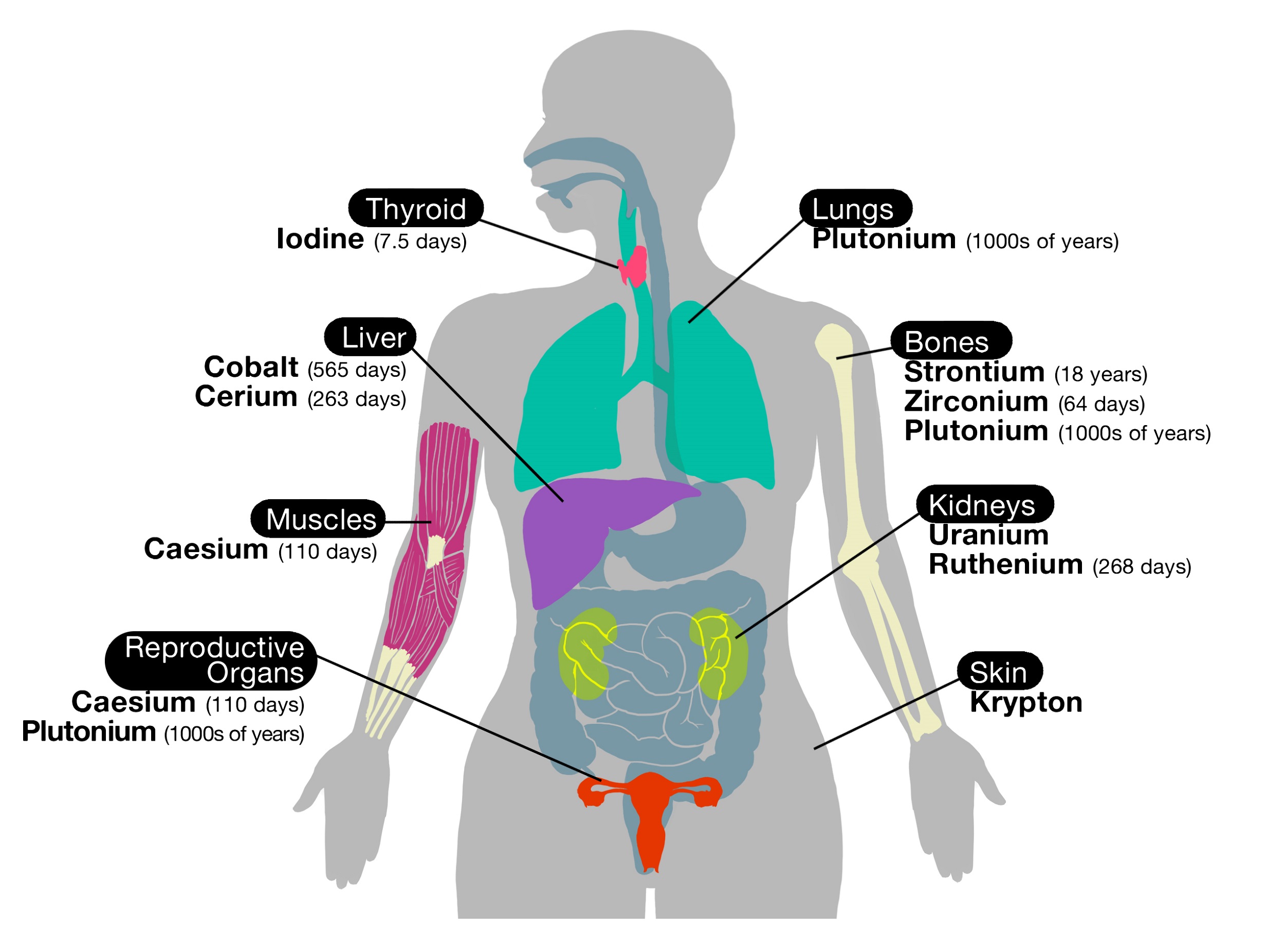
You probably think you know where your liver is. Most people point to the middle of their stomach when they feel a twinge, but they’re usually off by a few inches. It’s actually tucked up under your right ribcage. It’s massive. In fact, it's the largest internal organ you've got, weighing in at about three pounds of dark, rubbery tissue. We walk around in these biological machines every single day, yet our mental map of organs in body is often a blurry mess of "somewhere in the middle."
Understanding this layout isn't just for med students. It's about knowing why a pain in your shoulder might actually be your gallbladder screaming for help, or why "heartburn" has absolutely nothing to do with your heart. The human torso is a masterpiece of spatial engineering, where every millimeter is spoken for.
The High-Rent District: The Thoracic Cavity
The chest is basically a cage of bone and cartilage designed to protect the "VIPs." Your heart isn't on the far left side, despite what we’re taught in kindergarten. It sits right in the center, behind the breastbone, just slightly tilted to the left. If you feel your pulse there, you’re hitting the apex. Surrounding it are the lungs. The right lung is shorter because the liver (that big guy we mentioned) needs room downstairs. The left lung is narrower because it has to make a "cardiac notch"—basically a little cove—to accommodate the heart.
It's crowded. When you take a deep breath, your diaphragm, a dome-shaped muscle at the base of your ribs, flattens out. This creates a vacuum, but it also physically shoves your abdominal organs downward.
Why Your "Chest" Pain Might Be Something Else
Sometimes the map gets confusing because of referred pain. The phrenic nerve, which controls the diaphragm, also communicates with the nerves in your shoulder. If something is irritating the organs near the diaphragm—like a spleen issue or a liver cyst—you might feel it in your neck. Crazy, right? This is why doctors ask so many annoying questions about "where exactly" it hurts. They are trying to trace the wiring of your internal map.
The Midsection: A Tangled Web of Tubes
Below the diaphragm, the map of organs in body gets chaotic. This is the abdominal cavity. Most of it is occupied by the gastrointestinal tract. If you unspooled your small intestine, it would stretch about 20 feet. It’s packed in there like a messy garden hose.
The stomach is further up than people realize. It’s high on the left, tucked under the ribs. Below that, the large intestine (the colon) frames the whole abdominal area like a picture frame. It goes up the right side (ascending), across the middle (transverse), and down the left (descending).
Then you have the "background" players:
- The Spleen: A small, purple organ on the far left. It's like a blood filter. You can live without it, but your immune system takes a hit.
- The Pancreas: Tucked behind the stomach. It’s thin and flat. It’s the primary producer of insulin and digestive enzymes. If you poke your upper belly right in the middle, you’re pointing toward it.
- The Gallbladder: A tiny, pear-shaped sac under the liver. It stores bile. When you eat a greasy burger, it squeezes that bile into the small intestine to break down the fat.
The Backline: The Kidneys and the Hidden Players
We often forget about the stuff in the back. Your kidneys aren't in your lower back, where many people rub when they're sore. They are actually higher up, nestled against the back muscles just below the rib cage. They are bean-shaped and roughly the size of a computer mouse.
The right kidney usually sits a bit lower than the left. Why? Because the liver is a space-hog and pushes it down. Behind the kidneys and the digestive tract is the "retroperitoneal space." This is where the heavy-duty plumbing lives, like the aorta—the body's largest artery—which runs right down the front of the spine.
The Pelvic Floor: The Foundation
At the very bottom of our internal map are the reproductive organs and the bladder. The bladder is a muscular sac that sits right behind the pubic bone. When it's empty, it’s tiny. When full, it can expand to hold about two cups of fluid, physically pushing against the other organs around it. In women, the uterus sits right on top of the bladder, which is why pregnancy usually involves a lot of trips to the bathroom. The map literally shifts as life grows.
Common Misconceptions About Where Things Sit
People often think the appendix is some mysterious organ in the middle of the gut. It’s actually at the very beginning of the large intestine, located in the lower right quadrant of your abdomen. If you draw a line from your belly button to your right hip bone, the appendix is usually about two-thirds of the way down that line.
Another big one: the "stomach." Most people point to their belly button when they say their stomach hurts. But your belly button is actually positioned over your small intestine. Your actual stomach is much higher, closer to your heart.
How to "Read" Your Body's Map
Knowing the map of organs in body helps you communicate with healthcare providers. Instead of saying "my belly hurts," being able to say "I have sharp pain in my upper right quadrant under the ribs" points a doctor directly toward the liver or gallbladder.
Here is how you can practically apply this:
- The Quadrant Method: Divide your torso into four squares using your belly button as the center.
- Upper Right: Liver, gallbladder, part of the colon.
- Upper Left: Stomach, spleen, pancreas, part of the colon.
- Lower Right: Appendix, ascending colon, right ovary/fallopian tube (in women).
- Lower Left: Descending colon, left ovary/fallopian tube (in women).
If you’re feeling discomfort, try to "pin" it on this map. Note if the pain stays in one spot or moves. For example, kidney stone pain often starts in the back and "radiates" toward the groin—following the path of the ureters.
Taking Action: Protecting Your Internal Geography
Understanding where things are is the first step to taking care of them. You can't see these organs, but you can support their placement and function.
- Posture matters: Slumping compresses the abdominal cavity. This can lead to acid reflux because you're literally squeezing the stomach, forcing acid up into the esophagus. Sit tall to give your organs breathing room.
- Hydration is the lubricant: Every organ on this map relies on fluid to function and to stay "slippery" within the various membranes that hold them in place.
- Listen to the "Referred" signals: Don't ignore a persistent ache in a weird spot. A dull ache in the middle of your back might not be a pulled muscle; it could be your kidneys signaling a struggle with hydration or infection.
The human body isn't just a collection of parts; it's a precisely laid out system where location is everything. When you know the map, you stop being a passenger in your own body and start being the navigator.
/i.s3.glbimg.com/v1/AUTH_08fbf48bc0524877943fe86e43087e7a/internal_photos/bs/2025/H/e/ewwgKCQCSopdUJUwy6DA/imagem-2025-04-27-114802986.png)


