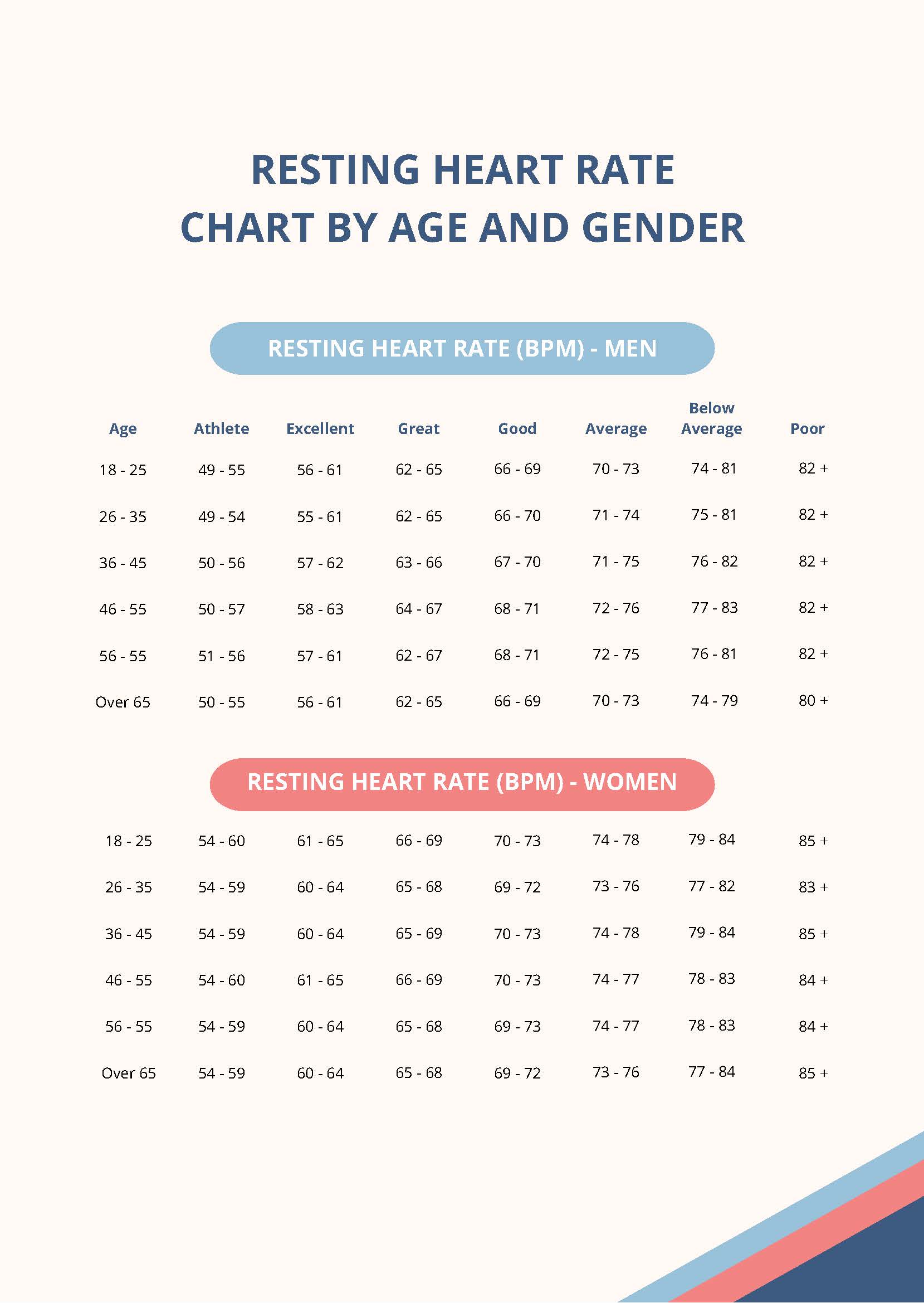
You’re sitting on the couch, maybe scrolling through your phone, and your smartwatch buzzes with a notification. It says your heart is beating at 58 beats per minute. Or maybe it’s 82. Suddenly, you’re spiraling. You start wondering if you’re secretly an elite athlete or if you’re one skipped meal away from a medical emergency. Honestly, the obsession with tracking every single "thump" has made us all a little bit neurotic.
But here’s the thing. Knowing what is ideal resting heart rate for your specific body isn't just about hitting a magic number. It’s about understanding the context of your life.
The standard answer you’ll find in every textbook is that a normal resting heart rate (RHR) for adults ranges from 60 to 100 beats per minute (bpm). That’s the official word from the American Heart Association. But if you talk to a cardiologist at the Mayo Clinic, they’ll tell you that the "ideal" is often much lower than that upper limit. A resting pulse of 95 might be "normal" by the book, but it’s often a sign that your heart is working harder than it probably should be.
Why the 60 to 100 Range Is Kinda Misleading
Medicine loves a broad range. It’s safe. It covers almost everyone. However, recent large-scale studies suggest that sitting at the high end of that "normal" range isn't exactly a badge of health.
Research published in the journal Open Heart tracked middle-aged men for over a decade and found that those with a resting heart rate of 75 bpm or higher were twice as likely to die from any cause compared to those with a rate of 55 or lower. That’s a massive jump. It suggests that while 80 bpm won’t land you in the ER today, it might be a whisper from your cardiovascular system that things could be better.
Your heart is a pump. If it has to beat 100 times every minute just to keep you alive while you’re watching Netflix, that’s a lot of wear and tear over sixty or seventy years. A lower rate generally means your heart muscle is more efficient. It’s moving more blood with every single squeeze.
The Athlete Exception
You’ve probably heard stories about Miguel Induráin, the legendary cyclist, having a resting heart rate of 28 bpm. That is wild. It’s also not something the average person should aim for. For a professional athlete, a very low heart rate (bradycardia) is a sign of a hyper-efficient "athletic heart." For the rest of us, if your pulse drops below 50 and you feel dizzy or tired, it’s not a fitness flex—it’s a reason to see a doctor.
What Is Ideal Resting Heart Rate for You?
Context is everything. Your age, your stress levels, and even that third cup of coffee you had at 2 PM all play a role.
Generally speaking, many experts now argue that an ideal resting heart rate for a healthy, non-athlete adult is actually between 50 and 70 bpm. If you’re in this window, your heart is likely in a "Goldilocks" zone—strong enough to provide plenty of oxygenated blood without overworking the engine.
Factors That Mess With Your Numbers
- Stress and Anxiety: This is the big one. If your nervous system is stuck in "fight or flight" mode because of a deadline, your RHR will climb.
- Dehydration: When you’re low on fluids, your blood volume drops. Your heart has to beat faster to maintain blood pressure. It’s simple physics.
- Temperature: If it’s sweltering outside, your heart pumps faster to move blood to the surface of your skin to cool you down.
- Medications: Beta-blockers will tank your heart rate, while some asthma inhalers or ADHD meds can send it soaring.
Interestingly, your RHR can also be an early warning system for illness. Many people noticed their resting heart rate jumped by 10 or 15 beats a day before they actually felt symptoms of COVID-19 or the flu. Your body is cranking up the system to fight an invader before you even realize you’re sick.
How to Get an Accurate Reading
Don't check your heart rate right after you’ve walked up the stairs or had an argument with your partner. That’s not your resting rate.
The best time—the gold standard—is right after you wake up, before you even get out of bed. Lay there for a minute. Be still. Use your index and middle fingers (not your thumb, it has its own pulse) on your wrist or the side of your neck. Count the beats for 30 seconds and multiply by two.
Smartwatches are pretty good these days, but they aren't perfect. If your Apple Watch or Garmin gives you a reading that seems weird, verify it manually. Wrist-based sensors can struggle with "noise" if the band is loose or if you have dark tattoos on your wrist.
Moving the Needle: How to Lower Your RHR
If you’ve realized your heart rate is consistently in the 80s or 90s and you want to bring it down, you aren't stuck there. The heart is a muscle. You can train it.
- Cardio, but Make It Easy: You don't need to sprint until you puke. Low-intensity steady-state (LISS) cardio—like a brisk walk where you can still hold a conversation—is actually one of the best ways to strengthen the heart over time.
- Magnesium and Potassium: These electrolytes are crucial for the electrical signals that tell your heart when to beat. A lot of people are chronically low on magnesium.
- Sleep Hygiene: If you aren't sleeping, your heart never gets a true "break." Chronic sleep deprivation keeps your cortisol high, which keeps your pulse high.
- Vagus Nerve Stimulation: Sounds fancy, but it’s just deep breathing. Slow, diaphragmatic breaths tell your parasympathetic nervous system to take the wheel. This can drop your heart rate almost instantly.
When to Actually Worry
Let’s be real: most of us worry too much. But there are times when you should call a professional. If your resting heart rate is consistently over 100 (tachycardia) or if it’s very low and accompanied by fainting, chest pain, or shortness of breath, don't ignore it.
Also, watch for palpitations. That "skipped beat" feeling or a fluttering in your chest. Occasionally, it’s just too much caffeine. Other times, it could be Atrial Fibrillation (AFib), which requires medical management.
The Big Picture
The quest to find what is ideal resting heart rate shouldn't be about hitting one specific number. It’s about the trend. If your RHR was 65 last year and now it’s 78, that’s a signal to look at your lifestyle. Are you more stressed? Have you stopped exercising?
Your heart is the most hardworking organ you own. It doesn't get a day off. Giving it the environment it needs to beat a little more slowly and a little more powerfully is one of the best things you can do for your long-term longevity.
Actionable Next Steps:
- Track your baseline: For the next three days, take your pulse manually the moment you wake up. Average those three numbers to find your true resting heart rate.
- Audit your stimulants: If your RHR is high, try cutting out caffeine after noon for a week and see if the number drops.
- Add "Zone 2" training: Aim for 150 minutes a week of movement where your heart rate is elevated but you aren't gasping for air. This is the "sweet spot" for heart efficiency.
- Stay hydrated: Drink an extra 16 ounces of water tomorrow and check if your evening resting pulse is lower than usual. You might just be "thick-blooded" from dehydration.
Monitoring your heart shouldn't be a source of anxiety. It’s just data. Use it to make small, incremental changes, and your heart will likely return the favor by beating steadily for a long, long time.
/i.s3.glbimg.com/v1/AUTH_08fbf48bc0524877943fe86e43087e7a/internal_photos/bs/2025/H/e/ewwgKCQCSopdUJUwy6DA/imagem-2025-04-27-114802986.png)


