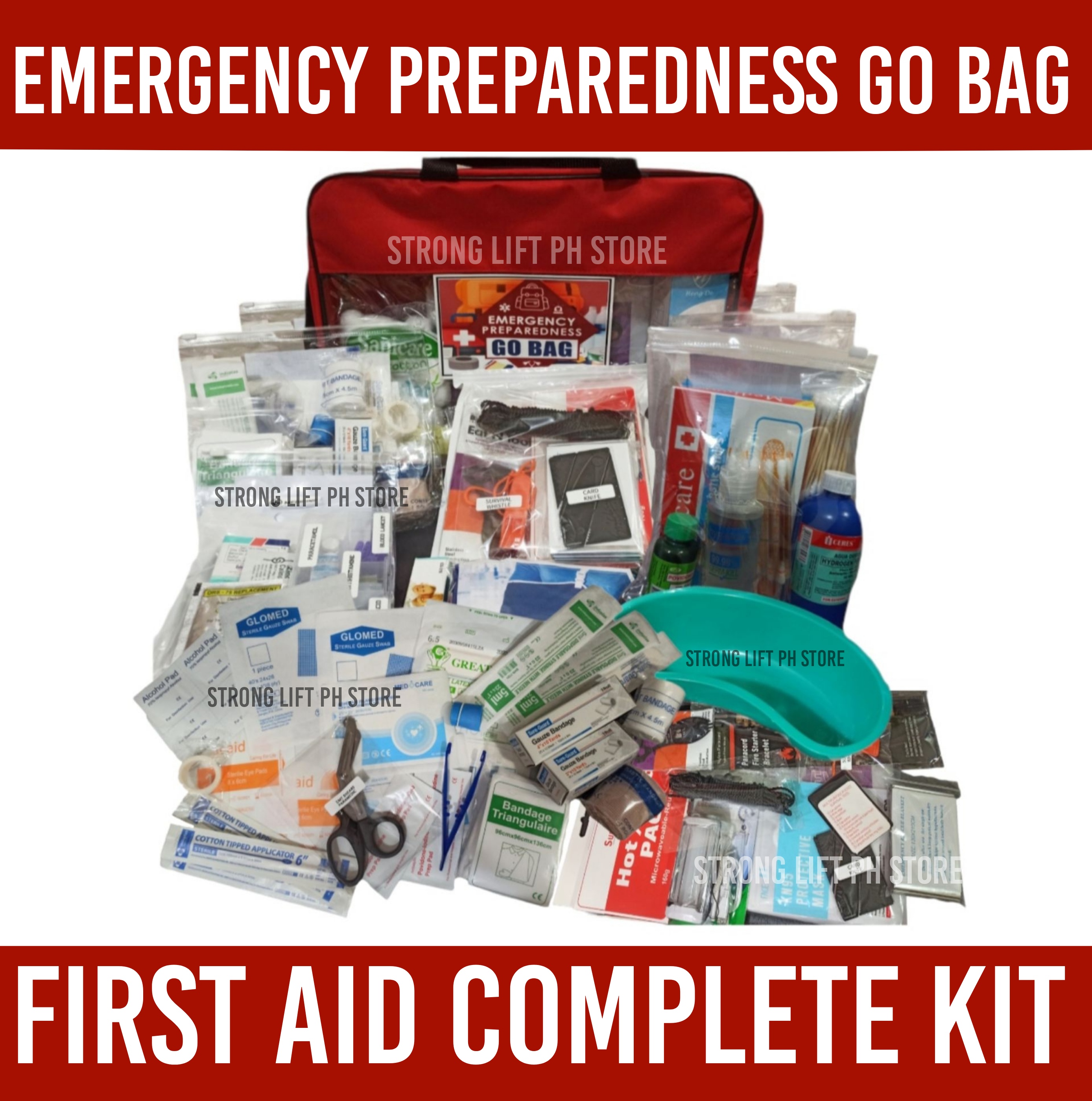
Most people treat their go bag first aid kit like a lucky charm. They buy a pre-made red nylon pouch from a big-box store, shove it to the bottom of a rucksack, and forget it exists until they’re actually bleeding. That is a mistake. Honestly, it’s a dangerous one.
The reality of emergency medicine outside of a pristine hospital setting is messy. It’s loud. You’re likely tired, maybe cold, and definitely stressed. If your kit is just a collection of thirty tiny adhesive bandages and some expired aspirin, you don’t have a medical kit; you have a placebo.
Building a functional go bag first aid kit requires a shift in mindset. You aren't just packing for a scraped knee at a picnic. You are packing for the "what if" scenarios that keep you up at night—natural disasters, prolonged power outages, or being stranded far from an ambulance.
The Massive Difference Between "Ouchie" Kits and Trauma Gear
Stop thinking about bandages for a second. We need to talk about the things that actually kill people in emergencies. Most preventable deaths in trauma situations come from uncontrolled bleeding.
A standard store-bought kit is great for a blister. It is useless for a deep laceration from broken glass or a fall. If you want a kit that actually saves lives, you need to prioritize "life-saving" over "comfort-providing." This means looking into Tactical Combat Casualty Care (TCCC) guidelines. These aren't just for soldiers. They are the gold standard for anyone dealing with trauma in the field.
Why the Tourniquet is Non-Negotiable
You’ve probably heard people say tourniquets are a last resort because they’ll "make you lose the limb." That is outdated, 1970s-era misinformation. Modern medical data from the wars in Iraq and Afghanistan, and more recently from civilian mass casualty events, proves that a high-quality tourniquet like the North American Rescue CAT (Combat Application Tourniquet) is safe for several hours and is the single most effective tool for stopping arterial bleeding.
Don't buy the cheap $10 knockoffs on discount sites. They snap. I’ve seen the plastic windlasses on counterfeit tourniquets break under the pressure required to actually stop blood flow. Get a real one. It’s twenty-five bucks that decides whether you or a loved one bleeds out in three minutes.
Beyond the Basics: What Your Go Bag First Aid Kit is Missing
Everyone remembers the Gauze. Almost nobody remembers the Pressure Dressing.
While a tourniquet is for limbs, you can’t put a tourniquet on a torso or a neck. For those wounds, you need "wound packing." This isn't just dabbing the surface; it's physically stuffing gauze into the wound channel to create internal pressure.
- Hemostatic Agents: Products like QuikClot or Celox contain agents that help blood clot faster. They come in gauze form. It’s much more effective than loose powder, which can blow away in the wind or get in your eyes.
- Chest Seals: If there’s a puncture to the chest, the lungs can collapse because of pressure changes. A vented chest seal (like a HyFin or Halo) lets air out but not in. It’s a specialized tool, but if you need it, nothing else works.
- The Power of Duct Tape: Honestly, a small roll of high-quality duct tape is more versatile than medical tape. It stays sticky when wet. It can secure a splint or even patch a tent.
Dealing with the "Mundane" Emergencies
Trauma gets all the attention because it’s dramatic, but in a real-world "bug out" or evacuation scenario, you are much more likely to be taken down by a stomach bug or a nasty infection.
Hygiene disappears fast in an emergency. If you're walking miles in boots you aren't used to, a blister can turn into an infection that prevents you from moving. That’s a crisis. Your go bag first aid kit needs a robust "pharmacy" section.
Forget the cardboard boxes. Use small, labeled zip bags or pill canisters. You want high-strength Ibuprofen for inflammation, Loperamide (Imodium) because dehydration from diarrhea is a legitimate killer in survival situations, and a broad-spectrum antibiotic if you can get a prescription from your doctor for "travel purposes."
Don't forget Diphenhydramine (Benadryl). Not just for hay fever, but for acute allergic reactions to stings or weird plants you might brush against while hiking off-trail.
The Importance of Electrolytes
Water isn't enough. If you’re sweating and stressed, you're dumping salt. Pack oral rehydration salts (ORS). Brands like Liquid I.V. or even the World Health Organization's basic formula packets are tiny, lightweight, and can literally pull someone back from the brink of heat exhaustion.
Organizing for Chaos
If you have to dump your entire bag on the ground to find a pair of tweezers, your organization has failed.
Think in "modules."
- The Bleeding Module: This should be at the very top or in an external pouch. Red pull tabs help. It contains the tourniquet, pressure dressing, and gloves.
- The Meds Module: A small pouch for pills, creams, and wipes.
- The Tool Module: Trauma shears (don't use a knife to cut clothing off a wound—you'll stab the patient), tweezers, a small mirror, and a headlamp.
Yes, a headlamp. Have you ever tried to stitch a wound or even just find a splinter in the dark while holding a flashlight in your teeth? It sucks.
The Skill Gap: Tools are Useless Without Training
You can buy the most expensive go bag first aid kit in the world, but if you don't know how to use a nasopharyngeal airway or how to properly tension a tourniquet, you're just carrying extra weight.
Take a "Stop the Bleed" course. They are often free or very cheap and offered by local hospitals or fire departments. These classes take about two hours and give you the hands-on muscle memory to act when your brain freezes up.
Also, practice with your gear. Not the actual life-saving stuff—don't tear open your sterilized chest seals—but buy a "trainer" tourniquet to practice on yourself and your family. Try putting it on your own arm using only one hand. It’s harder than it looks in the YouTube videos.
Environmental Considerations
Where do you live?
If you're in the desert, your kit needs more hydration salts and moleskin for heat-swollen feet. If you're in the Pacific Northwest, you need to double down on waterproof packaging and space blankets to fight hypothermia.
Hypothermia is a massive factor in trauma. When you lose blood, you lose the ability to regulate body temperature. Even in a relatively warm environment, a shock victim can freeze. A simple Mylar blanket is better than nothing, but a heavy-duty reusable emergency bivy is significantly better for a permanent go-bag.
Actionable Steps for Your Kit
- Audit your current kit: Throw away anything expired. Replace those "toy" scissors with real trauma shears that can cut through denim or leather.
- Separate your kit: Keep your "everyday" items (Band-Aids, aspirin) separate from your "life-saving" items (tourniquets, hemostatic gauze).
- Write down your protocols: In a crisis, your IQ drops by 50 points. Laminate a small card with basic dosages for your meds and the steps for treating shock.
- Check the seals: Check your bag every six months. Heat in a car trunk can degrade the adhesive on bandages and the plastic on some medical tools.
- Invest in a "Stop the Bleed" kit: If you don't want to build one from scratch, companies like Dark Angel Medical or North American Rescue sell vacuum-sealed components that are specifically designed for high-stress environments.
Ultimately, your go bag first aid kit is a bridge. It’s the bridge between the moment an accident happens and the moment professional help arrives. Whether that bridge holds depends entirely on the quality of your components and your ability to use them under pressure. It isn't about having a "complete" kit; it's about having the right kit for the worst day of your life.
Stop worrying about having a hundred different items. Focus on the ten things that actually matter when the clock is ticking. Get a tourniquet, get some gauze, get some training, and keep it where you can actually reach it.



