Marvel loves a good "what if" scenario. But the version of Norman Osborn we see in Your Friendly Neighborhood Spider-Man isn't just a simple palette swap or a lazy "good guy" trope. It’s a total structural overhaul of the Spider-Man mythos. Usually, when you think of Norman, you think of a cackling lunatic on a glider throwing pumpkin bombs at a teenager’s head. He’s the guy who killed Gwen Stacy. He’s the guy who made Peter Parker’s life a living hell for decades of comic book history.
This time? He's the mentor.
It’s weird. It’s honestly a bit jarring at first. Instead of Tony Stark pulling up in a limo to recruit Peter for a cosmic war, we get Norman Osborn stepping into the role of the benefactor. This specific animated series, which debuted on Disney+, takes us back to Peter's freshman year but swerves hard left where the MCU went right. By making Norman the primary mentor figure, the show creates a ticking time bomb of tension that fans are losing their minds over.
The Mentor Twist You Didn't See Coming
Most of us are used to the Iron Man dynamic. Tony was the rich, snarky father figure who gave Peter the tech and the "with great power" talk (sort of). In Your Friendly Neighborhood Spider-Man Norman Osborn fills that vacuum. But he doesn't do it with the clean, heroic sheen of an Avenger. He does it with the calculated, corporate precision of Oscorp.
He’s charming.
That’s the dangerous part. In this universe, Norman isn't (yet) the Green Goblin. He is a billionaire philanthropist who sees potential in a kid from Queens. It’s a brilliant move by the writers because it forces the audience into a state of permanent unease. We know who Norman Osborn is. We know what he becomes in almost every single strand of the Great Web. Watching Peter Parker look up to this man is like watching a kid pet a shark because they think it's a dolphin.
Why This Version of Norman Matters
If you look at the history of Spider-Man media, Norman is usually defined by his descent into madness. Think Willem Dafoe's legendary performance in the Sam Raimi films or the "Red Goblin" arc in the comics. He is the ultimate shadow. By placing him in the mentor role, the showrunners are playing with the concept of "Nature vs. Nurture."
Is Norman inherently evil? Or is this version actually trying to be better?
There’s a specific nuance here that shouldn't be overlooked. This Peter Parker is younger, more vulnerable, and hasn't been hardened by the losses we usually see early in his career. When Norman offers him resources, Peter accepts because, honestly, why wouldn't he? He’s a poor kid who needs a lab. But for the viewers, every gift from Osborn feels like a trap. It changes the stakes from "will the hero win the fight" to "will the hero lose his soul before the fight even starts."
Breaking Down the Aesthetic and the Vibe
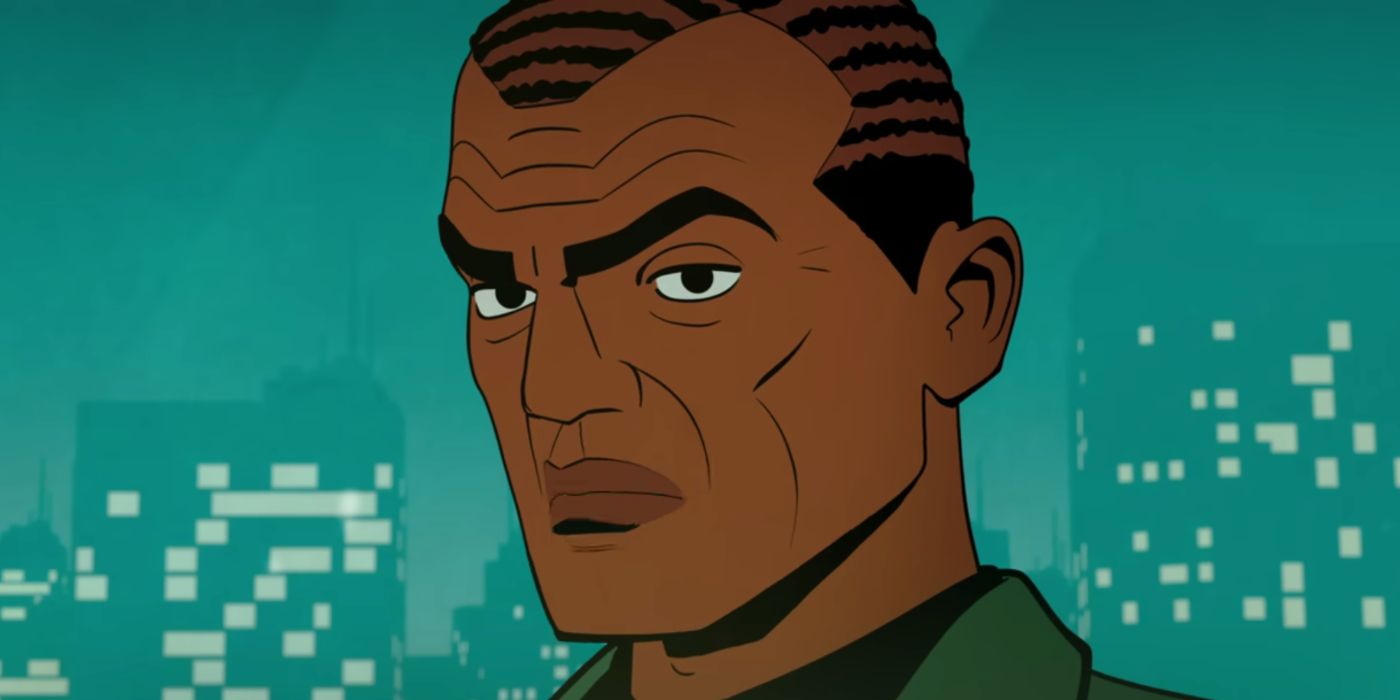
The show uses a very specific 1960s-inspired art style, nodding heavily to the original Steve Ditko drawings. This makes the presence of Your Friendly Neighborhood Spider-Man Norman Osborn even more striking. He looks classic. He has that sharp, cornrow-esque hair and the expensive suits. But the way he moves—the way the animation lingers on his expressions—suggests there’s a lot going on behind those eyes.
It’s not just about the visuals, though. It’s about the voice.
Colman Domingo voices Norman in this series, and he brings a weight to the character that is entirely different from the manic energy of previous iterations. He’s smooth. He’s persuasive. He sounds like a man who genuinely believes he is doing the right thing for the city of New York, even if his methods involve a level of surveillance and control that would make Captain America sweat.
The Oscorp Influence vs. The Stark Legacy
In the MCU, Peter had access to Stark Tech, which felt "safe." Even when the drones went rogue in Far From Home, the intent behind the tech was ostensibly protective. Oscorp tech is different. It’s always been grittier, more experimental, and frankly, more dangerous.
When Peter uses equipment provided by Norman, there’s an underlying sense of "at what cost?"
- Norman provides the suit.
- Norman provides the lab space.
- Norman provides the "guidance."
But Norman also has his own agenda. In this series, he’s shown as someone who wants to protect the city, but he wants to do it on his terms. He’s the "Friendly Neighborhood" benefactor, but the neighborhood he wants is one where he holds all the keys. This creates a fascinating friction. Peter wants to help people; Norman wants to manage them.
A New Kind of Origin Story
We've seen the spider bite a million times. We know Uncle Ben dies. The show handles these tropes by pivoting away from the familiar and leaning into the "New Mentor" angle. By replacing Tony Stark with Norman Osborn, the series effectively turns the "Homecoming" trilogy on its head.
Instead of Peter trying to live up to a hero's legacy, he's inadvertently building a villain's empire.
It’s a masterclass in dramatic irony. We, as fans, have decades of context. We’ve seen Norman kill Gwen. We’ve seen him lead the Dark Avengers. We’ve seen him torment Peter’s family. So, when Norman gives Peter a pat on the back in this show, it feels more like a threat than a gesture of affection. You almost want to scream at the screen for Peter to run away.
The Supporting Cast and the Norman Factor
It’s not just Peter who is affected by Norman’s presence. The entire social circle is shifted. We see characters like Harry Osborn, obviously, but the dynamic is altered because his father is currently the "hero" of the narrative. Usually, Harry is the one caught between his father’s madness and Peter’s goodness. Here, both Peter and Harry are under the same wing.
This makes the inevitable fall—if it happens—so much more tragic.
Imagine the fallout when the man you thought was your greatest ally turns out to be your greatest nightmare. It’s not just a betrayal of trust; it’s a betrayal of Peter’s entire support system. The show spends a lot of time building this foundation specifically so it can rip it out from under us later.
Is This Norman Actually "Good"?
This is the big question. Some fans speculate that this might be a genuinely reformed or different Norman Osborn. In the multiverse, anything is possible. Maybe this Norman really does just want to be a mentor?
Honestly, that’s unlikely.
Marvel knows its audience. They know that the name "Norman Osborn" carries a specific weight. If he stayed good forever, the tension would evaporate. The genius of Your Friendly Neighborhood Spider-Man Norman Osborn is the "when," not the "if." We are all just waiting for the green paint to start flying and the laugh to break through the corporate persona.
What This Means for the Future of Spider-Man Animation
This series proves that you can tell a fresh Spider-Man story without ignoring the roots. You can take the most famous villain in the rogue's gallery and make him the most important ally, and it works because the characterization is grounded. It’s a bold choice that sets this show apart from Spider-Man: The Animated Series or The Spectacular Spider-Man.
It also opens the door for other villains to be reimagined. If Norman is the mentor, what does that mean for Otto Octavius? What does it mean for the Sinister Six? The ripple effect is massive.
Practical Insights for Fans and Collectors
If you're following the series or looking to dive deeper into this specific version of the character, there are a few things to keep in mind. First, check out the Your Friendly Neighborhood Spider-Man prequel comics. They offer a bit more context on the world-building and how this version of Peter first crossed paths with the Osborn family.
Second, pay attention to the background details in Oscorp. The show is packed with Easter eggs that hint at Norman’s true intentions. From the color schemes in his office to the specific projects he’s funding, the clues are there if you look closely enough.
Lastly, keep an eye on the voice cast interviews. Colman Domingo has spoken at length about how he approached Norman as a "complicated" man rather than a "bad" man. Understanding that perspective helps you appreciate the nuance in his performance. He isn't playing a villain; he's playing a man who thinks he's the hero. And those are always the most dangerous ones.
Next Steps for Deepening Your Knowledge:
- Watch the Prequel Shorts: Disney+ released several bite-sized look-ins that establish the tone of the Peter-Norman relationship before the main series kicks off.
- Re-read "Amazing Spider-Man #39-40": If you want to see the original "Mentor/Father Figure" vibe that Stan Lee and John Romita Sr. toyed with before Norman went full villain, these classic issues are the blueprint.
- Track the Suit Evolution: In this series, Peter's suits are directly tied to his relationship with Norman. Analyze how the tech becomes more "Osborn-centric" as the episodes progress—it's a visual metaphor for Norman's growing influence over Peter's life.



