Honestly, the wait for Your Friendly Neighborhood Spider-Man episodes has felt like a lifetime for Marvel fans who grew up on the 90s animated series or the Spectacular run. This isn't just another cartoon. It’s a massive pivot for the Marvel Cinematic Universe (MCU), specifically because it takes us back to Peter Parker’s roots—but with a twist that basically breaks the timeline we thought we knew.
Ever since Captain America: Civil War, we’ve wondered exactly how Peter spent those first six months before Tony Stark showed up in Queens. We knew he got bit. We knew he fought some low-level crime. But the specifics were always a bit fuzzy, relegated to throwaway lines or background Easter eggs. Now, Marvel Studios is finally filling in those gaps, though maybe not in the way you'd expect.
What’s Actually Happening in These Episodes?
The core hook here is "The Great Responsibility." That's the vibe. Jeff Trammell, the head writer, has been pretty vocal about wanting to capture that specific feeling of being a teenager who can't pay his bills but can lift a city bus.
It’s about the grind.
In the first few Your Friendly Neighborhood Spider-Man episodes, we see a Peter Parker who is still figuring out how to balance high school life at Midtown High with the sudden realization that he can stick to walls. It’s messy. He’s not the polished hero we see in Infinity War. He’s a kid in a homemade suit—the one we caught a glimpse of in Homecoming—trying to do the right thing while his life is arguably falling apart.
But here is where things get weird. Instead of Tony Stark being the mentor who knocks on Aunt May’s door, it’s Norman Osborn. Yeah. That Norman. This single change ripples through every episode, creating a "What If?" scenario that is actually canon to its own pocket of the multiverse. It changes the social dynamic of the entire supporting cast.
The Animation Style is a Love Letter
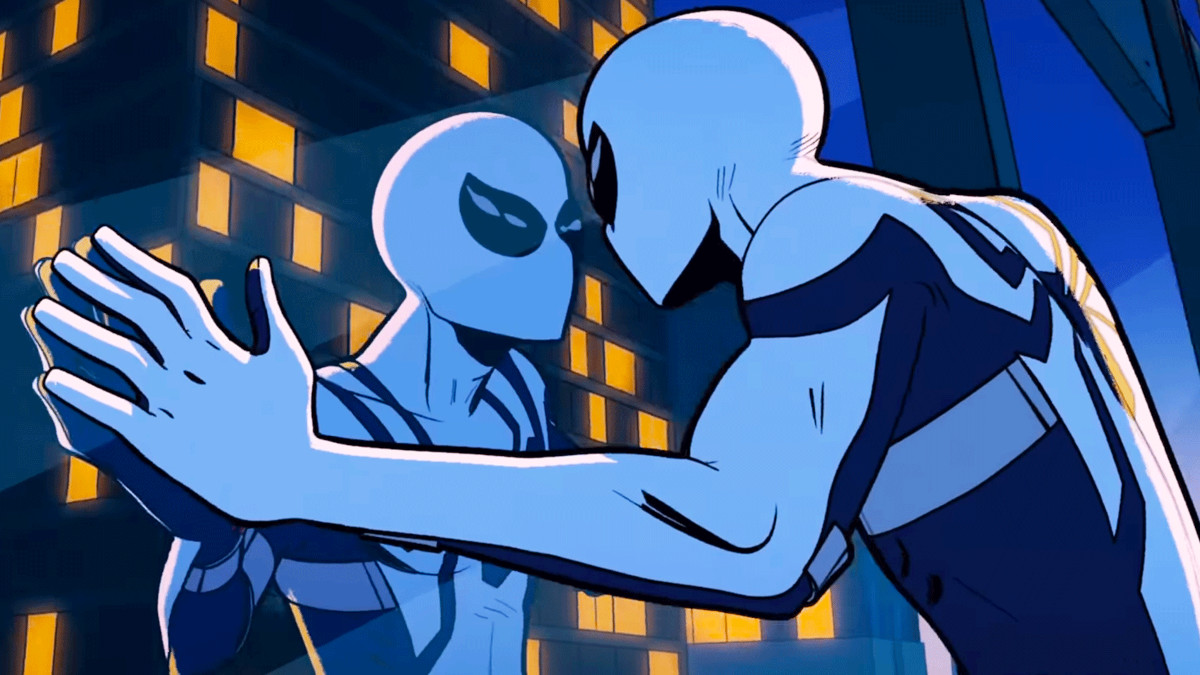
If you look at the stills or the early footage shown at D23 and San Diego Comic-Con, the visual language is jarring in the best way possible. It doesn't look like the 3D-heavy What If...? series. Instead, the animation team at Polygon Pictures leaned hard into the 1960s aesthetic of Steve Ditko.
It looks like a comic book come to life.
There are these jagged lines and vibrant, slightly offset colors that scream silver-age Marvel. It’s a bold choice. Some people might find it "scratchy," but it gives the show a grit that matches Peter’s early, desperate days. You can almost feel the paper texture. It’s a stark contrast to the sleek, digital look of modern Disney+ shows.
Meet the Class of Midtown High
The character lineup for these episodes is a deep cut into Marvel lore. We aren't just getting Ned and MJ. Instead, the show introduces characters like Nico Minoru from the Runaways and Amadeus Cho.
- Nico Minoru: In this universe, she’s one of Peter’s close friends. Her presence hints at a magical side of the MCU that Peter usually doesn't touch until much later in his career.
- Amadeus Cho: Before he becomes the "Totally Awesome Hulk," he's just another genius kid hanging out in the hallways.
- Lonnie Lincoln: Better known as Tombstone, but here he’s just a peer, showing the origins of a rivalry that will likely span seasons.
- Harry Osborn: With Norman as the mentor, Harry’s relationship with Peter is flipped on its head.
This isn't just window dressing. Each of these characters forces Peter to make choices that the "Main" MCU Peter never had to face. When your mentor is the guy destined to become the Green Goblin, your moral compass gets spinning pretty fast.
The Villain Problem
A hero is only as good as his rogues' gallery, right? The Your Friendly Neighborhood Spider-Man episodes are leaning heavily into the classics. We’re talking Rhino, Scorpion, Speed Demon, and Chameleon.
But it’s the Doctor Octopus inclusion that has everyone talking.
In the early episodes, Otto Octavius isn't the multiversal threat we saw in No Way Home. He’s a brilliant scientist, and his interaction with Peter is framed through the lens of academic brilliance meeting teenage angst. The show spends a lot of time on the science of being a superhero. It’s not just "hit the bad guy." It’s "how do I use physics to stop a rampaging Rhino without leveling a city block?"
Is This Part of the MCU?
This is the question that keeps fans up at night. The short answer? Yes and no. Brad Winderbaum, Marvel’s head of streaming, clarified that it takes place in the MCU, but on a different branch of the timeline.
Think of it as a "nexus point" deviation.
Everything is the same up until the moment Peter meets his mentor. By swapping Stark for Osborn, the show explores how Peter’s DNA as a hero changes. Does he become more ruthless? Does he stay the "neighborhood" hero longer? The episodes explore the idea that Peter Parker is a hero not because of who trains him, but because of who he is at his core. It’s a nature vs. nurture experiment played out in 22-minute chunks.
The Soundtrack and the Vibe
Music plays a huge role here. The score reflects the 60s era while feeling contemporary. It’s bouncy. It’s jazz-influenced. It feels like New York.
When Peter is swinging through Queens, the music doesn't feel like an epic orchestral swell. It feels like a heartbeat. It’s frantic and energetic. You’ve got to appreciate how much effort went into making this feel like a localized story. The stakes aren't the end of the universe; the stakes are whether Peter can get home before Aunt May realizes he’s missing.
Why This Format Matters Now
Streaming has changed how we consume superhero stories. We’ve had the massive, world-ending threats in the movies. We’re tired of the "Sky Beam" trope. What people actually want—and what these episodes provide—is character growth.
We want to see Peter struggle with a chemistry test. We want to see him run out of web fluid at the worst possible moment. We want to see him try to explain a black eye to a suspicious Aunt May.
The episodic nature allows for "Villain of the Week" storytelling that hasn't been viable in the movies. It builds a world. By the time you get to the fifth or sixth episode, Queens feels like a living, breathing place. You know the shopkeepers. You know the bullies. You know the shortcuts over the rooftops.
Breaking Down the Episode Structure
Most of the season follows a serialized arc hidden behind standalone adventures. You might have an episode where Peter is just trying to stop a robbery at a bodega, but in the background, Norman Osborn is slowly consolidating power.
It’s subtle.
The writers have managed to weave the overarching mystery of Norman’s intentions into the mundane daily life of a high school student. It’s a slow burn. Honestly, it’s refreshing. We don’t need the Green Goblin in episode one. We need to see why Norman is a compelling father figure first, so the inevitable betrayal actually hurts.
The Voice Cast Shift
One thing people have to get used to is the voice. Tom Holland isn't voicing Peter here. Instead, Hudson Thames takes the lead. He voiced Peter in the What If...? "Zombies" episode, and he brings a certain youthful vulnerability that works perfectly for a 15-year-old Spidey.
It’s different, but it’s good.
He captures the "stuttering but trying to be brave" energy that is essential for Peter Parker. The rest of the cast is equally stacked, with Colman Domingo taking on the role of Norman Osborn. Domingo brings a gravitas to the role that makes Norman feel genuinely dangerous, even when he’s just offering Peter an internship.
Technical Hurdles and Production
Developing this show wasn't easy. It was originally titled Spider-Man: Freshman Year before the rebrand to Your Friendly Neighborhood Spider-Man. The name change reflects a shift in focus—it's less about the school year and more about the identity of the hero.
The production faced some delays, which is typical for high-quality animation, but the extra time allowed the team to refine the "ink and paint" look. They wanted to make sure the action sequences didn't lose clarity despite the detailed art style. If you watch closely, the way Spider-Man moves is less "floaty" than in other animated versions. There’s a weight to him. When he hits a wall, he bounces. When he swings, you see the tension in the line.
What Most People Get Wrong About the Show
There’s a common misconception that this is a "kids' show."
Sure, it’s animated. Sure, it’s on Disney+. But the themes are surprisingly mature. It deals with class struggle, the ethics of scientific advancement, and the loneliness of keeping a secret identity. It’s not "gritty" in a Daredevil way, but it’s grounded.
Another mistake is thinking this replaces the MCU Peter. It doesn't. It’s an expansion. It’s a way for Marvel to have their cake and eat it too—keeping the movie version for the big Avengers crossovers while using the animated episodes to explore the "street-level" stories that fans have been begging for since 2016.
Actionable Steps for Fans and Viewers
If you're looking to dive into the world of Your Friendly Neighborhood Spider-Man episodes, here is how to get the most out of the experience:
- Read the Source Material: Pick up some Steve Ditko-era Amazing Spider-Man comics. The show's visual style is a direct homage to issues #1 through #38. Seeing the original art will make you appreciate the animation choices way more.
- Watch for the Cameos: This show is a goldmine for obscure Marvel characters. Keep an eye on the background characters in the school scenes. Many of them are future heroes or villains that haven't appeared in live-action yet.
- Track the Timeline Deviations: Make a mental note (or a physical one, if you're that kind of fan) of every time things happen differently than in Captain America: Civil War. These "divergence points" are key to understanding the show's logic.
- Listen to the Score: Pay attention to the sound design. The show uses sound to differentiate between Peter’s "normal" life and his "hero" life, often blending the two when he’s in a rush.
- Check the Credits: Marvel often hides hints for upcoming episodes or tie-in comics in the end-credit sequences.
The series is a reminder of why we fell in love with Spider-Man in the first place. It’s not the powers. It’s the kid behind the mask who is just trying to do his best while the world keeps throwing curveballs at him. Whether you’re a die-hard MCU completionist or just someone who misses the classic Saturday morning cartoon vibe, these episodes offer something that feels both nostalgic and brand new.
Stay tuned to official Disney+ announcements for the specific release cadence of the remaining episodes, as Marvel has been known to experiment with batch drops versus weekly releases depending on the season's narrative structure.



