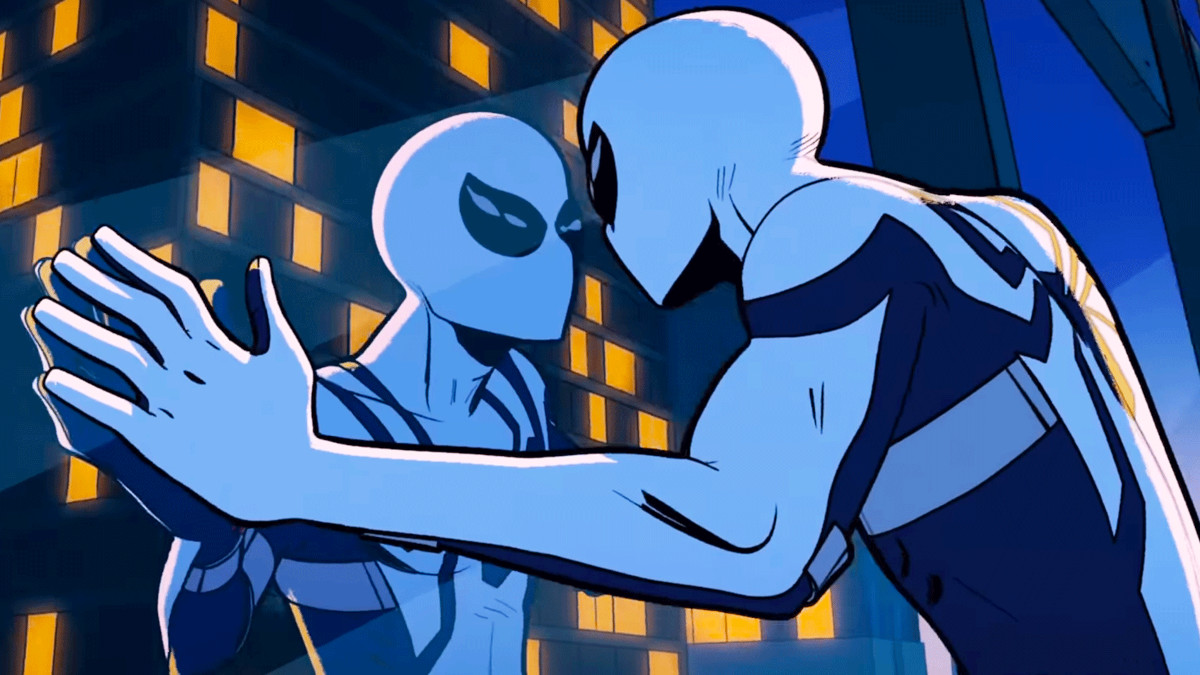
Peter Parker has been through a lot. We’ve seen the bite, the uncle, the "great responsibility" speech, and the multiversal madness more times than most people have changed their oil. But when Marvel Studios first announced Your Friendly Neighborhood Spider-Man—originally titled Spider-Man: Freshman Year—the collective internet groaned a bit. Do we really need more? Honestly, yeah. Because these your friendly neighborhood spider-man episodes aren't just a retread of the MCU's Homecoming trilogy. They’re a complete pivot.
Think of it as a "What If?" scenario that got its own full series. Jeff Trammell, the head writer known for Craig of the Creek, is steering this ship into a version of New York where Tony Stark didn't show up in that Queens apartment. Instead, Norman Osborn walks through the door. That one change ripples through every single episode, creating a timeline that feels nostalgic yet deeply weird.
The Episode Structure and the 616 Problem
People keep asking if this is canon. It’s a bit messy. While it’s produced by Marvel Studios, it doesn't take place in the main Earth-616 timeline. You've basically got a "remix" of Peter’s origin. The episodes are designed to capture that specific, jittery energy of the early Stan Lee and Steve Ditko comics. You can see it in the character designs—Peter looks a bit more awkward, his glasses are a bit thicker, and the world feels lived-in and slightly grimy.
The first season is built to track Peter’s earliest days. We aren't starting with a high-tech Stark suit. We're starting with goggles and sweatpants. This matters because it shifts the stakes. In the MCU films, Peter had a billionaire benefactor. In these episodes, Peter is broke. He’s struggling with homework. He’s trying to figure out how to stop a mugging without breaking his own arm. It’s grounded in a way that the bigger movies sometimes forget to be.
Why Norman Osborn Changes Everything
The dynamic of the series hinges on the relationship between Peter and Norman. In the movies, Tony Stark was the mentor. Here, Norman Osborn takes that spot. It’s uncomfortable. You know Norman is destined to become the Green Goblin, but in these early episodes, he’s presented as a guy who genuinely wants to help Peter. Or does he? The tension is baked into every scene they share.
It creates a psychological layer that the usual "villain of the week" shows lack. You’re watching Peter trust a man that the audience knows is a ticking time bomb. This isn't just about punching bad guys; it's about the corruption of a young hero's moral compass. It makes the your friendly neighborhood spider-man episodes feel more like a slow-burn thriller than a Saturday morning cartoon.
A Massive Cast of Deep Cuts
If you're a comic book nerd, the character list for these episodes is basically a fever dream. We’re moving past the usual suspects. Sure, Aunt May is there, but look at the school roster. You’ve got Nico Minoru from The Runaways. You’ve got Amadeus Cho, who eventually becomes Brawn/Hulk in the comics. Even Pearl Pangan (Wave) makes an appearance.
The villains follow the same logic. We’re seeing:
- The Chameleon (Spider-Man's first-ever comic book villain)
- Scorpion
- Rhino
- Tarantula
- Speed Demon
- Butters Scotch (a very deep cut)
This variety prevents the show from feeling stagnant. Most Spider-Man media rotates through the Sinister Six and calls it a day. By digging into the 1960s archives, Trammell and his team are giving us visuals we haven't seen in animation since the 1994 series or Spectacular Spider-Man.
The Visual Style: More Than Just "Retro"
The art style is polarizing. Some people love the Ditko-inspired linework; others find it a bit stiff compared to the fluid animation of Across the Spider-Verse. But it's intentional. The show uses a cel-shaded look that tries to mimic the dot-matrix printing of old comic books. It’s bright, it’s colorful, and it feels like a moving Sunday comic strip.
There’s a specific "jerkiness" to the movement that mimics the limited animation of the 60s, but with a modern budget. It’s a vibe. It’s meant to feel like a found artifact. When you watch the episodes, pay attention to the backgrounds. They aren't the generic CG cities we see in most Disney+ shows. They are hand-drawn, messy, and full of Easter eggs that reference everything from old Marvel issues to specific New York landmarks that don't exist anymore.
Breaking Down the "New" Origin
We've all seen the spider bite. We know the drill. However, the way these your friendly neighborhood spider-man episodes handle the "inciting incident" is supposedly different. Rumors from production suggest the bite happens in a way that ties directly into the larger mystery of Osborn’s interest in Peter. It’s not just a random field trip accident. It’s a targeted event.
This changes Peter's motivation. He isn't just a kid trying to do good; he's a kid caught in a web (pun intended) of corporate espionage and mad science from day one. The "friendly neighborhood" aspect is his way of reclaiming his life from these massive, scary forces. He’s a small guy in a very big, very dangerous world.
Voice Acting and Character Shifts
Hudson Thames takes over the voice of Peter Parker, stepping in after voicing the character in What If...?. He nails that cracking, teenage voice that Tom Holland mastered, but with a bit more of a cynical edge. He sounds tired. Being Spider-Man in a pre-Avengers world is exhausting.
Then you have Colman Domingo as Norman Osborn. This is brilliant casting. Domingo brings a sophisticated, almost predatory calm to the role. He doesn't play Norman as a cackling madman. He plays him as a mentor who is just a little too invested in Peter's potential. It’s haunting.
The supporting cast also shifts the tone. Having Nico Minoru (voiced by Lyrica Okano, reprising her role from the live-action Runaways) adds a magical element to Peter's world that usually stays grounded in science. It’s a genre-mashup that shouldn't work, but somehow, in the context of a "remixed" history, it does.
What This Means for the Future of Marvel Animation
Marvel Animation is in a weird spot. X-Men '97 was a massive hit because it leaned into nostalgia. Your Friendly Neighborhood Spider-Man is doing something riskier. It’s using nostalgia for the aesthetic, but the story is brand new. It’s an experiment in brand flexibility. Can you tell a Spider-Man story that ignores the last 10 years of movie continuity and still get people to care?
The success of these episodes will likely dictate how Marvel handles other "alternate" stories. If people embrace a Peter Parker who isn't tied to the Avengers, it opens the door for more standalone, creator-driven projects. It’s a break from the "everything is connected" mandate that has started to fatigue some fans.
Spotting the Differences: Movie vs. Show
It's helpful to look at the specific deviations. In the movies, Peter's best friend is Ned Leeds (who is basically Ganke Lee from the Miles Morales comics). In this series, his social circle is much broader and leans into the "science geek" trope. He’s surrounded by people like Amadeus Cho, who can actually keep up with his intellect.
The tech is the other big one. No E.D.I.T.H. glasses. No nanotech. Peter is sewing his suits. He’s using web-fluid that he has to cook on a literal stove. This "lo-fi" Spider-Man is what fans have been begging for. It returns the character to his roots as a DIY hero.
Actionable Insights for Fans and Viewers
If you're planning to dive into the series, don't expect it to bridge the gap to Spider-Man 4 in the MCU. It won't. Instead, treat it as a standalone graphic novel. To get the most out of the experience, here are a few things to keep in mind:
- Watch for the Backgrounds: The show is littered with references to 1960s Marvel lore. If you see a storefront or a poster, it’s probably a nod to a creator like Steve Ditko or Jack Kirby.
- Ignore the Canon Wars: Don't get bogged down in how this fits with Tom Holland's Peter Parker. It doesn't. Accept it as its own universe (Earth-1218 or similar) to avoid frustration.
- Pay Attention to Norman's Suits: The color palette Norman wears often reflects his mental state or his progression toward the Goblin persona.
- Look for the Multiversal Clues: While it's a standalone story, Marvel rarely does anything without a nod to the wider multiverse. There are subtle hints about why this timeline diverged from the one we know.
The best way to enjoy these episodes is to appreciate the craft. The animation team at Polygon Pictures has worked hard to create something that looks like a comic book come to life. It’s a love letter to the era that started it all, even as it tells a story that feels entirely fresh.
Wait for the rhythm of the show to click. The first couple of episodes might feel fast-paced or jarring because of the visual style, but once the relationship between Peter and Norman starts to fray, the narrative weight kicks in. It’s a reminder that at his core, Spider-Man isn't about the gadgets or the multiverse—he’s about a kid from Queens trying to do the right thing when everything is going wrong.
Keep an eye out for the Season 2 updates, which has already been subtitled Sophomore Year. The plan is to follow Peter through his entire high school career, one season at a time. If Season 1 is about the "honeymoon phase" of having a mentor like Osborn, Season 2 will likely be the fallout.



