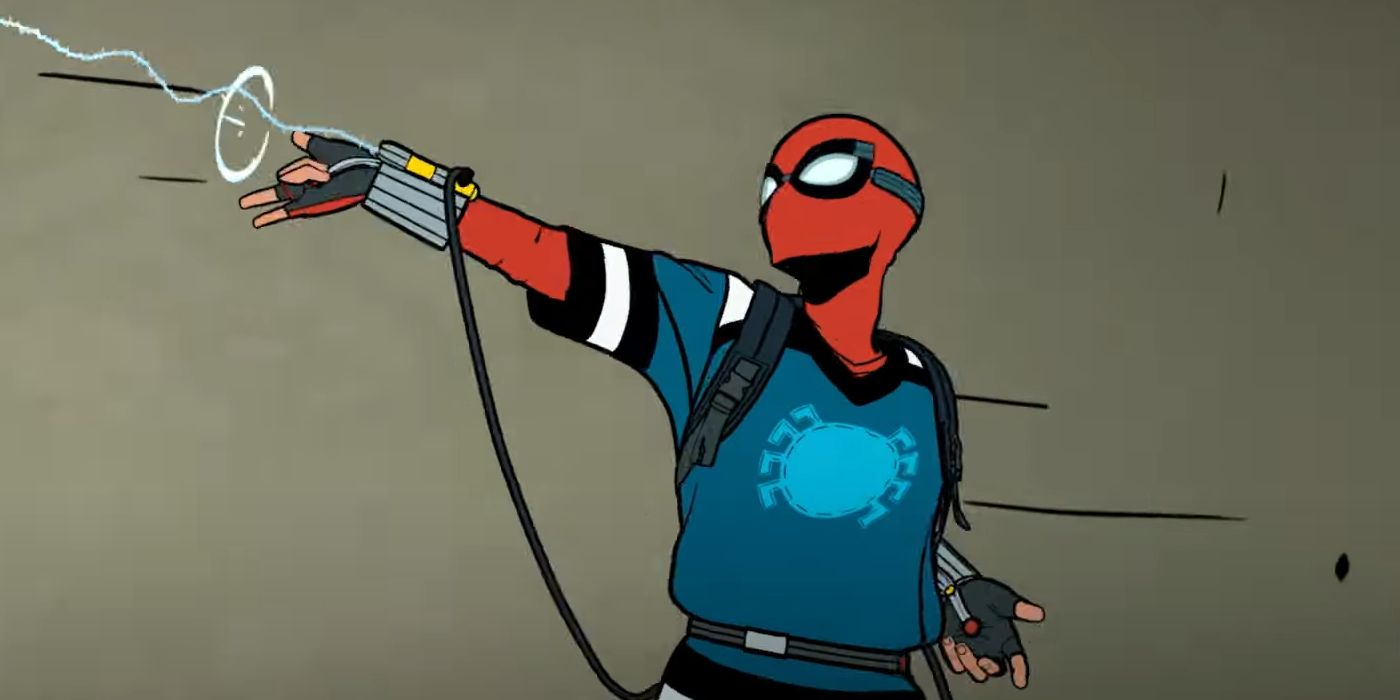
Look, we’ve seen the origin story a thousand times. Ben dies, Peter learns about responsibility, and the red-and-blue spandex comes out of the closet. But Your Friendly Neighborhood Spider-Man episode 3 is where the training wheels finally fall off this specific MCU-adjacent experiment. It's weird. It’s colorful. Honestly, it’s a bit of a fever dream compared to the polished, billion-dollar gloss of the Tom Holland films. If you were expecting a simple retread of Homecoming, you're looking at the wrong show. This series, particularly by the time we hit the third chapter, leans into the "what if" of it all with a grit that feels more like a 1960s Steve Ditko panel come to life than a modern blockbuster.
Peter Parker is still a kid here. He’s clumsy. He’s making mistakes that actually have consequences. By the third episode, the novelty of seeing Norman Osborn step into the "mentor" role—a spot usually reserved for Tony Stark—starts to feel genuinely unsettling. It’s a dynamic that flips the script. You've got this brilliant, awkward teenager being guided by a man we all know is destined for madness. The tension isn't just in the supervillain fights; it's in the quiet moments in the lab where you're just waiting for the other shoe to drop.
Breaking Down the Norman Osborn Influence in Episode 3
The biggest shift in Your Friendly Neighborhood Spider-Man episode 3 is how it handles the Osborn legacy. Usually, Norman is the big bad. Here? He’s the benefactor. He’s the guy giving Peter the tech and the "guidance" he thinks he needs. It's a total inversion of the Iron Man dynamic. While Tony Stark was a flawed hero, he was ultimately trying to keep Peter safe. Norman? Norman is grooming a protégé.
You can see it in the way the scenes are framed. The lighting is just a bit harsher when Norman is on screen. The dialogue feels a bit more transactional. Peter is thrilled, obviously. Who wouldn't be? He’s a poor kid from Queens getting a front-row seat to cutting-edge science. But the audience knows better. We’re watching a slow-motion car crash where the car is a teenage boy's moral compass. It’s a bold choice for Marvel Animation. They’re betting on the fact that we’ve seen the traditional story enough to appreciate this twisted remix.
The Animation Style is the Secret Sauce
People complained about the art style when the first teasers dropped. They called it cheap. They called it "stilted." They were wrong. By the time you get into the rhythm of episode 3, the aesthetic makes perfect sense. It’s trying to evoke that specific, hand-drawn feel of the early Spider-Man comics. The colors pop. The line work is heavy.
When Spidey swings through the city, it doesn't look like a physics-defying CGI model. It looks like ink on paper moving at sixty frames per second. There’s a weight to it. When he hits a wall, he hits it hard. When he misses a web-shot, it looks frantic. The third episode really showcases this during a mid-episode chase sequence that uses perspective in a way that live-action simply can't replicate without looking goofy. Here, it just looks like art.
Who is the Real Villain Here?
One thing Your Friendly Neighborhood Spider-Man episode 3 does exceptionally well is blurring the lines between "hero" and "threat." We’re introduced to updated versions of classic rogues, but they aren't just mustache-twirling baddies. They have motivations that feel grounded in the specific, slightly-off-kilter New York this show inhabits.
Take the introduction of the tech-based threats Peter faces. They aren't just random bank robbers. They are often products of the same corporate environment that Norman Osborn sits atop. It creates this recursive loop where Peter is fighting fires started by the guy who gave him his fire extinguisher. It’s brilliant. It’s frustrating. It makes you want to yell at the screen because Peter is so earnest and so blind to what’s actually happening around him.
The pacing of the episode is breakneck. It starts with a small-scale problem—Peter trying to balance schoolwork and superheroics—and escalates into a massive set piece that challenges his understanding of what being a hero actually means. It’s not about the big wins yet. It’s about the small, painful lessons.
Peter’s Social Circle: Not Your Average Supporting Cast
Nico Minoru. Amadeus Cho. These aren't just background characters; they’re the emotional core. In episode 3, we see the friction between Peter’s "super" life and his actual life. His friends are geniuses in their own right. They aren't just there to be rescued. In fact, there are moments where Nico feels more capable than Peter does.
This creates a different vibe than the "loser Peter" trope we see in the Sam Raimi films. This Peter is surrounded by peers who are just as bright as he is, which makes his isolation as Spider-Man feel more self-imposed. He could share this with them, but he’s already falling into the trap of thinking he has to carry it all alone. It’s a classic Spidey mistake, but it feels fresh because the people he’s keeping secrets from are characters we rarely see him interact with in this way.
Why the "Freshman Year" Rebrand Matters
Originally, this show was titled Spider-Man: Freshman Year. The shift to Your Friendly Neighborhood Spider-Man was more than just a marketing tweak. It signaled a departure from being a strict "prequel" to the MCU's Civil War. This is its own thing. It’s a multiverse story without the exhaustion of "multiverse" tropes.
Episode 3 solidifies this. By this point in the season, the show has firmly established that this is a "What If" scenario played straight. What if Peter didn't have Tony? What if the bite happened under different circumstances? What if his first real costume wasn't a high-tech gift, but a series of experimental failures?
The stakes feel higher because we don't know where this ends. We know where the MCU Peter ends up—he ends up on Titan fighting Thanos. We have no idea where this Peter ends up. He could become the greatest hero of his world, or he could be consumed by the Osborn machine. That unpredictability is the show's greatest strength.
Practical Takeaways for Fans
If you're watching this and feeling a bit lost, don't worry. The show is designed to be layered. To get the most out of it, pay attention to the background details. The Easter eggs aren't just there for fan service; they are world-building tools.
- Watch the background tech: A lot of the gear Peter uses or encounters is branded in ways that hint at future corporate wars.
- Listen to the score: The music shifts from lighthearted to discordant whenever Norman is mentioned or on screen.
- Follow the supporting cast: Characters like Pearl Pangan and Lonnie Lincoln are being set up for much larger roles than they initially seem to have.
The Verdict on the Third Chapter
Basically, Your Friendly Neighborhood Spider-Man episode 3 is the moment the show finds its voice. It moves past the "origin" jitters and starts exploring the messy, complicated reality of being a kid with too much power and not enough guidance. It’s funny, sure. But it’s also got an undercurrent of dread that makes it stand out in a crowded field of superhero content.
The most important thing to remember is that this isn't a replacement for the Spider-Man we know. It’s an expansion. It’s a look at the character through a distorted lens that highlights different parts of his psyche. Peter’s desperation to please Norman is a mirror of his desperation to please Tony in the movies, but with a much darker potential outcome.
As the credits roll on episode 3, you aren't just thinking about the fight scenes. You're thinking about the choices Peter is making. You’re wondering how long he can keep his head above water before the world Norman is building for him pulls him under. It’s a gripping piece of television that proves there is still plenty of life left in the old web-head yet.
To stay ahead of the curve on this series, track the specific comic book issues being referenced in the end credits art. These aren't random; they often provide the blueprint for the character arcs being adapted. Compare the Norman-Peter relationship in this episode to the "Dark Reign" era of Marvel Comics to see just how much DNA this show shares with the darker side of the source material. Lastly, keep an eye on the subtle changes in Peter's suit design; each "upgrade" he gets from Oscorp is a literal tie to a man he shouldn't trust.



