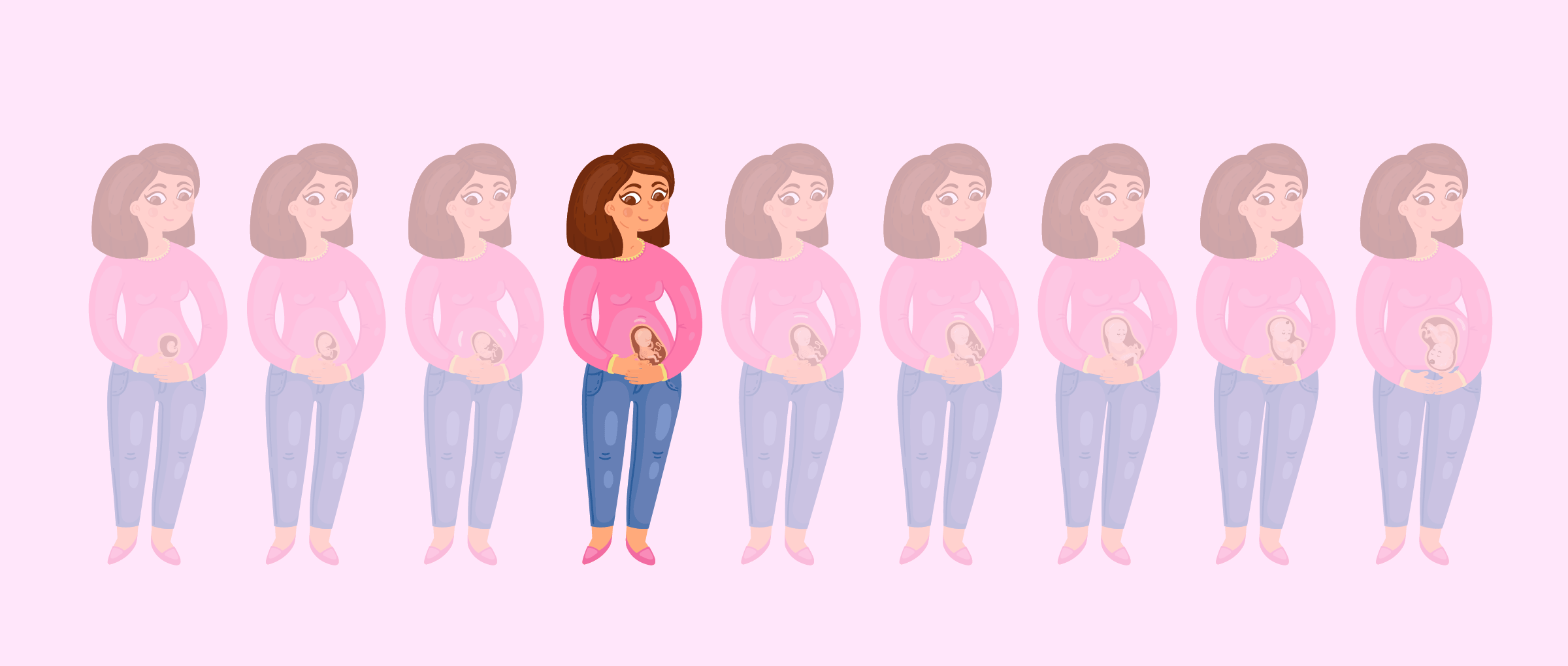
You’re walking past a mirror, and suddenly, you see it. Is that a bump or just the burrito you had for lunch? Honestly, the four months pregnant belly is the weirdest stage of the whole journey. You’re finally out of the "morning sickness and misery" phase of the first trimester, but you haven't quite reached the "I can't see my feet" stage of the third. It's a bit of a literal middle ground.
Most people expect a perfect, basketball-shaped bump the second they hit week 13 or 14. Real life isn't a movie. For a lot of us, it starts as a thickening of the waist. Your favorite jeans? Yeah, they probably won't button today. But you might not look "pregnant" to a stranger on the street yet. It's that awkward phase where you just feel like you’ve been hitting the buffet a little too hard.
Why the Four Months Pregnant Belly Looks Different for Everyone
Growth isn't linear. If you’re a first-time mom, your abdominal muscles are basically like tight rubber bands. They’re holding everything in with a vengeance. It might take until week 16 or 17—maybe even 20—before you truly "pop." But if this isn't your first rodeo? Your muscles already know the drill. They’ve been stretched before, so they tend to give up the ghost much earlier.
Your height matters too. Longer torsos give the uterus more room to grow upward before it has to push outward. If you’re shorter, there’s nowhere for that baby to go but straight out. This is why two people at the exact same stage of pregnancy can look completely different. One looks like they’re carrying a grapefruit, and the other just looks like they’re wearing a slightly tight shirt. Both are totally normal.
The Uterus Move-In Day
By the time you hit month four, your uterus is roughly the size of a large cantaloupe. It’s finally rising out of your pelvic cavity and moving into your abdomen. Dr. Abigail Cutler, an OB-GYN, often notes that this shift is what finally starts to change your silhouette. Before this, the uterus was tucked away behind your pubic bone. Now, it’s making a play for center stage.
You can actually feel the top of it—the fundus—if you lie flat and press gently about midway between your pubic bone and your belly button. It feels firm, like a well-inflated ball. Don't be surprised if your four months pregnant belly feels harder in the morning. When your bladder is full, it pushes the uterus upward and outward, making the bump more prominent before you've even had breakfast.
Gas, Bloating, and the "Fake" Bump
Let’s be real for a second. A huge chunk of that early bump isn't even the baby. It’s progesterone. This hormone is great for maintaining a pregnancy, but it’s a nightmare for your digestion. It slows everything down to ensure your body absorbs every possible nutrient for the baby. The side effect? Massive bloating.
You might wake up with a flat-ish stomach and go to bed looking six months pregnant. That’s the "bloat bump." It’s common to feel "heavy" or "tight" in your lower abdomen long before the baby is actually big enough to cause a visible bulge. It's frustrating because you want the cute baby bump, but what you get is a digestive system that's basically on strike.
Skin Changes You Might Not Expect
Your skin is starting to realize it’s in for a wild ride. As your belly expands, you might notice the linea nigra—that dark vertical line running down your stomach. It’s always been there (called the linea alba), but pregnancy hormones increase melanin production, making it darken.
Then there’s the itching. Oh, the itching. As the skin stretches, it gets dry and irritated. Some people swear by cocoa butter, but the truth is, stretch marks are mostly genetic. According to the American Academy of Dermatology, moisturizers can help with the discomfort, but they won't necessarily stop the marks from forming if your skin isn't naturally elastic. It's kiddy-pool-deep science: keep the skin hydrated so it doesn't feel like it’s going to snap.
Movement: The "Flutters" vs. Reality
While your four months pregnant belly is becoming visible, you might start feeling something inside. People call them "butterflies" or "flutters," but honestly? It usually feels like gas bubbles or a tiny fish hitting the side of a bag. This is quickening.
If you have an anterior placenta (meaning the placenta is attached to the front of your uterus), it acts like a giant pillow. You might not feel a thing for several more weeks. That’s okay. Don't panic if your friend felt her baby at 14 weeks and you're at 17 weeks feeling nothing but a craving for pickles. The baby is only about 5 inches long right now—roughly the size of an avocado. They have plenty of room to flip around without hitting the "walls" hard enough for you to notice.
The Round Ligament Pain Surprise
As the bump grows, you might get a sharp, stabbing pain in your lower groin or side when you sneeze, cough, or stand up too fast. Congratulations, that’s round ligament pain. Think of the round ligaments as the anchors for your uterus. As the uterus grows, those anchors stretch and thin out like overextended bungee cords.
A sudden movement causes them to snap back quickly, which hurts like a regular muscle cramp but specifically in your "pregnancy zone." It's one of those things no one warns you about until you’re doubled over in the grocery store because you sneezed. Taking it slow when you change positions is basically the only way to avoid it.
Dressing the In-Between Stage
This is the hardest time to get dressed. You aren't big enough for full-panel maternity leggings (they just fall down), but your pre-pregnancy clothes are uncomfortable.
- The Hair Tie Trick: Loop a hair tie through the buttonhole of your jeans and over the button. It gives you an extra two inches of breathing room.
- Belly Bands: These are basically tubes of stretchy fabric that cover your unzipped pants so you can keep wearing them longer.
- Empire Waists: Look for dresses that cinch right under the bust. They highlight the smallest part of your torso and let the fabric flow over the "is it a baby or a burger" area.
- Side-Ruched Shirts: These are the holy grail. The extra fabric on the sides allows the shirt to grow with you without getting too short in the front.
Practical Steps for the Fourth Month
You’ve reached the "Golden Semester." Energy usually returns, and the constant nausea starts to fade. Use this window of time before the third-trimester exhaustion hits.
- Invest in a Pregnancy Pillow Early: You might not "need" it yet, but learning to sleep on your side now is much easier than trying to figure it out when you're the size of a house. The "U-shaped" pillows are life-changing for hip alignment.
- Start a Simple Skin Routine: Find a thick, unscented body butter or oil. You don't need the expensive "anti-stretch mark" stuff—plain almond oil or Shea butter works wonders for the itching. Apply it while your skin is still damp from the shower to lock in moisture.
- Check Your Iron Levels: Around month four, your blood volume is increasing rapidly. This can lead to anemia, making you feel dizzy or more tired than usual. Ask your midwife or doctor to check your levels at your next appointment.
- Take the "Bump" Photos Now: Even if you don't feel like you look different, take a photo every week. When you look back in three months, you’ll be shocked at how much was actually happening under the surface.
- Hydrate Like It's Your Job: Water helps with the bloating and helps your skin stay elastic. It also reduces the frequency of those annoying Braxton Hicks contractions that some people start feeling toward the end of the fourth month.
The transition into the second trimester is a major milestone. Your four months pregnant belly is the physical evidence that the "abstract" idea of a baby is becoming very, very real. Wear the stretchy pants, embrace the weird flutters, and try not to stress if you don't look like the Pinterest-perfect pregnant woman just yet. You’re literally building a human; your body knows exactly what it’s doing.
/i.s3.glbimg.com/v1/AUTH_08fbf48bc0524877943fe86e43087e7a/internal_photos/bs/2025/H/e/ewwgKCQCSopdUJUwy6DA/imagem-2025-04-27-114802986.png)


