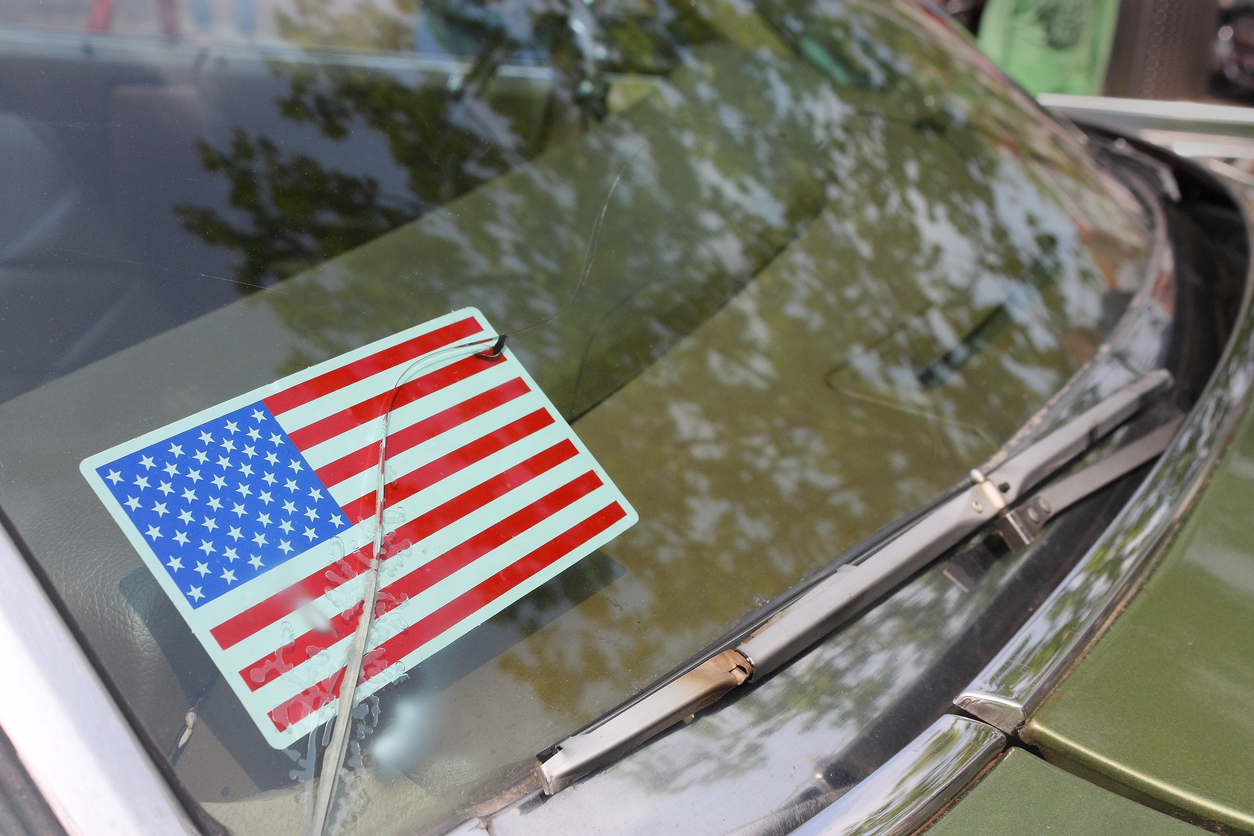
John Prine was twenty-four when he wrote a song that made people both laugh and squirm. It wasn’t a love song. It wasn't a typical folk ballad about trains or coal mines, though he wrote plenty of those too. It was a sharp, biting piece of social commentary called Your Flag Decal Won't Get You Into Heaven, and honestly, if you listen to it today, it feels like it could have been written this morning.
In 1971, the United States was a mess. The Vietnam War was dragging on, the "silent majority" was clashing with the counterculture, and patriotism had become a sort of visual shorthand. You didn't necessarily have to live out specific values; you just had to put a sticker on your bumper. Prine saw through the performative nature of it all. He realized that people were using the American flag as a "get out of jail free" card with the Almighty. If you enjoyed this article, you should read: this related article.
It’s a weird song. It’s funny, but it’s dark. It deals with a guy who covers his car in flag decals until he literally can’t see out the windshield. He crashes, dies, and finds out that St. Peter isn't exactly impressed by his 3M adhesive collection.
The Story Behind the Song
Prine was a mailman in Maywood, Illinois, before he became the "Mark Twain of songwriting." He spent his days walking the streets, observing people, and seeing how they presented themselves to the world. During the late 60s, Reader's Digest actually started a campaign where they distributed millions of American flag decals. They were everywhere. You couldn't go to a grocery store without seeing a car plastered with them. For another look on this development, refer to the latest coverage from Entertainment Weekly.
The song was featured on his self-titled debut album in 1971, an album that also gave us "Sam Stone" and "Angel from Montgomery." While those songs are heavy and mournful, Your Flag Decal Won't Get You Into Heaven used humor as a weapon. Prine didn't hate the flag. He hated the way it was being used to justify violence and silence dissent. He famously said in interviews that the song wasn't meant to be anti-American; it was meant to be anti-hypocrisy.
Why the Song Disappeared (And Came Back)
For a long time, Prine actually stopped playing the song. He felt like the message had been received, or perhaps he just grew tired of the specific imagery of the Vietnam era. But then 2003 happened.
When the United States invaded Iraq, Prine dusted the song off. He realized that the same patterns were repeating. The "Love It or Leave It" sentiment was back in full force, and once again, the flag was being used as a shield against any kind of critical thinking or moral questioning. He started playing it at every show, often to standing ovations, though it still rubbed some people the wrong way. That’s the thing about great satire—it’s supposed to be uncomfortable.
Breaking Down the Lyrics
The song starts with the narrator seeing a "sentimental value" in the stickers. He’s not a villain. He’s just a guy who thinks he’s doing the right thing by being "patriotic."
"But your flag decal won't get you into Heaven Checkmating the gate-keeper's heart"
This is the core of the argument. Prine is suggesting that symbols are empty if they aren't backed by action or genuine faith. You can’t "checkmate" God. It’s a very Midwestern, plain-spoken way of addressing the concept of works versus faith, or rather, appearances versus reality.
The most famous part of the song involves the narrator's death. He’s driving his car, blinded by the very symbols of his loyalty, and he hits a tree. When he gets to the pearly gates, St. Peter gives him the bad news. Apparently, Heaven is already "overcrowded" with people who thought their bumper stickers were a substitute for a soul.
It’s a blunt metaphor. If you spend all your time looking at the symbol, you lose sight of the road ahead. You crash.
The Cultural Impact of Performative Patriotism
We see this everywhere now. It’s not just flag decals anymore. It’s profile picture filters, hashtags, and yard signs. We’ve entered an era of "lifestyle branding" where our political and spiritual identities are sold back to us as commodities.
Sociologists often talk about "symbolic ethnicity" or "identity markers," but Prine nailed it way more simply. He understood that humans have a tendency to take the easy way out. It’s much easier to buy a sticker than it is to actually engage with the complex, often painful duties of citizenship or religious devotion.
What Critics Said Then and Now
When the album dropped, Robert Christgau, the "Dean of American Rock Critics," praised Prine’s ability to find the extraordinary in the ordinary. But not everyone was a fan. Some saw the song as a direct insult to the troops or the country itself.
However, looking back through a 2026 lens, the song feels almost prophetic. We live in a world where "virtue signaling" is a common term, but Prine was describing the phenomenon decades before we had a name for it. He was pointing out that when a symbol becomes a substitute for thought, it becomes dangerous.
Is it Still Relevant?
Honestly? Yes. Maybe more than ever.
We are currently living through a period of intense polarization. Both sides of the political aisle have their own versions of "flag decals." We use symbols to signal which "tribe" we belong to, and we often assume that belonging to the right tribe is all the moral work we need to do.
Prine’s message is universal. It’s a warning against self-righteousness. It’s a reminder that no matter how many signs you put in your yard or how many flags you fly, you are still responsible for your individual actions and the way you treat your neighbors.
Real-World Examples of the "Decal" Mentality
Think about the way corporations change their logos for certain months of the year but don't change their labor practices. Think about the way politicians wear certain pins but vote against the very people those pins represent. These are all modern versions of the flag decal.
- The Corporate Shift: Changing a logo to a rainbow or a flag while ignoring the actual needs of employees.
- The Social Media Filter: Adding a frame to a photo instead of donating time or money to a cause.
- The Political Pin: Using a symbol to distract from a policy that does the opposite of what the symbol suggests.
Prine wasn't just picking on conservatives in 1971; he was picking on the human tendency to mistake the map for the territory.
The Legacy of John Prine
John Prine passed away in 2020 due to complications from COVID-19. His death was a massive blow to the music world. Artists like Bonnie Raitt, Brandi Carlile, and Kacey Musgraves have all cited him as a primary influence. Why? Because he could tell the truth without being a jerk about it—mostly.
Your Flag Decal Won't Get You Into Heaven remains one of his most requested songs, even if it’s one of his most controversial. It’s a testament to his songwriting that a track about 1970s bumper stickers still resonates in an era of digital avatars and 24-hour news cycles.
He didn't want us to stop being proud of where we come from. He just wanted us to stop using that pride as a blindfold.
Actionable Takeaways from Prine’s Philosophy
If you want to apply the "Prine Method" to your own life, it’s not about taking the stickers off your car. It’s about looking behind them.
1. Audit your symbols. Take a second to look at the things you display—whether it’s a flag, a cross, a political sign, or a brand logo. Ask yourself: "Am I living up to what this represents, or am I just using it as a shortcut?"
2. Seek nuance over slogans. Slogans are easy. Nuance is hard. Prine’s songs always had a "but" or a "maybe." He saw the humanity in the people he was criticizing. Try to find the person behind the "decal" in others, too.
3. Practice "Active" Citizenship/Faith. If the song tells us anything, it’s that the "gate-keeper" isn't impressed by your accessories. Genuine contribution to a community requires effort, conversation, and sometimes, the willingness to admit you’re wrong.
4. Listen to the songwriters. Sometimes, a three-minute folk song can explain a complex sociopolitical issue better than a 500-page textbook. Prine, Kris Kristofferson, and Joni Mitchell weren't just entertainers; they were cultural mirrors.
John Prine's work reminds us that the road to whatever "Heaven" looks like for you isn't paved with adhesive. It's paved with how you treat the person in the car next to you, especially when they don't have any stickers at all. Keep your eyes on the road. Don't let the decals block your view.


