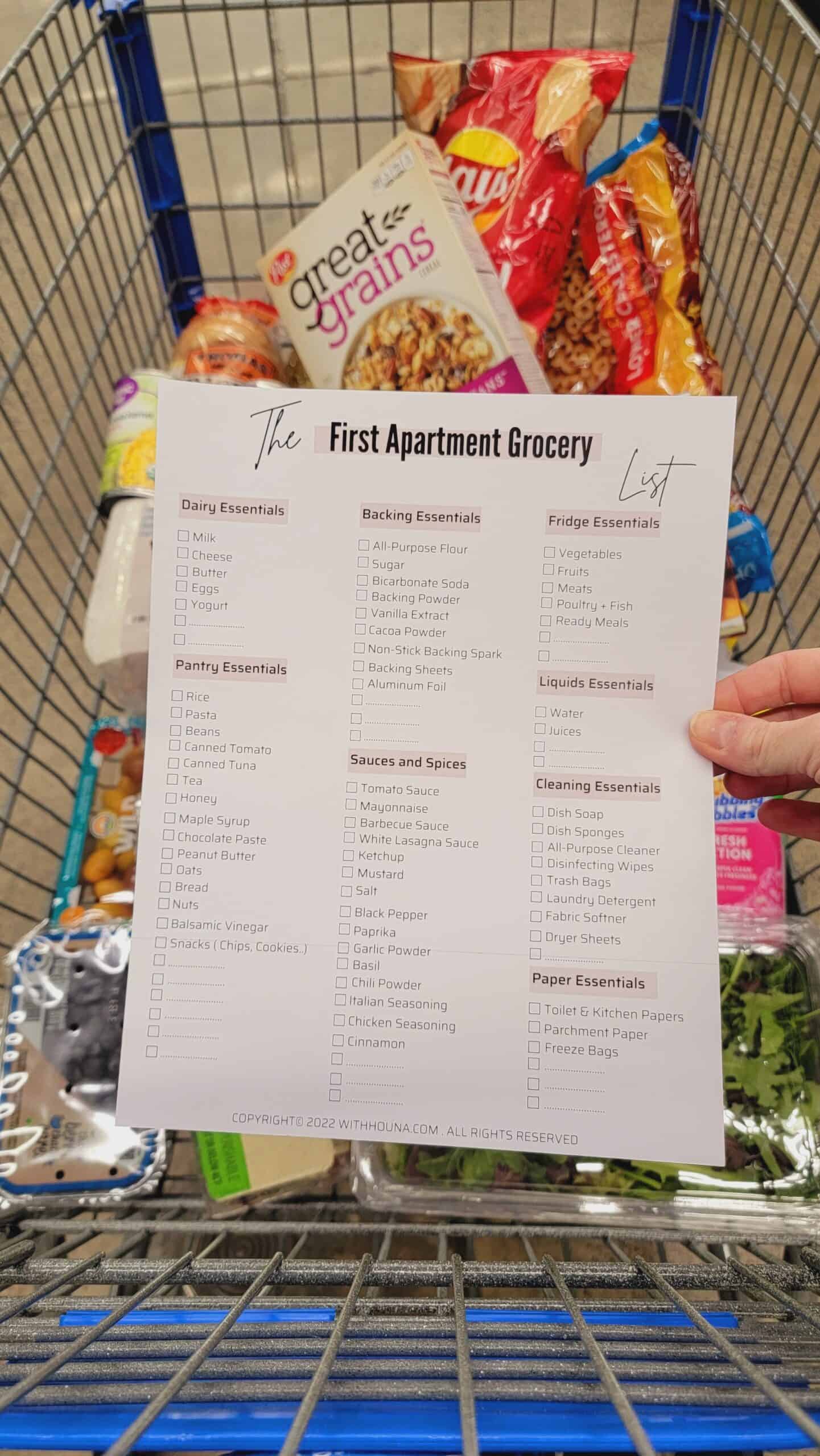
Moving is exhausting. You’ve spent three days hauling boxes, your back hurts, and you just realized you don’t even have salt in the house. It's a classic rookie mistake. Most people think they need to buy everything at once, but honestly, that’s how you end up with a $400 grocery bill and a fridge full of wilted kale you never intended to eat.
Building a grocery list for first apartment success isn't about filling every shelf. It's about survival. You need the stuff that keeps you from ordering takeout for the fifth night in a row. It’s about balance. You want the basics, but you also need that one weird hot sauce that makes everything taste better.
The Pantry Foundation (Or Why You Need More Than Ramen)
Starting from scratch is expensive because you're buying things you’ll only replace once every six months. Think oils, spices, and grains. You can't cook a decent meal without fat. Get a decent-sized bottle of Olive Oil—extra virgin if you're feeling fancy—and a neutral oil like vegetable or canola for when you're frying something and don't want it to smoke up the whole studio.
Salt and pepper are non-negotiable. Don't buy the tiny shakers; get the bigger containers because you'll use more than you think. Garlic powder, onion powder, and maybe some red pepper flakes will cover about 80% of what you'll cook in your first month.
Rice is your best friend. A five-pound bag of Jasmine rice costs almost nothing and stays good forever. Same goes for pasta. Keep two or three different shapes—maybe a box of penne and some spaghetti—so you don't feel like you're eating the same meal every night.
Canned Goods That Aren't Sad
Canned beans are a literal lifesaver. Black beans, chickpeas, and kidney beans can be tossed into salads, mashed into tacos, or just heated up with some of that garlic powder we talked about. They’re cheap protein.
Keep a few cans of diced tomatoes or tomato sauce. You can turn those into a pasta sauce or a soup in about ten minutes. Honestly, having a "backup" meal in the pantry is the only thing that stops most of us from spending $30 on DoorDash when we're tired.
Refrigerated Essentials and the "Two-Week Rule"
The fridge is where money goes to die if you aren't careful.
Milk (or whatever nut-based alternative you prefer) is a given. Butter is essential, not just for toast but for making literally anything in a pan taste better. Eggs are the cheapest high-quality protein you can buy. You can eat them for breakfast, fry one to put on top of your rice, or scramble them when you’ve run out of "real" food.
- Greek Yogurt: It’s breakfast, or a snack, or a sour cream substitute.
- Cheese: A block of sharp cheddar lasts longer and tastes better than the pre-shredded stuff that's coated in potato starch.
- Condiments: Ketchup, mustard, and mayo are the "Big Three," but don't forget soy sauce or Sriracha.
The "Two-Week Rule" is simple: don't buy fresh produce that you won't eat in the next 14 days. This is why bags of spinach are dangerous. They look healthy in the store and turn into green slime in four days. Buy hearty veggies like carrots, onions, and potatoes. They live on the counter or in the crisper drawer for weeks without complaining.
Let’s Talk About Frozen Food
Freezers are underrated for first-time renters. Frozen broccoli is just as nutritious as fresh, and it won't rot. Buy a big bag. Throw it in the oven with some olive oil and salt.
Frozen fruit is great for smoothies if you're the kind of person who actually wakes up early enough to make them. If not, at least keep some frozen pizza or a box of veggie burgers. There will be a Tuesday night where you are too tired to function. That frozen pizza is your safety net.
The Non-Food Stuff People Always Forget
Your grocery list for first apartment isn't just about what you eat. It’s the boring stuff that makes a home run.
Dish soap. You will run out of it faster than you think. Sponges—get the ones with the scrubby side. Paper towels are a luxury, but you'll want at least one roll for the inevitable spill.
Trash bags are weirdly expensive, but do not buy the cheapest ones. Having a bag rip while you're carrying it down the hall is a rite of passage you don't actually need to experience.
Cleaning Supplies That Actually Work
You don't need twelve different bottles. An all-purpose cleaner (something like Mrs. Meyer's or even just a vinegar/water mix) handles most surfaces. You need a toilet bowl cleaner because, well, obviously.
- Laundry detergent (pods are easier when you're starting out).
- Hand soap for the bathroom and the kitchen.
- Toilet paper—buy the big pack. Running out is a nightmare scenario.
Navigating the Supermarket Without Losing Your Mind
Budgeting for this first trip is tricky. Expect to spend more than your "normal" weekly budget because of those pantry staples. If you can, split your shopping. Go to a discount place like Aldi or Lidl for the dry goods and canned stuff. Then, hit a bigger grocery store for the specific brands or fresh items you like.
Don't shop hungry. It's a cliché for a reason. If you go into a grocery store hungry while trying to stock a new kitchen, you will come home with three bags of chips, a rotisserie chicken, and zero ingredients for an actual meal.
Strategic Thinking for Your First Month
Avoid the temptation to buy specialized kitchen tools or niche ingredients. You don't need truffle oil. You don't need a zester yet. Stick to the basics that allow for the highest number of combinations.
Think about "crossover ingredients." An onion can go in an omelet, a pasta sauce, or a stir-fry. That's a high-value item. A jar of artichoke hearts that only goes in one specific salad you saw on TikTok? Low value.
Real-World Example: The $50 Starter Kit
If you only had $50 to spend on your very first day, here is exactly what should be in the cart:
- Big bag of rice
- Dozen eggs
- Loaf of bread
- Jar of peanut butter
- Box of pasta and a jar of marinara
- Bag of onions and a head of garlic
- Small bottle of oil and salt/pepper
- Dish soap and one roll of toilet paper
It isn't glamorous, but you can live off that for a week while you figure out where the nearest trash chute is.
Addressing the "Bulk Buy" Myth
People will tell you to go to Costco or Sam's Club. Unless you have roommates to split things with, buying 48 rolls of paper towels for a tiny apartment is a space management disaster. Your "pantry" might just be a single shelf over the stove.
Buy small until you know your rhythm. You might think you'll eat oatmeal every morning, but if you find yourself grabbing a granola bar on the way out the door instead, that giant tub of oats is just taking up space.
Actionable Steps for Your Shopping Trip
Before you leave for the store, do these three things:
- Measure your fridge: Make sure that "family size" milk or juice actually fits on the shelves.
- Check under the sink: See if the landlord left any cleaning supplies behind. Sometimes you get lucky with a stray bottle of Windex.
- Write it down: Use a physical list or a notes app. Walking into a store without a plan for a first apartment shop is a recipe for overspending.
Focus on the items that bridge the gap between "empty house" and "functional kitchen." Start with the dry goods, move to the long-lasting cold items, and finish with the cleaning essentials. Once you have the basics, you can slowly add the fun stuff—the fancy cheeses and the expensive coffee—over the next few weeks as you settle into your new space.