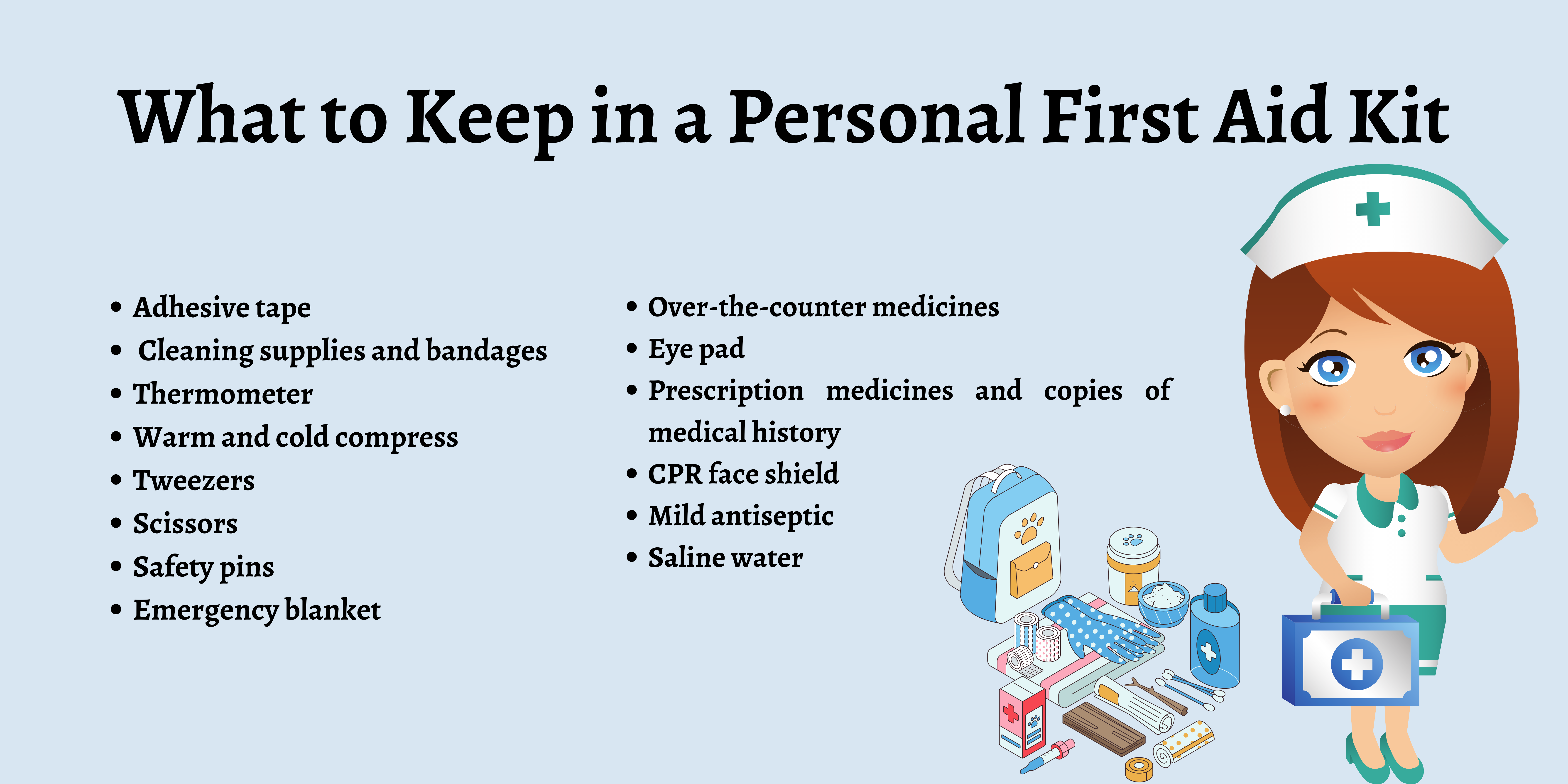
Most people treat a first aid kit like a time capsule. You buy one of those plastic white boxes at a big-box retailer, shove it under the bathroom sink, and forget it exists until someone is bleeding on the kitchen tile. That is a mistake. A big one.
When you finally crack that lid open during a crisis, you’ll likely find dried-out alcohol wipes, expired antibiotic ointment that has separated into a gross oily mess, and adhesive bandages that have lost their stick. It’s frustrating. It's also dangerous. If you are looking for a first aid kit items list, you don’t just need a inventory of "stuff." You need a functional system that works when adrenaline is spiking and your hands are shaking.
Let's be honest: most pre-packaged kits are stuffed with "filler." They boast "200 pieces!" but 150 of those are just different sized band-aids. You don't need 150 band-aids. You need a tourniquet, some decent shears, and maybe some chewable aspirin.
The Core Essentials: Beyond the Basics
Stop thinking about your kit as a box of Band-Aids. Think of it as a life-support system for the first ten minutes of an emergency.
The most critical item—and the one most often missing—is a pair of high-quality trauma shears. Forget those tiny, flimsy scissors that come in cheap kits. You want shears that can cut through denim, leather, or a seatbelt. If you can’t get to the wound, you can’t treat it. Brands like Leatherman make high-end versions, but even a pair of $10 stainless steel shears from a medical supply store will beat your kitchen scissors every single time.
Then there is the issue of bleeding. Most people are terrified of tourniquets. There’s this old myth that if you use one, the person will definitely lose their limb. That is mostly nonsense in a modern context. If someone has life-threatening arterial bleeding, you use a tourniquet. The Committee on Tactical Combat Casualty Care (CoTCCC) recommends the CAT (Combat Application Tourniquet) or the SOFTT-W. Buy a real one. Don't buy a $5 knock-off on a random marketplace; those plastic windlasses snap under pressure, and that's the last thing you want when trying to stop a femoral bleed.
Wound Care That Actually Works
Once the life-threatening stuff is handled, we look at standard wound care. Your first aid kit items list must include "hemostatic agents." Think brands like QuikClot. These are gauzes impregnated with kaolin or other minerals that help blood clot faster.
For the everyday scrapes, you need variety, but not the kind you think.
- Sterile Saline Wash: Buy the pressurized cans. It's much better for flushing dirt out of a wound than dabbing it with a wet cloth.
- Transparent Dressings: Think Tegaderm. These are amazing for "road rash" or burns because they stay on for days and let you see if the wound is getting infected without pulling the scab off.
- Coban or Self-Adherent Wrap: This stuff is magic. It sticks to itself but not to skin or hair. It’s perfect for holding a dressing in place on a wiggly kid or a hairy arm.
Why Your Medications Are Probably Useless
Check your kit right now. Is there a bottle of ibuprofen in there from 2019?
Medications lose potency. While most won't become "toxic" the day after they expire, they certainly won't help your pounding headache as well as they should. You need a rotating stock.
Aspirin is non-negotiable. If someone is having a heart attack, chewing a full-strength (325mg) aspirin can be the difference between life and death. The American Heart Association has been shouting this for years. Keep it in a small, waterproof vial.
Don't forget the Diphenhydramine (Benadryl). It's not just for hay fever. If someone has a surprise allergic reaction to a bee sting or a hidden peanut in a cookie, an antihistamine buys time.
You should also carry Electrolyte powder. Dehydration isn't just a "hot summer day" problem; it's a "stomach flu at 3 AM" problem. Rehydration salts (like those from Liquid I.V. or specialized medical brands) work significantly faster than plain water.
Specialized Tools You Didn't Know You Needed
Most lists forget the "weird" stuff.
Tweezers: Not the dull ones from your makeup bag. Get a pair of "splinter out" or fine-tipped precision tweezers. If you've ever tried to pull a tiny glass shard out of a heel with blunt tweezers, you know the pain.
A Mylar Blanket: They’re tiny, they cost two dollars, and they prevent hypothermia. Shock often leads to a drop in body temperature, even in warm weather. Wrapping a patient in one of these "space blankets" keeps their core heat in while you wait for the ambulance.
A Permanent Marker: Why? To write the time you applied a tourniquet on the patient’s forehead or the bandage. To note down what time you gave a medication. In a crisis, your memory will fail you. Write it down.
Nitrile Gloves: Not latex. Many people have latex allergies, and nitrile is more chemically resistant anyway. Get them in a bright color like blue or orange. Why? So you can see if you've got blood on your hands. It's hard to see red blood on black gloves.
Organizing for Chaos
If your kit looks like a junk drawer, it’s useless.
I’m a huge fan of the "modular" approach. Use small, clear zippered pouches to categorize your first aid kit items list.
- The "Stop Bleeding" Pouch: Tourniquet, pressure dressing, hemostatic gauze. Red label.
- The "Wound Care" Pouch: Bandages, antiseptic, tape, saline. Blue label.
- The "Meds" Pouch: Aspirin, ibuprofen, antihistamine, antacids. Yellow label.
This way, when you tell a panicked bystander to "get the meds," they aren't digging through a pile of gauze to find a tiny pill bottle.
Also, consider your environment. A kit for a car should have a seatbelt cutter and a window breaker. A kit for a hiker needs moleskin for blisters and maybe a snake bite kit (though the "suction" ones are widely discredited by experts like those at the Cleveland Clinic—better to have pressure immobilization bandages).
The "Ouch" vs. The "Emergency"
It helps to bifurcate your thinking. You really have two kits. One is the "comfort kit" for splinters, paper cuts, and headaches. The other is the "trauma kit" for things that require a 911 call.
Most people over-index on the comfort kit. Honestly, you can survive a paper cut without a specialized kit. You can't survive a massive laceration without proper supplies.
Maintaining Your Kit: The 6-Month Rule
Put a reminder in your phone. Every six months—maybe when the clocks change for Daylight Savings—open the box.
Check the batteries in your flashlight or headlamp. (Side note: Always keep a headlamp in your kit. Trying to bandage a wound while holding a phone light in your teeth is a nightmare.)
Check the seals on your sterile pads. If the paper packaging is yellowed or brittle, the item is no longer sterile. Toss it. Buy new. It’s a small price to pay for peace of mind.
Actionable Next Steps to Build Your Kit
Don't just go out and buy a "299-piece" kit today and think you're done. That’s lazy and potentially useless. Instead, take these steps to ensure you actually have a first aid kit items list that works.
- Audit your current supplies: Dump everything on the table. Throw away anything expired, anything you don't recognize, and anything that looks "cheap."
- Purchase a dedicated "Trauma" component: Get a genuine CAT tourniquet and a 4-inch Israeli Bandage (emergency pressure dressing). These are the heavy hitters.
- Go Modular: Find three or four small, durable bags. Organize by "Trauma," "General Wound Care," and "Meds."
- Get Training: This is the most important part. A kit is just a bag of trash if you don't know how to use it. Look for a local "Stop The Bleed" course. They are often free or very cheap and take about 90 minutes.
- Add Personal Requirements: If you’re an asthmatic, an extra inhaler goes in. If you have a severe allergy, an EpiPen (check the expiration!). This kit should reflect the people who will actually be using it.
Building a proper kit is a process of curation. It’s about choosing quality over quantity. You want the items that will perform when your heart is racing at 140 beats per minute and someone you love is hurting. Forget the fluff. Focus on the gear that actually saves lives.
/i.s3.glbimg.com/v1/AUTH_08fbf48bc0524877943fe86e43087e7a/internal_photos/bs/2025/H/e/ewwgKCQCSopdUJUwy6DA/imagem-2025-04-27-114802986.png)


