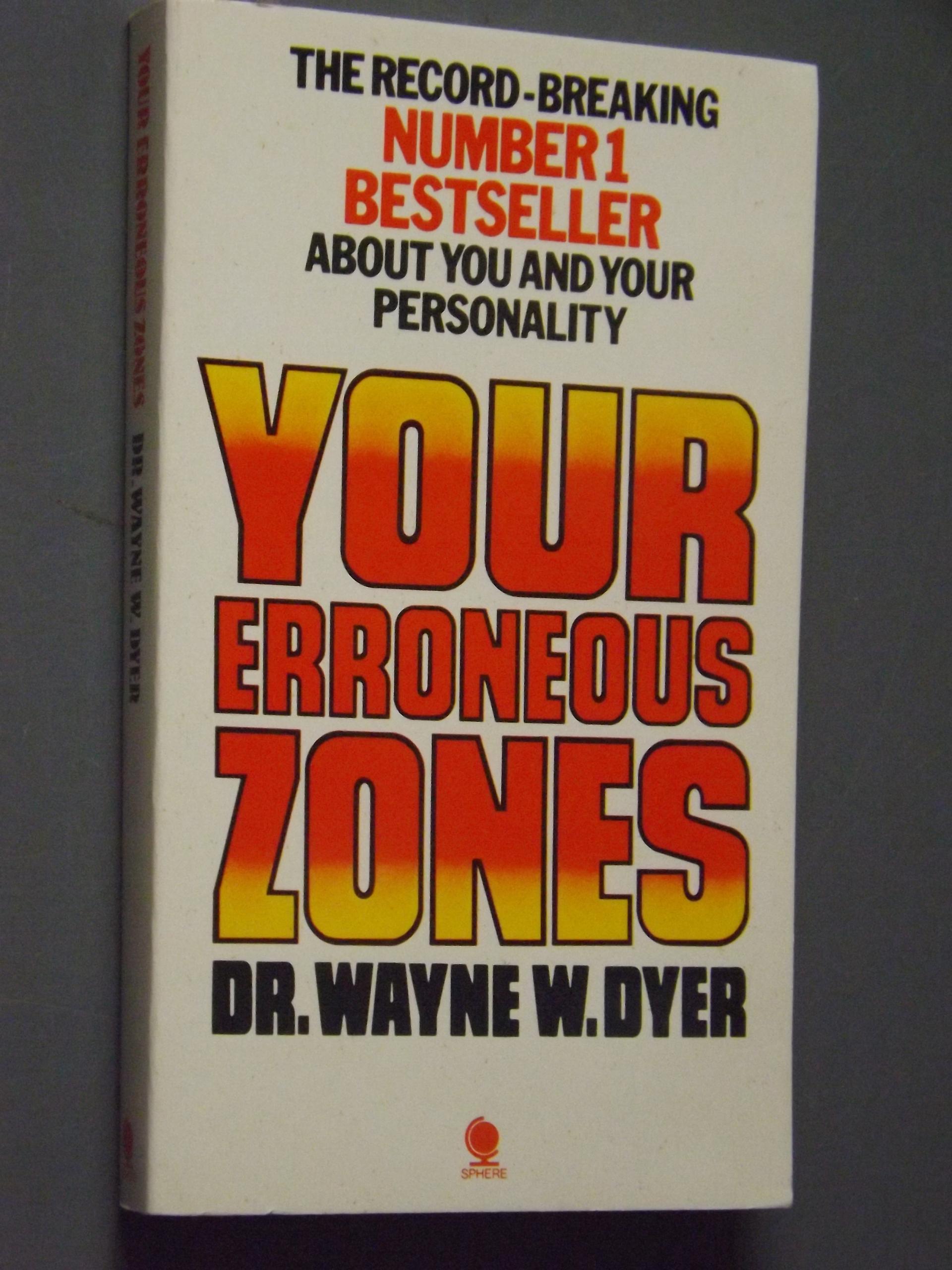
Wayne Dyer wasn't always the "Father of Motivation" with the PBS specials and the soft, spiritual sweaters. Back in 1976, he was a scrappy professor from St. John’s University who decided to pack his station wagon with copies of his own book. He drove across the country, hit every radio station that would let him in, and basically birthed the modern self-help industry through sheer grit. That book was Your Erroneous Zones. It didn’t just sell; it exploded. We’re talking over 35 million copies sold, making it one of the most successful books in publishing history.
Honestly, the title alone makes people do a double-take. No, it’s not about anatomy. It’s about the psychological "zones" where we trap ourselves in self-defeating behaviors. Dyer’s premise was simple but, at the time, felt like a lightning bolt: you are responsible for how you feel. Not your boss. Not your ex. Not the economy. You.
The Idea That Irritated the Experts
While the public loved it, the academic world wasn't always so kind. Albert Ellis, the father of Rational Emotive Behavior Therapy (REBT), famously accused Dyer of lifting his ideas without enough credit. If you look at the core of Your Erroneous Zones, it’s basically REBT dressed up in conversational, "everyman" language.
Dyer took dense clinical concepts about cognitive restructuring and turned them into something you could understand while eating your cereal. He argued that "neurotic" behavior isn't some fixed personality trait. Instead, it’s a choice. You choose to be miserable because, on some level, it’s safer than being happy.
Take the "Justice Trap." We spend so much energy whining about how life isn't fair. Dyer basically said: "Yeah, it’s not fair. So what?" He argued that using "it’s not fair" as an excuse for your own unhappiness is a classic erroneous zone. It’s a way to avoid taking action. If the world is broken, you don't have to fix yourself, right? Wrong.
Why Guilt and Worry are Literally Useless
Dyer dedicated a huge chunk of the book to what he called the "useless emotions."
Guilt. Worry.
That’s it. Those are the big two. He didn’t just say they were bad; he said they were functionally zero-value. Guilt is a way of being immobilized in the present because of something that happened in the past. Worry is being immobilized in the present because of something that might happen in the future.
Think about that for a second. If you’re feeling guilty about a mistake you made five years ago, does that guilt change the mistake? Nope. Does it make you a better person today? Usually not—it just makes you a depressed person today. Dyer’s advice was to replace guilt with "learning from the past" and move on.
Worry is the same brand of nonsense. You can spend twelve hours a day worrying about a stock market crash, but your worry doesn't affect the market. It only affects your blood pressure. Dyer famously asked, "How long are you going to be dead?" It’s a grim question, but it’s meant to shake you out of the small-mindedness of these "zones."
Breaking the Approval-Seeking Habit
Most of us are junkies for approval. We don't even realize we're doing it. We check our phones for likes, we adjust our opinions to fit the room, and we feel a physical pang when someone doesn't like us.
In Your Erroneous Zones, Dyer calls this out as a major barrier to living an authentic life. He wasn't saying you should be a jerk. He was saying that if your self-worth depends on someone else's opinion of you, you’ve handed them the remote control to your happiness.
He suggested some pretty radical (for the 70s) exercises. Like intentionally doing something slightly "weird" just to see that the world doesn't end when people look at you funny. The goal was to build "inner-directed" strength.
The "I'm Just This Way" Excuse
We love our labels. "I'm shy." "I'm bad at math." "I'm a procrastinator."
Dyer hated these labels. He called them "the I-ams." To him, these were just convenient ways to avoid growth. If you say "I'm shy," you’ve given yourself a free pass to never talk to a stranger. You’ve turned a behavior into an identity.
The book pushes you to look at the "neurotic dividends"—the little rewards you get for staying in your erroneous zones. What do you get out of being a procrastinator? Well, you get to avoid the fear of being judged on your best work. If you wait until the last minute and do a mediocre job, you can always say, "I just didn't have enough time." It protects your ego. It’s a clever, self-sabotaging trick.
Is the Advice Still Relevant in 2026?
It’s easy to look back at a book from 1976 and think it’s outdated. The cover of the original edition has Dyer with a very period-appropriate mustache and a look that screams "disco era." But the psychology is remarkably durable.
The world has changed, but human brains haven't. We still struggle with the same loops of anxiety and self-doubt. In fact, with social media, the "approval-seeking" zone is more dangerous than ever.
How to Actually Apply This Today
You don't need to go on a spiritual retreat to start fixing your erroneous zones. It’s about small, annoying shifts in your daily monologue.
- Catch the "I-ams." Every time you say "I'm just not the type of person who...", stop. Realize that's a choice, not a DNA sequence.
- Audit your guilt. If you're dwelling on a past screw-up, ask yourself: "Is this feeling helping me do better right now?" If the answer is no, visualize yourself literally setting that thought down and walking away.
- The "Who Cares?" Test. When you're worried about someone's opinion, ask: "In five years, will this person's opinion affect my ability to breathe, eat, or love?" Usually, it's a no.
- Kill the Justice Trap. Stop waiting for life to be fair before you decide to be happy. Take the world as it is, not as you think it "should" be.
Dyer’s work eventually shifted toward more "woo-woo" spiritual topics in his later years, but Your Erroneous Zones remains his most grounded, practical contribution to the world. It’s a book for people who are tired of their own excuses. It's not about being perfect; it's about being in charge.
Moving Beyond Your Zones
If you’re looking to dive deeper into this, the best next step is to pick a single "I-am" label you’ve been carrying around and intentionally do something that contradicts it this week. If you "aren't a morning person," get up at 6:00 AM once just to prove you can. If you "can't speak in public," ask one question in your next meeting. Prove to your brain that these "zones" are just invisible fences you can walk right through.