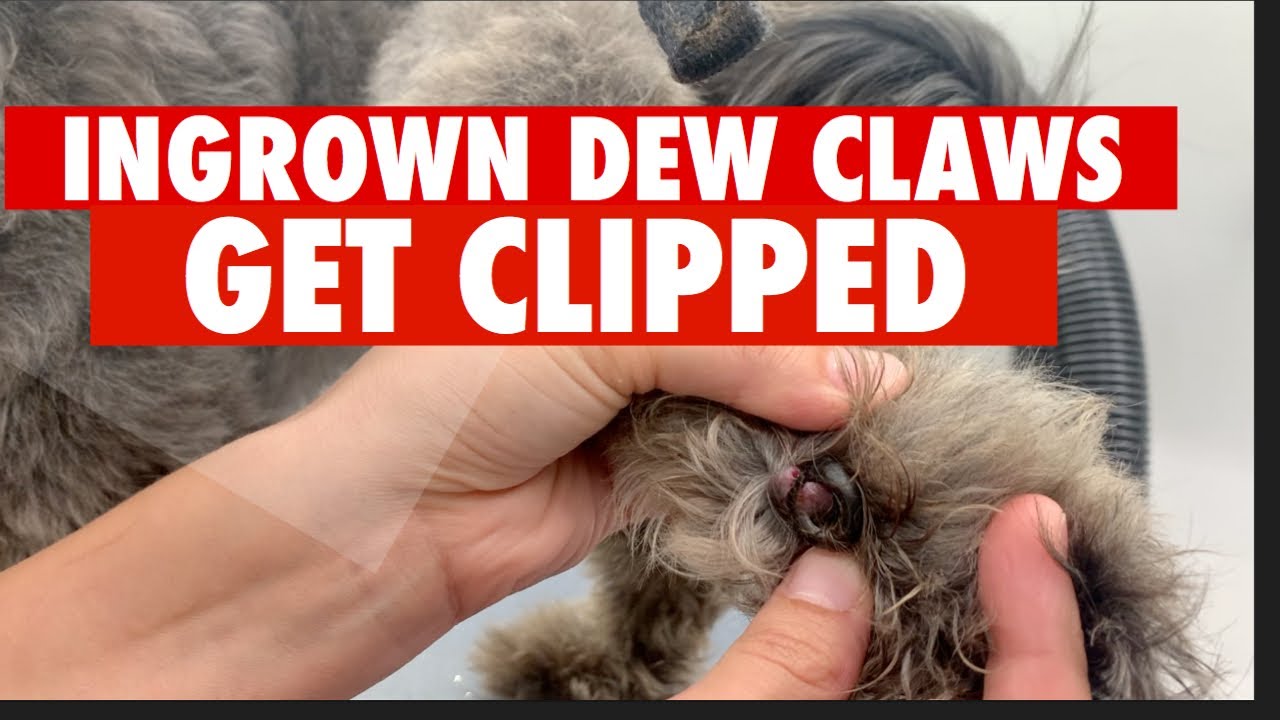
You’re sitting on the couch, your dog is snoozing at your feet, and suddenly you hear that rhythmic, frantic licking. You pull the paw up to look and there it is—a jagged, nasty-looking split right down the middle of the thumb-like nail on the side of the leg. It looks painful. It probably is. A dog split dew claw is one of those minor medical dramas that can quickly spiral into a bloody mess if you don't handle it right away.
I've seen owners panic because these things bleed like crazy. The dew claw is basically a vestigial thumb, and because it sits higher up on the leg, it catches on everything—carpet fibers, upholstery, thick brush during a hike, or even just a rough patch of grass. Unlike the regular nails that get worn down by pavement, the dew claw just grows and grows in a curve until it snaps.
Why a Dog Split Dew Claw is Different From a Broken Human Nail
When we break a nail, it’s annoying. When a dog splits a dew claw, it often involves the "quick." If you aren't familiar, the quick is the living center of the nail containing blood vessels and nerves. It’s basically an extension of the bone. When a split reaches that pink tissue, your dog isn't just "uncomfortable"—they are in genuine pain.
Think about it this way. Imagine slamming your finger in a door until the nail cracks halfway down the bed. That's the level of sensitivity we're talking about here.
Most people think a dog split dew claw is just a grooming issue. It's not. Because the nail is attached to the digit by a strong bed of tissue, a vertical split can act like a wedge, prying the sensitive layers apart every time the dog walks or brushes against something. This is why you’ll see them limping or obsessively licking the area. Licking is the dog's way of trying to "clean" the wound, but their mouths are full of bacteria, which is a recipe for a nasty infection called paronychia.
The Anatomy of the Disaster
The nail isn't just a dead piece of keratin. It’s a complex structure. You have the ungual process (the bone), the dermis (the quick), and the epidermis (the hard outer shell). When the shell splits, the dermis is exposed to air, dirt, and saliva.
Dr. Jerry Klein, the Chief Veterinary Officer for the AKC, often points out that because the dew claw isn't weight-bearing, owners often forget to trim it. This is the root cause. Long nails catch on things. It's physics. A long lever (the nail) hooked into a loop (the carpet) creates enough torque to snap the keratin.
Assessing the Damage: How Bad Is It?
Not all splits are created equal. You need to look closely—use a flashlight if you have to—to see where the crack ends.
If the split is just at the very tip and hasn't reached the pink flesh, you're in luck. You can probably just trim it back. But if the split goes all the way up into the hair line, or if the nail is dangling at a weird 90-degree angle, you're looking at a vet visit.
Wait, is it bleeding? If there is blood, the quick is definitely involved. You’ll need to stop the bleeding before you can even see what’s going on. Use styptic powder (like Kwik Stop) or, if you’re in a pinch, cornstarch or flour. Pack it on there. Don't wipe it off. Just let it clot.
Sometimes the nail doesn't just split; it "shells." This is when the hard outer layer peels off, leaving the fleshy quick completely exposed. It looks like a raw, red "mini-hot dog" sticking out of the paw. This is incredibly painful. If you see this, don't try to "fix" it at home. Wrap it loosely in a clean bandage and head to the clinic.
The Infection Risk Nobody Mentions
I’ve talked to many frustrated pet parents who "fixed" the nail at home only to have the dog's toe swell up like a grape three days later. That’s because bacteria got trapped under the remaining nail shard. If the toe feels hot to the touch or if you see pus—which often looks like a yellowish discharge—you’re dealing with an infection. At that point, simple trimming won't work; you’ll need antibiotics like Cephalexin or Clavamox, which only a vet can prescribe.
Fixing a Dog Split Dew Claw at Home (The "Safe" Way)
If the split is minor and the dog is letting you touch it, you can try a DIY fix. But honestly? Be careful. A pained dog, even the sweetest Golden Retriever, might nip if you squeeze a raw nerve.
- Restrain properly. Have someone hold the dog’s head and feed them peanut butter or high-value treats.
- Clean it. Use a diluted povidone-iodine solution (it should look like weak tea) or just warm soapy water.
- The Clip. You need sharp, high-quality bypass clippers. Don't use the "guillotine" style ones for a split nail because they crush the nail before they cut it, which can widen the split. You want to clip the nail just above the split if possible.
- File it down. Use an emery board to smooth any jagged edges so it doesn't catch on the bandage.
- Bandage. Use a non-stick pad, some gauze, and then a wrap like VetWrap. Crucial rule: Never wrap too tight. You should be able to fit two fingers under the bandage. If the paw starts to swell above the wrap, it's too tight and you're cutting off circulation.
When to Throw in the Towel and See a Vet
I get it. Vet bills are expensive. But trying to "pull" a deeply split nail at home is often traumatic for the dog.
Vets have the good stuff. They can use a local anesthetic (a nerve block) so the dog doesn't feel a thing. They usually "debride" the nail, which is just a fancy way of saying they cut away the damaged parts so new, healthy nail can grow back.
Usually, the cost for a dog split dew claw repair ranges from $100 to $300 depending on whether they need sedation. If your dog is particularly wiggly or aggressive when their paws are touched, sedation is a must for everyone's safety.
Surprising Fact: Some Breeds Are Just Cursed
Ever notice how some dogs have "floppy" dew claws? This is common in breeds like Great Pyrenees or Briards, who often have double dew claws on their hind legs. Because these aren't always firmly attached to the bone by a joint, they dangle. Dangle means snag. Snag means split.
If your dog is constantly suffering from a dog split dew claw, some vets recommend surgical removal (dew claw ablation). This is usually done during a spay or neuter, but it can be done as a standalone procedure if the injury is chronic. It’s controversial for some, but for a dog that's constantly ripping their nails off in the woods, it can be a huge relief.
Preventing the Next Split
Prevention is boring but it works. The most effective way to avoid a dog split dew claw is a strict trimming schedule.
Keep those nails short. If you can hear them clicking on the floor, they’re too long. For the dew claw specifically, since it doesn't touch the ground, check it every two weeks.
Also, consider the environment. If you’ve got a high-energy dog that loves sprinting through thickets, look into "dog boots" or "leg wraps." They look ridiculous, yeah, but they save you a $200 vet trip. Another trick is using a Dremel or nail grinder instead of clippers. Grinders cauterize as they go and are less likely to cause the nail to shatter or split further if there’s already a micro-fracture in the keratin.
Diet and Nail Strength
Sometimes, a dog split dew claw happens because the nail quality is just poor. Brittle nails can be a sign of a zinc deficiency or a lack of Omega-3 fatty acids.
Adding a fish oil supplement or a bit of plain cooked egg to their diet can help strengthen the keratin over time. It won't fix a split today, but in six months, those nails will be much tougher.
Actionable Next Steps for You and Your Dog
If you’re staring at a split nail right now, don't just wait for it to "fall off." It won't. It will just catch on your rug and rip further.
- Step 1: Stop the bleeding immediately using cornstarch or styptic powder. Pressure is your friend; hold it for at least 5 minutes.
- Step 2: Assess the depth. If the crack enters the skin or the dog yelps when you move the nail, stop. Go to the vet.
- Step 3: If it's a clean break near the tip, clip it with sharp bypass trimmers.
- Step 4: Disinfect with an antiseptic (no alcohol or hydrogen peroxide, as these damage the tissue and sting like crazy).
- Step 5: Keep it covered for 24-48 hours to prevent the dog from licking it into an infection.
- Step 6: Monitor for redness, swelling, or a foul smell over the next week.
Keeping a small "paw kit" in your car or hiking bag with some VetWrap and styptic powder is the best way to handle a dog split dew claw before it becomes a bloody mess in the backseat. Taking care of it quickly means your dog gets back to being a dog faster, and you avoid the stress of an emergency clinic visit on a Saturday night.



