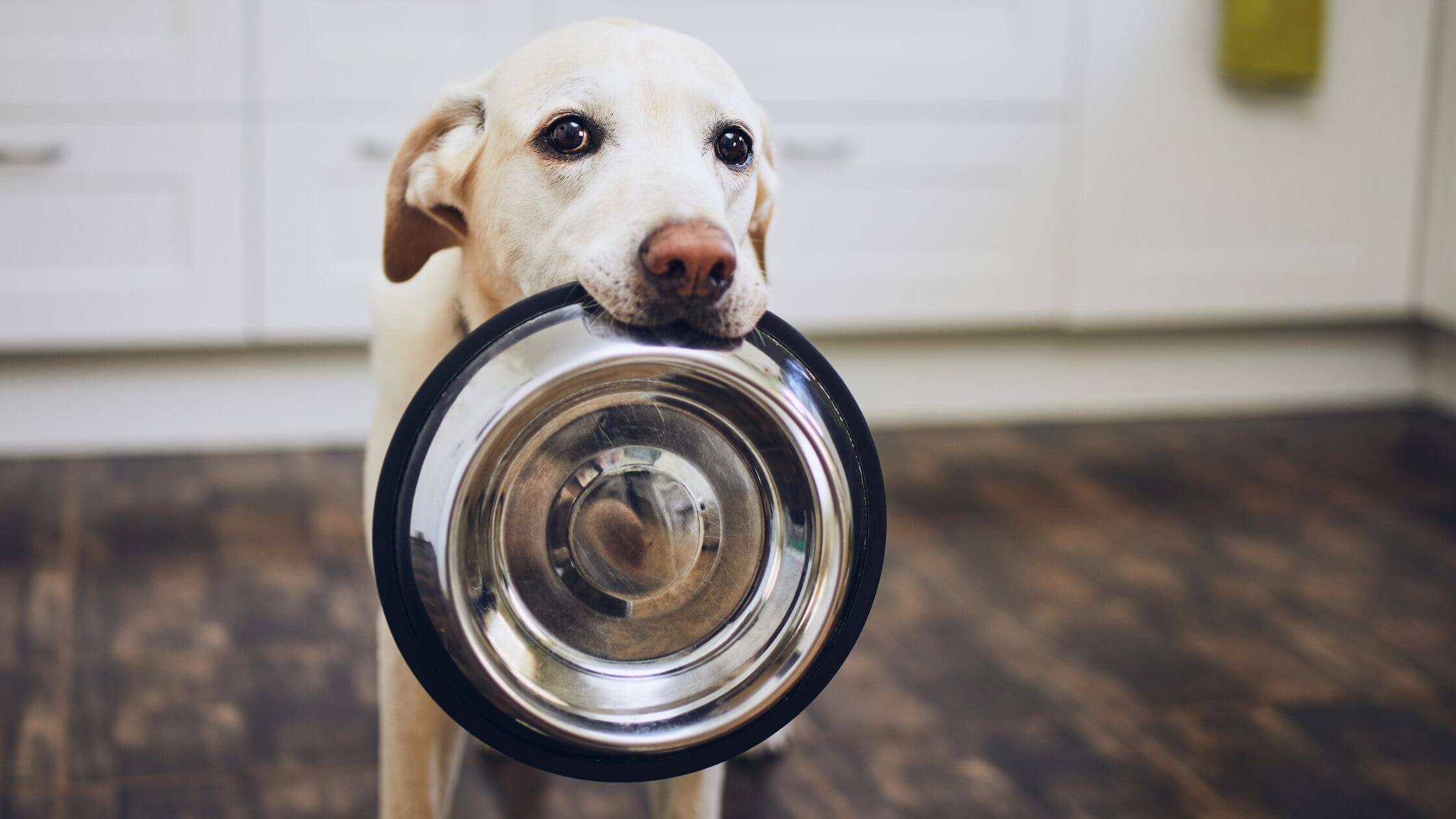
Ever watched a dog with food bowl and thought, "Man, I wish I enjoyed salad that much"? It’s a classic image. The wagging tail, the frantic sniffing, the clatter of metal on tile. But honestly, beneath that cute surface, there is a massive amount of biology and behavioral psychology at play that most owners completely ignore. We treat the bowl like a static object—a piece of kitchenware—when it’s actually the center of your dog’s universe.
Feed them. They eat. Simple, right? Not really.
The way your dog interacts with their bowl can tell you if they are stressed, if they have a hidden dental abscess, or if their joints are starting to fail. It’s a diagnostic tool disguised as a plastic dish. You’ve probably seen your dog nudge the bowl across the floor or maybe they take a mouthful of kibble, walk to the rug, spit it out, and eat it there. Why? Because the bowl itself might be the problem.
The Ergonomics of the Dog With Food Bowl
Standard floor bowls are actually kinda terrible for certain breeds. Imagine eating your dinner off the floor while standing on all fours. If you’re a Great Dane or a Greyhound, that’s a long way down. This isn't just about comfort. Dr. Jerry Klein, the Chief Veterinary Officer for the AKC, has often pointed out that the physical mechanics of eating matter.
For large, deep-chested breeds, the height of the dog with food bowl is a hot topic. There is a long-standing debate about whether elevated feeders help or hurt when it comes to Gastric Dilatation-Volvulus (GDV), or "bloat." For years, we thought raising the bowl was the cure. Then, some studies, like the one from Purdue University, suggested that elevated bowls might actually increase risk in certain high-risk dogs. It’s complicated. It’s not a one-size-fits-all situation.
Material Matters More Than You Think
Plastic is cheap. It’s also a haven for bacteria. If you notice your dog getting weird little bumps on their chin—canine acne—check the bowl. Those microscopic scratches in plastic hold onto oils and "biofilm" that no dishwasher can truly kill.
Switching to stainless steel or ceramic is the move here. Stainless is the gold standard for a reason. It’s non-porous. It doesn't leach chemicals. It doesn't harbor the gunk that makes your dog’s face break out. Plus, it doesn't have that weird chemical smell that might be putting a sensitive-nosed pup off their dinner.
Why Your Dog Is Acting Weird Around the Dish
Resource guarding is the big elephant in the room. You see a dog with food bowl and you want to pet them, or maybe take the bowl away to show "who's boss." Please, stop doing that.
Traditional "alpha" training suggested you should be able to take your dog’s food away at any time. Modern behavioral science, supported by experts like Patricia McConnell, tells us this actually creates the guarding behavior we’re trying to prevent. It makes the dog anxious. If someone kept reaching for your fries while you were eating, you’d eventually get snappy too.
The "Dumping" Phenomenon
Does your dog dump the food out? Some dogs hate the sound of their tags hitting the side of a metal bowl. It’s loud. It’s right next to their ears. So, they dump the food to eat in peace. Other times, it’s instinct. In the wild, canines often move their kill away from the main site to avoid competition. Your living room rug is just their "safe zone."
Mental Stimulation and the End of the "Lazy" Bowl
The traditional dog with food bowl is actually a bit of a missed opportunity for mental health. In the wild, dogs spend 80% of their waking hours looking for food. We give it to them in a silver platter, and they finish in 45 seconds. Then they're bored. And bored dogs chew your shoes.
Enter the "slow feeder" or the puzzle bowl.
- Slow Feeders: These have ridges and mazes that force the dog to use their tongue to get the kibble.
- Snuffle Mats: Not a bowl, but a fabric equivalent that mimics foraging.
- Interactive Dispensers: Think Kongs or Bob-a-Lots.
Honestly, if your dog is a "gulper," a slow feeder isn't just a toy—it's a life-saver. Gulping air along with food is a massive contributor to indigestion and that aforementioned bloat risk. If your dog finishes a meal before you can even put the bag back in the pantry, you need to change the delivery method.
Cleanliness: The Biofilm Secret
Go touch your dog’s empty bowl right now. Is it slimy? That’s biofilm. It’s a collection of bacteria, algae, and fungi bound together in a glue-like substance. It’s nasty.
According to a study by the National Sanitation Foundation (NSF), pet bowls are the fourth germiest place in most households. They are dirtier than toilet seats. Let that sink in. You should be washing that bowl every single day with hot, soapy water.
Special Considerations for Seniors
As dogs age, the dog with food bowl interaction changes. Arthritis makes bending down painful. If you see your senior dog shifting their weight or "dancing" while they eat, they’re likely in pain.
This is where elevation is almost always a good idea. Raising the bowl to chest height allows them to keep their spine neutral. It makes the swallow easier. It’s a small tweak that can drastically improve the quality of life for a 12-year-old Lab.
Also, consider the surface. A dog eating off a bowl on a slick hardwood floor is like a human trying to eat while ice skating. Their paws slide out. Put a yoga mat or a non-slip rug under the bowl. Stability equals confidence.
Practical Steps for a Better Mealtime
Don't just buy the first bowl you see at the grocery store. Think about your specific dog.
- Ditch the Plastic. Go stainless steel. It’s worth the extra five bucks.
- Size it Right. A tiny bowl for a big dog leads to mess. A huge bowl for a tiny dog can lead to overfeeding because the portion looks small.
- Location, Location. Put the bowl in a low-traffic area. Nobody wants to eat while people are tripping over them.
- Wash it Daily. If you wouldn't eat off it, don't make them do it.
- Observe. Spend one minute once a week just watching them eat. Look for pauses, head tilting, or reluctance. It’s the easiest health check you’ll ever do.
Feeding your dog isn't just a chore. It's the most important interaction you have with them every day. The bowl is the tool that facilitates that bond. Make sure it's the right one.
If you suspect your dog’s eating habits have changed suddenly—like they’re suddenly scared of the bowl or leaving half their food—don’t wait. Changes in appetite or "bowl-side manner" are often the first signs of kidney issues or dental pain. Get them to a vet. But in the meantime, take a look at that dish. It might be time for an upgrade.