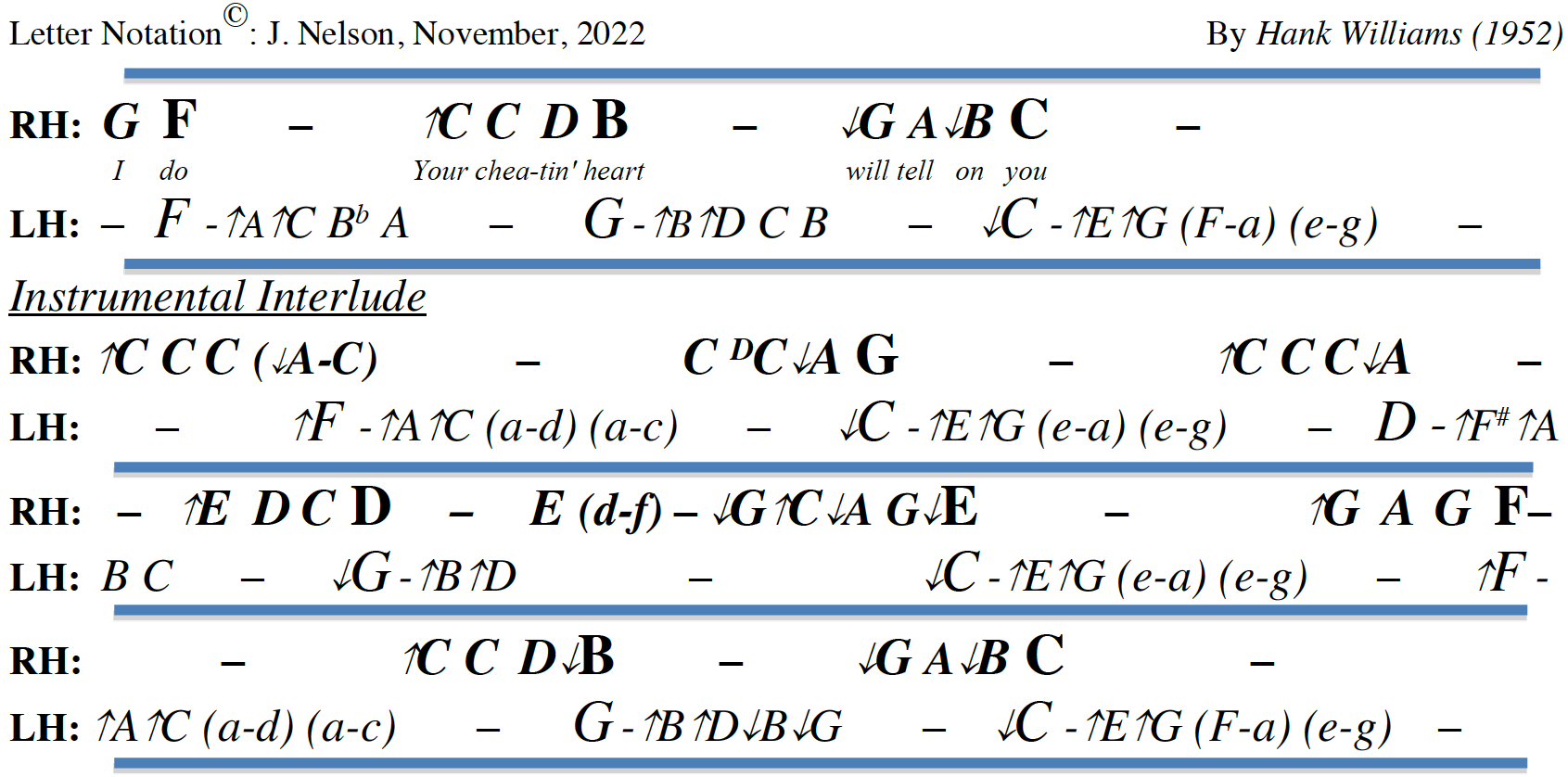
Hank Williams didn't just write songs; he bled them onto the floor of the recording studio. When you listen to Your Cheatin' Heart, you aren't just hearing a country standard. You're hearing a prophecy. It’s arguably the most famous song in the history of the genre, a haunting, mid-tempo piece of poetry that feels as raw today as it did when it hit the airwaves in 1953.
It’s honest. It’s brutal.
The song was recorded on September 23, 1952, at Castle Studio in Nashville. Hank was dead three months later. That timing matters. It adds a layer of ghostly weight to every line. When he tells the subject of the song that they’ll "toss around and call my name," he isn’t just talking about a breakup. He’s talking about a legacy that refuses to be ignored.
Most people know the tune, but few realize it was essentially a final word on a volatile marriage that defined his life. Hank was a man who lived fast, died young, and left a body of work that makes most modern "heartbreak" songs look like nursery rhymes.
The Story Behind Your Cheatin' Heart
To understand the song, you have to understand Audrey Mae Sheppard. She was Hank’s first wife, his manager for a time, and the primary muse for his most miserable lyrics. Their relationship was a chaotic cycle of fights, divorces, and booze-soaked reconciliations.
The legend goes that Hank was driving from Nashville to Alexander City, Alabama, with his second wife, Billie Jean Jones. He was thinking about Audrey. He reportedly started describing Audrey's "cheatin' heart" and dictated the lyrics right there in the car. It’s a classic image: the tortured artist staring out the window at the passing pine trees, turning his bitterness into gold.
Billie Jean later claimed she helped him with the lyrics, but the sentiment is pure Hank. It’s a song about the inevitability of guilt. He isn't yelling. He isn't even really angry. He’s just telling her exactly how it’s going to go. He’s saying that the sleep she loses won’t be because of him—it’ll be because of what she did. That’s a sophisticated psychological play for a guy who never finished high school.
Why the melody feels so "right"
Musically, the song is deceptively simple. It relies on a standard I-IV-V chord progression, but the way Hank hits those blue notes—the slight cracks in his voice—is where the magic happens. The steel guitar intro, played by Don Helms, is iconic. That sliding, mournful sound defines the "Honky Tonk" era. It mimics a human cry.
Helms once said that Hank told him exactly how to play: keep it simple and make it hurt.
The Recording Session That Changed Everything
When Hank walked into the studio that September day, he wasn't in great shape. His back—ravaged by spina bifida occulta—was killing him. He was leaning on painkillers and alcohol just to stay upright. Yet, he recorded four songs in that session: "Kaw-Liga," "Take These Chains from My Heart," "I Could Never Be Ashamed of You," and Your Cheatin' Heart.
Any one of those would make a career. Hank did all four in a single afternoon.
The musicians in the room included the Drifting Cowboys, his loyal band. They knew his cues. They knew his timing. There was a telepathy there. If you listen closely to the original mono recording, you can hear the room. It sounds tight and intimate, like you're sitting on a stool three feet away from the microphone.
The Tragic Release
Hank died on New Year's Day, 1953, in the back of his Cadillac. He was 29.
The song was released later that month. MGM Records knew they had a hit, but they couldn't have predicted it would become a cultural phenomenon. It spent weeks at the top of the charts. For a public mourning the loss of their biggest star, Your Cheatin' Heart felt like a message from the grave. It wasn't just a song anymore; it was a testament.
It’s interesting to look at the charts from that era. You had pop singers like Patti Page and Perry Como doing these very polished, polite songs. Then comes Hank, sounding like he’s about to fall apart, singing about "weeping like a willow tree." It was a jolt to the system. It brought a level of "high lonesome" reality to the mainstream that hadn't been there before.
The Covers: From Ray Charles to Elvis
A song this good doesn't stay in one genre.
- Ray Charles: In 1962, Ray Charles reinvented the song for his Modern Sounds in Country and Western Music album. He stripped away the twang and replaced it with a soulful, orchestral swell. It proved that the song’s bones were strong enough to support any style.
- Patsy Cline: Her version is polished and powerful, showing the perspective of a woman who has been wronged but remains dignified.
- Elvis Presley: The King recorded it in 1958. It’s good, but it lacks the desperation of the original. Elvis sounds like he’s singing a great song; Hank sounds like he’s living a nightmare.
- Fats Domino: He gave it a New Orleans R&B swing that somehow makes the lyrics even more biting.
Each cover adds a layer to the song’s history, but they all eventually lead the listener back to the 1952 original. You can't out-Hank Hank.
The Anatomy of the Lyrics
"Your cheatin' heart will make you weep / You'll cry and cry and try to sleep."
The rhyme scheme is basic. It’s AABB. But look at the word choices. "Weep" is a heavy word. It implies a deep, soul-shaking sorrow, not just a few tears. He uses the word "heart" as the primary antagonist. The heart is a separate entity that betrays the person it belongs to.
There's a subtle cruelty in the bridge: "When tears come down like falling rain / You'll toss around and call my name." He’s predicting her misery with a sort of calm satisfaction. It’s the ultimate "I told you so."
Why We Are Still Talking About It in 2026
We live in an age of over-produced, digital perfection. You can tune a voice until it sounds like a flute. You can quantize a drum beat until it’s perfectly on the grid. Your Cheatin' Heart is the opposite of that. It’s flawed. It’s human.
The song captures a universal truth: guilt is a slow burn. Everyone has felt that pang of regret. Everyone has been on one side of a "cheatin' heart"—either the one breaking or the one being broken. Hank tapped into a frequency that doesn't age.
Common Misconceptions
Some people think the song was a massive pop hit immediately. While it did well, its legendary status grew over decades. Others believe it was written about his daughter, Jett Williams, which is factually impossible given the timeline and the context of the lyrics. It was always about Audrey. It was always about the war between two people who loved each other but couldn't live together.
How to Truly Appreciate the Track
If you want to understand why this song is the "North Star" of country music, do this:
- Find a Mono Version: Avoid the "reprocessed for stereo" versions from the 60s. They add fake reverb that kills the intimacy.
- Listen to the Bass: The walking bass line provides a steady heartbeat that contrasts with the emotional instability of the vocals.
- Read the Lyrics Alone: Read them as a poem. Without the music, they hold up as a stark look at the human conscience.
Actionable Steps for Music Fans and Historians
If you're looking to dig deeper into the world of Hank Williams and the impact of this specific era of music, here is how you can practically engage with the history:
Visit the Hank Williams Museum in Montgomery, Alabama. You can see the 1952 Cadillac he died in. Seeing the physical space where he spent his final hours makes the lyrics of Your Cheatin' Heart feel incredibly immediate. It moves the song from "historical artifact" to "human story."
Study the Don Helms Steel Guitar Style. If you’re a musician, learn the intro. It’s a masterclass in using an instrument to set a mood. Helms used a non-pedal steel, which required incredible precision. Modern players often overlook how much work went into that "simple" sound.
Explore the "Complete Mother's Best" Recordings. To understand the man behind the song, listen to his radio shows. You’ll hear him joke around, talk to the audience, and sing hymns. It provides the light that makes the darkness of Your Cheatin' Heart even more profound.
Document the Influence. Look at modern songwriters like Jason Isbell or Chris Stapleton. Listen for the "Hank-isms" in their writing—the directness, the lack of flowery metaphors, and the focus on the internal struggle. Recognizing these threads helps you appreciate how the 1952 session at Castle Studio basically mapped out the next 70 years of American songwriting.
Hank Williams didn't have a long life, but he had a loud one. Your Cheatin' Heart remains the loudest part of his legacy. It’s a warning, a curse, and a masterpiece all wrapped into two minutes and forty-two seconds. You don't just listen to it; you endure it. And that is exactly what Hank intended.



