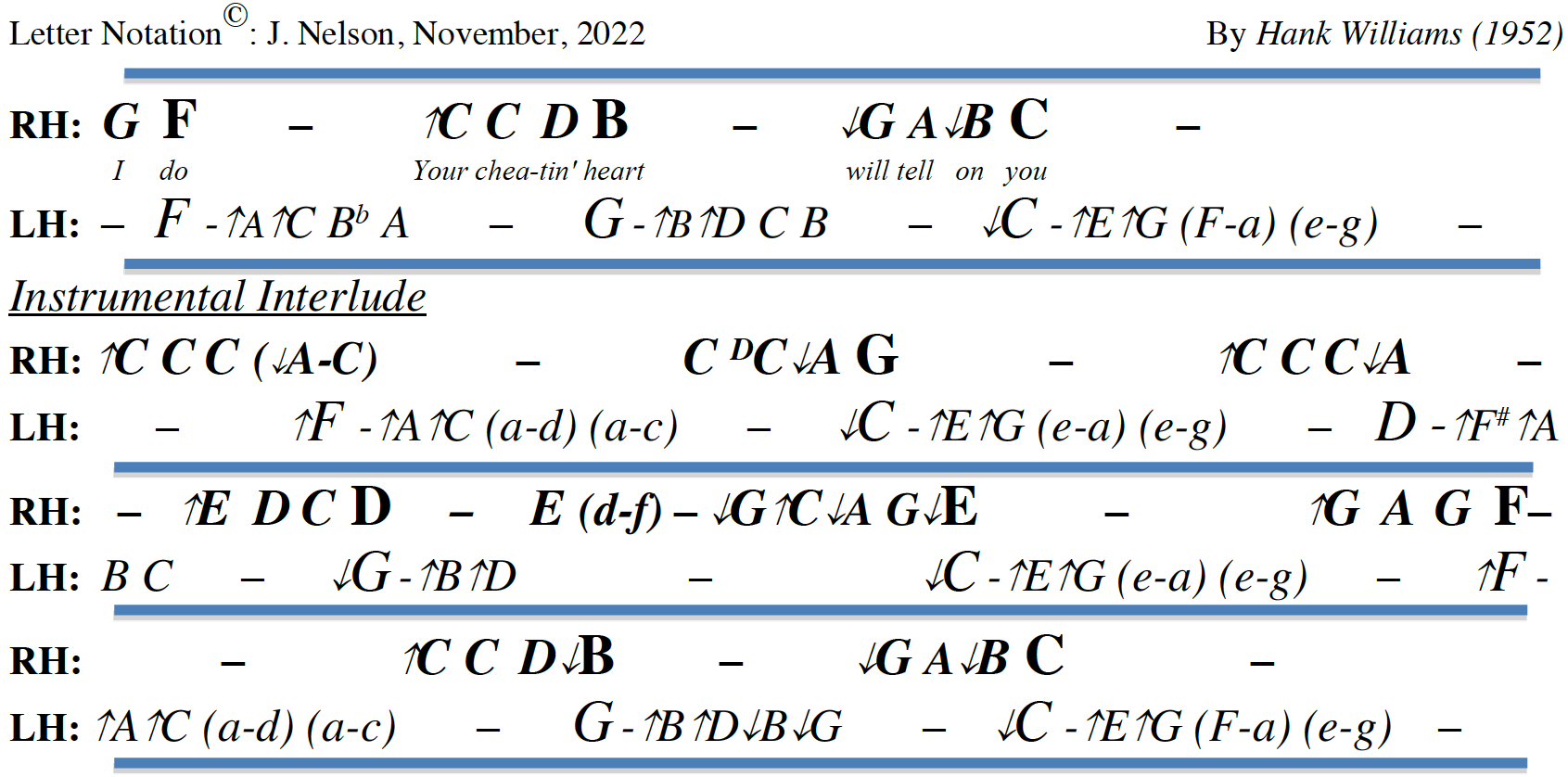
Hank Williams was dying, and he knew it. He was twenty-nine years old, riding in the back of a Cadillac through a snowstorm, and basically coughing up the last of his legendary spirit. But just a few months before that final ride, he dictated a song to his fiancé, Billie Jean Jones, that would define country music for the next century. Your Cheatin Heart by Hank Williams isn't just a song. It is a haunting, vengeful, and painfully honest curse laid over a simple three-chord melody.
It's the ultimate "I told you so."
Most people think of country music as a genre of trucks and beer, but Hank was different. He wrote about the soul. He wrote about the kind of guilt that keeps you awake at 3:00 AM when the house is too quiet. When he cut this track in September 1952 at Castle Recording Studio in Nashville, he wasn't just making a record. He was documenting the collapse of his marriage to Audrey Sheppard. Honestly, the backstory is as messy as any modern tabloid headline.
Why Your Cheatin Heart Still Hurts to Listen To
There is a specific kind of "lonesome" that only Hank Williams could capture. You can hear it in the way his voice cracks—that "tear in his voice" that every Nashville singer has tried to copy since 1953.
The lyrics are prophetic. He tells the subject (Audrey, though she’d never admit it was about her) that she will toss and turn and cry the way he did. It’s mean. It’s visceral. It’s perfect.
The Nashville Sound Before It Got Shiny
Back in the early 50s, recording was a one-take business. You had the Drifting Cowboys—Hank's band—and you had a microphone. There was no Auto-Tune. If you listen closely to the original MGM recording of Your Cheatin Heart by Hank Williams, you can hear the raw acoustics of the room. Jerry Rivers’ fiddle isn’t just playing a melody; it’s weeping in the background. Don Helms’ steel guitar provides those signature sliding notes that feel like a physical weight on your chest.
Some critics, like the legendary music historian Colin Escott, argue that this song was the pinnacle of the "honky-tonk" era. It moved away from the upbeat "Hey, Good Lookin'" vibe and dove headfirst into the "Hillbilly Shakespeare" territory that earned Hank his nickname. He used simple words. "You’ll walk the floor the way I do." It’s a line anyone can understand, whether they’re a billionaire or a guy working the coal mines in Alabama.
The Weird, Tragic Timing of the Release
Life is cruel, and the music industry is crueler. Hank recorded the song in September '52. He died on New Year's Day, 1953.
The song was released later that month.
Imagine being a fan in 1953. You hear on the radio that the biggest star in the world died in the back of a car on his way to a gig in Canton, Ohio. Then, two weeks later, you hear his voice coming through the speakers singing about weeping and craving love that isn't there. It was ghostly. The song shot to number one on the Billboard Country & Western chart and stayed there for weeks. It basically became a national eulogy.
The Audrey vs. Billie Jean Drama
You can't talk about this song without talking about the women. Audrey Sheppard was the muse and the tormentor. Their marriage was a cycle of fights, infidelity, and booze. Billie Jean, who was with him at the end, claimed he dictated the lyrics to her while they were driving. Audrey, on the other hand, spent years claiming the song was her "legacy."
The reality? It doesn't matter who held the pen. The pain belonged to Hank.
- He was fired from the Grand Ole Opry for being a drunk.
- His back was failing him due to spina bifida occulta.
- He was losing his grip on his own career.
When he sings "Your cheatin' heart will tell on you," he might have been talking to himself as much as anyone else. He was a man who knew the cost of bad decisions.
Covers and the Legacy of a Masterpiece
Everyone has covered this. From Ray Charles to Patsy Cline to Elvis Presley. But most of them get it wrong.
Ray Charles did a soul version in 1962 that was brilliant, mostly because he understood that the song wasn't about country music—it was about blues. He stripped away the twang and added strings, proving the songwriting was bulletproof. However, many pop covers turn it into a lounge act. They lose the grit. They lose the smell of stale cigarettes and regret.
If you want to understand the influence of Your Cheatin Heart by Hank Williams, look at the Rock and Roll Hall of Fame. They listed it as one of the "Songs That Shaped Rock and Roll." Think about that. A hillbilly song from 1952 helped build the foundation for Elvis and The Beatles. It taught songwriters that you didn't have to be fancy; you just had to be real.
Fact-Checking the Myths
- Myth: Hank wrote it on his deathbed.
- Fact: He wrote it months before, though his health was in rapid decline.
- Myth: It was his last recording.
- Fact: He had one more session after the "Cheatin' Heart" date, but this was certainly his last great statement.
The song has been used in countless movies and commercials, which is kinda ironic given how dark the subject matter is. It’s become a piece of American wallpaper, something we all know without really knowing why.
How to Truly Appreciate the Track Today
If you really want to "get" this song, stop listening to it on tiny phone speakers while you're doing chores.
Wait until the sun goes down. Put on a pair of decent headphones. Find the original mono recording—not the "re-processed for stereo" versions that sound like they were recorded underwater. Listen for the way Hank drags out the word "toss." He makes it sound like a physical struggle.
Actionable Takeaways for Music Lovers
To get the most out of the Hank Williams catalog and this specific era of music, follow these steps:
- Listen to the "Mother Is Gone" recordings: These are the raw, acoustic demos Hank did at home. They show the skeletal structure of his songwriting before the studio musicians got a hold of them.
- Compare the 1952 original with Ray Charles’ 1962 version: This is a masterclass in how a great song can bridge the gap between genres and races during a time when America was deeply divided.
- Read "Hank Williams: The Biography" by Colin Escott: If you want the gritty details of the Castle Recording Studio sessions and the fallout of his death, this is the definitive source.
- Check out the lyrics of "I'm So Lonesome I Could Cry": If "Your Cheatin Heart" is the anger of a breakup, "Lonesome" is the depression. They are two sides of the same coin.
Understanding Your Cheatin Heart by Hank Williams is basically a rite of passage for anyone who cares about American songwriting. It’s a reminder that trends fade, production styles change, and "stars" come and go, but a perfectly written song about a universal human emotion is immortal. You don't need a music degree to feel what Hank felt. You just need to have had your heart broken at least once.
The song isn't just a piece of history; it’s a warning. And eighty years later, that warning still rings true every time the needle hits the groove. Give it a spin and pay attention to the silence between the notes. That's where the real story lives.



