You’re sitting there, staring at a blinking cursor. It’s 2:14 PM on a Tuesday. You’ve had three coffees, your "focus" playlist is looping, and yet, your mind is basically a screensaver. Why? Most people think it’s a lack of willpower. They think they just need to "grind harder" or find a better productivity app. Honestly, that’s total nonsense.
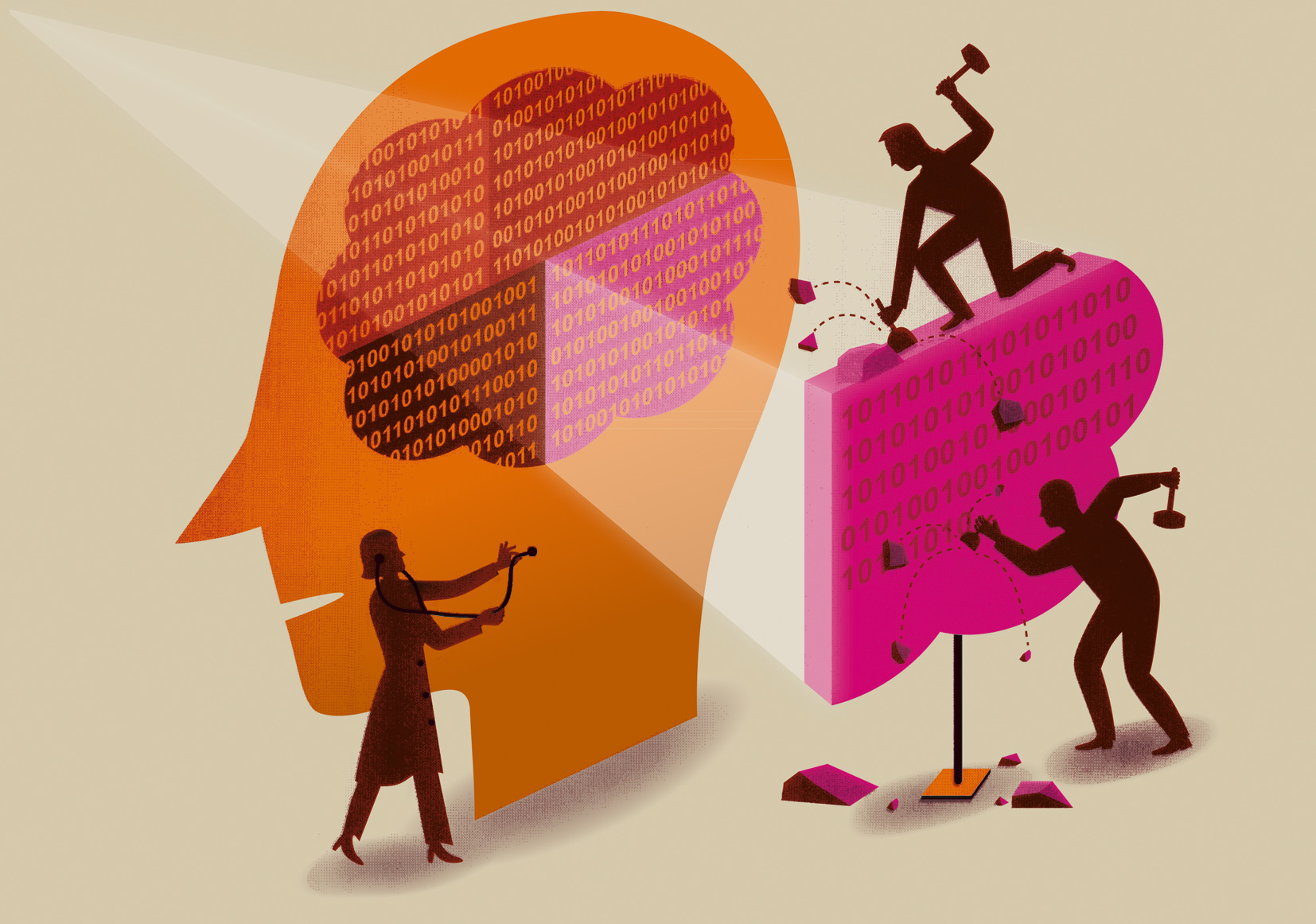
The reality is that your brain at work isn't a computer. It’s a biological organ with a very specific, very limited energy budget. When you understand the actual neurobiology of how your prefrontal cortex handles a Monday morning inbox, you realize that most of us are using our brains completely wrong. We treat our gray matter like an infinite resource, but it’s more like a phone battery that drains faster depending on which "apps" you leave open in the background.
The Prefrontal Cortex is a Goldfish
The prefrontal cortex (PFC) is the part of your brain sitting right behind your forehead. It’s the "Executive Suite." It handles decision-making, impulse control, and complex planning. It’s also incredibly fragile. David Rock, author of Your Brain at Work, points out that this area has remarkably high energy requirements but very limited capacity.
Think of your PFC as a small stage in a theater. Only a few actors (thoughts) can be on it at once. If you try to cram twenty actors onto that tiny stage, nobody can hear their lines, and the whole performance falls apart. This is why multitasking is a myth. You aren't actually doing two things at once; you’re just flickering your "stage lights" back and forth between two different plays so fast that you get a headache.
Every time you switch from a spreadsheet to a Slack notification, your brain has to "reload" the context of the first task. This costs metabolic energy. Specifically, it burns through glucose and oxygen. If you do this all morning, by 2:00 PM, your PFC is literally out of fuel. You’re not lazy. You’re just biologically spent.
Why Your To-Do List is Stressing You Out
Most people start their day by looking at a giant list of tasks.
Big mistake.
The human brain is wired to prioritize immediate threats over long-term rewards. This is thanks to the amygdala, your brain’s ancient alarm system. When you see a list of forty things you haven't done, your amygdala doesn't see "productivity opportunities." It sees a predator. It triggers a mild stress response, which actually inhibits the PFC. You become less capable of doing the very work you’re stressing about.
The Problem with Decision Fatigue
Ever notice how it’s harder to resist a donut at 4:00 PM than at 8:00 AM? That’s decision fatigue in action.
Research from practitioners like Roy Baumeister suggests that willpower is a finite resource. Every choice you make—what to wear, which email to answer first, whether to use a comma or a semicolon—chips away at that reserve. By the time the afternoon rolls around, your brain starts taking shortcuts. You get impulsive. You procrastinate. You spend forty-five minutes looking at vintage watches on eBay instead of finishing that report.
The Chemistry of a "Good" Workday
If you want to optimize your brain at work, you have to talk about dopamine. It’s not just the "pleasure" chemical; it’s the "anticipation and drive" chemical.
When you check off a small task, you get a tiny hit of dopamine. This feels good, so you want to do it again. This is why we love "easy" wins. But there's a dark side: "checking-loop" addiction. You spend all day answering emails because it feels productive—dopamine!—but you never actually do the deep, meaningful work that moves the needle.
- Norepinephrine: This is about alertness. Too little and you’re bored. Too much and you’re panicked.
- Acetylcholine: The "focus" chemical. It helps your brain focus on specific stimuli while ignoring the dog barking downstairs.
- GABA: This is your brain’s "brake" pedal. It helps calm down the firing neurons so you can actually think straight.
The sweet spot is often called "Flow," a term coined by Mihaly Csikszentmihalyi. It's that state where the challenge of the task perfectly matches your skill level. In Flow, your brain actually becomes more efficient, using less energy to achieve better results.
How to Stop Fighting Your Biology
Stop trying to be a "hustler" and start being a neuro-ergonomist.
First, do your hardest, most "brain-heavy" work first thing in the morning. Your PFC is at its freshest right after you wake up (and hopefully after you've had some protein). Save the mindless stuff—filling out expense reports, deleting spam, organizing your folders—for the afternoon slump.
Second, embrace the "Power Hour." Set a timer for 50 minutes. Close every tab. Put your phone in another room. Work on one thing. When the timer goes off, get up. Move your body. Your brain needs a literal change in blood flow to reset.
Third, watch your "arousal" levels. If you’re too relaxed, you won’t get anything done. If you’re too stressed, you’ll freeze. Use music to bridge the gap. Fast, upbeat music can bump up your norepinephrine if you're sluggish. Ambient, wordless sounds can help lower stress if your inbox is exploding.
The Myth of the Open Office
We have to talk about the environment. Open offices are objectively terrible for your brain at work.
Humans are evolutionarily tuned to pay attention to social cues and sudden noises. In an open office, your brain is constantly processing background conversations. "Is Susan talking about me?" "Why is Greg laughing so loud?" Even if you think you’re ignoring it, your brain is using energy to filter out that noise.
If you can, use noise-canceling headphones. Or, better yet, find a "cave." Your brain needs to feel safe and unobserved to enter deep focus. When you feel like people are watching you, a portion of your cognitive load is dedicated to "impression management," which leaves less room for actual thinking.
Actionable Next Steps for Brain Optimization
- Schedule your "Deep Work" blocks: Identify your peak alertness window (usually 2-4 hours after waking) and protect it like a hawk. No meetings. No Slack.
- The "Rule of Three": At the start of the day, choose only three things that must get done. This prevents the amygdala hijack caused by an overwhelming list.
- Visual Cues: Your brain loves visual simplicity. Clear the physical clutter off your desk. A messy desk is just more "visual noise" for your PFC to process.
- Strategic Breaks: A break isn't scrolling TikTok. That’s just more input for your brain to process. A real break is staring at a tree, walking around the block, or doing a five-minute breathing exercise.
- Manage Your "Mental Energy" Budget: Think of your day in terms of energy, not time. If you have a high-stakes meeting at 11:00 AM, don't spend 9:00 AM to 10:30 AM doing complex data analysis. You’ll be empty for the meeting.
Understanding your brain at work means accepting that you are a biological entity with limits. You can't "hack" your way out of needing sleep, glucose, and focus. But if you work with the rhythms of your prefrontal cortex instead of against them, you’ll find that you get more done in four hours than most people do in eight. Stop treating your mind like a machine and start treating it like the finely tuned, high-maintenance biological marvel it actually is.
/i.s3.glbimg.com/v1/AUTH_08fbf48bc0524877943fe86e43087e7a/internal_photos/bs/2025/H/e/ewwgKCQCSopdUJUwy6DA/imagem-2025-04-27-114802986.png)


