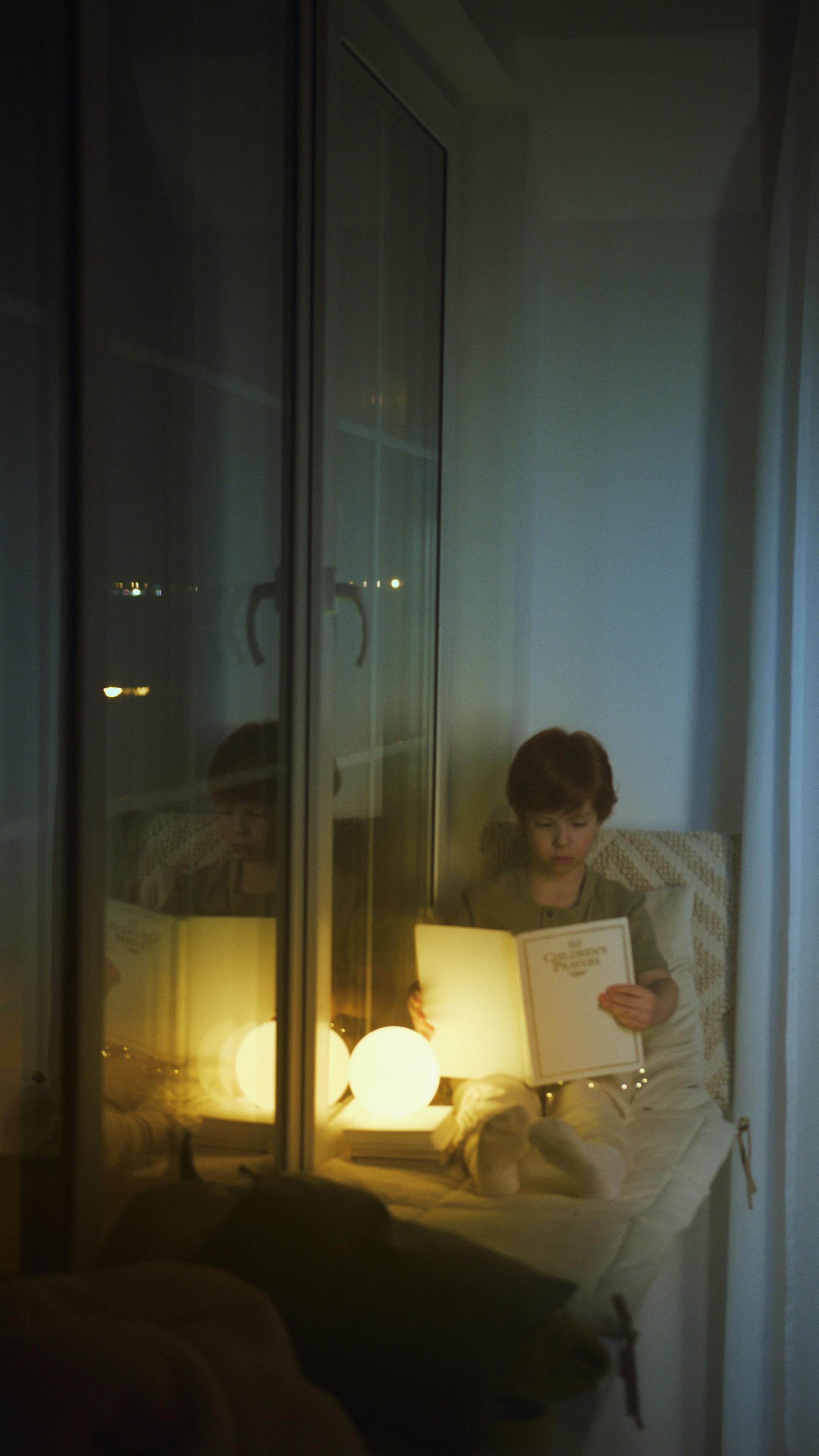
You’re lying there. It’s midnight, maybe 1:00 AM, and the room is sort of dark, but not really dark. There’s that annoying little red standby light on the TV. A sliver of streetlamp glow peeks through the curtain gap. Your phone screen just blinked because someone liked a photo you posted three years ago.
We’ve basically forgotten what real darkness feels like.
Most people think a bedroom in the dark is just a place where the lights are off. That's a mistake. True darkness is a biological requirement, not just a design choice or a vibe. When you mess with the light levels in your sleeping space, you aren't just "staying up late." You are actively sabotaging a massive hormonal cascade that keeps your brain from turning into mush.
The Biology of Pitch Black
Light is a drug.
Specifically, it’s a drug that tells your brain to stop producing melatonin. This isn't just some wellness-blog buzzword; it’s hard science. Your eyes have these things called intrinsically photosensitive retinal ganglion cells (ipRGCs). They don’t help you see the cat sitting on your chest; they detect blue light and signal the suprachiasmatic nucleus—your body's master clock.
When your bedroom in the dark isn't actually dark, these cells freak out. They tell your brain it’s still daytime. Even a tiny bit of light—we’re talking 5 to 10 lux, which is basically a dim nightlight—can suppress melatonin production by over 50%.
Dr. Charles Czeisler from Harvard Medical School has spent decades proving that artificial light is basically the primary reason we have a sleep epidemic. It’s not just about feeling tired. It’s about systemic inflammation. It’s about metabolic disruption. If you can see your hand in front of your face when you’re trying to sleep, your room isn’t dark enough. Period.
Why Your Phone is a Nightmare
We all do it. The "revenge bedtime procrastination" scroll.
The blue light emitted by smartphones is peak disruption. It mimics the short-wavelength light of the morning sun. By staring at it, you’re essentially shouting "WAKE UP" at your pineal gland. Honestly, it’s a miracle we sleep at all. Research published in PNAS showed that people who read on a light-emitting device before bed took longer to fall asleep, had less REM sleep, and were way more groggy the next morning compared to those reading a physical book.
Fixing the Environment (It’s Harder Than You Think)
You probably think your curtains are fine. They aren't.
Standard blinds let light bleed in from the sides. This creates "light pollution" within your own sanctuary. To get a true bedroom in the dark, you need to think like a mole.
- Blackout Curtains: Don't buy the cheap ones. You want heavy, thermal-lined drapes. If you can, install a wrap-around rod so the fabric hugs the wall.
- The Tape Trick: Take a roll of black electrical tape. Walk around your room. Every tiny LED—the humidifier, the power strip, the monitor—gets a piece of tape.
- The Door Gap: That light coming from the hallway? It’s ruining your deep sleep. Get a draft stopper or just shove a towel under there.
It sounds paranoid. It’s not. It’s optimization.
The Temperature Connection
Darkness and cold are best friends. In nature, when the sun goes down, the temperature drops. Our bodies are programmed to expect this. Your core temperature needs to dip by about 2 to 3 degrees Fahrenheit to initiate deep sleep.
If your bedroom in the dark is also 75 degrees, you’re fighting your own biology. Most sleep experts, including Dr. Matthew Walker, author of Why We Sleep, suggest a room temperature of around 65°F (18°C). It feels chilly when you first get in, but that’s the point. It signals to your nervous system that the day is over.
Total Darkness and Mental Health
There is a weird, almost spiritual component to a totally dark room.
When you remove visual stimuli, your brain finally stops processing the outside world. It’s a sensory deprivation tank for the masses. For people with anxiety, a bright room at night can be overstimulating. You see the pile of laundry. You see the dust on the nightstand. In the dark, those things vanish.
A study from Kenji Obayashi at Nara Medical University found that even low-level light exposure at night was linked to increased symptoms of depression in elderly participants. Light messes with your circadian rhythm, which in turn messes with your serotonin. It’s all connected. If you want to fix your mood, start by fixing your shadows.
Common Misconceptions About Nighttime Light
Some people say they "need" a nightlight.
Unless you are five years old or have a legitimate medical condition that requires navigation at 3 AM, you don't. If you must have light for safety, use a dim red bulb. Red light has a much longer wavelength and is the least likely to suppress melatonin.
Another myth: "I can sleep anywhere."
Sure, you can pass out on a bright plane or in a lit living room. But "passing out" isn't the same as high-quality sleep architecture. You’re missing out on the restorative stages of N3 (deep sleep) and REM. You’re waking up with a "sleep debt" that coffee can’t actually pay off. You’re just masking the fatigue with caffeine-induced adrenaline.
The Impact on Weight Loss
This is the one that usually gets people to listen.
A study published in JAMA Internal Medicine followed almost 44,000 women and found that those who slept with a television or light on in the room were 17% more likely to gain 11 pounds or more over five years.
Light exposure at night disrupts the hormones ghrelin and leptin. These are the "I'm hungry" and "I'm full" signals. When you don't have a proper bedroom in the dark, you wake up craving sugar and carbs. Your body thinks it needs quick energy because it didn't get the restorative rest it expected. You aren't lazy; you’re just poorly illuminated.
Creating Your Cave: Actionable Steps
Stop treating sleep like an afterthought. It's the foundation of everything else you do. If you want to be better at your job, a better partner, or just less of a jerk in traffic, you need to embrace the void.
Step 1: The 90-Minute Rule. Put the phone away 90 minutes before your head hits the pillow. If you can't do that, at least turn on the "Night Shift" or "Blue Light Filter" and drop the brightness to the absolute minimum. Better yet, buy a cheap pair of amber-tinted blue light blocking glasses. You’ll look ridiculous, but you’ll sleep like a pro.
Step 2: Audit the Windows. Wait until night. Turn off all the lights in your room. Wait two minutes for your eyes to adjust. Where is the light coming from? If it’s the street, you need better curtains. If it’s the neighbor's security light, you might need a sleep mask.
Step 3: The Sleep Mask Fail-Safe. Honestly, a high-quality silk or contoured sleep mask is the cheapest biohack on the planet. It guarantees a bedroom in the dark regardless of where you are. Get the "manta" style ones that don't press against your eyelids. It's a game changer for travel especially.
Step 4: Morning Sunlight. To make the darkness work, you need the light. Get 10 minutes of direct sunlight in your eyes (don't stare at the sun, obviously) as soon as you wake up. This sets the "timer" for your melatonin production 16 hours later.
Final Reality Check
We live in a world that never turns off. The "glow" is everywhere. But your brain is still the same hardware humans had 50,000 years ago. It expects the sun to go down and the world to go black.
When you deny yourself that darkness, you’re opting into a lower version of yourself. You’re choosing brain fog, irritability, and long-term health risks. It’s not about being perfect; it’s about being intentional.
Go home tonight and look at your bedroom. If it’s not dark enough to hide a ghost, it’s not dark enough for you.
Immediate Action Plan:
- Buy a Roll of Electrical Tape: Today. Cover every "vampire light" in your room.
- Test Your Curtains: Do the "hand test" tonight. If you can see your hand at arm's length, your curtains failed.
- Phone Ban: Charge your phone in the kitchen or bathroom tonight instead of on the nightstand. See how your morning feels without that immediate hit of dopamine and blue light.
- Invest in a Sleep Mask: Keep it in your bedside drawer for nights when the world outside won't shut up or dim down.



