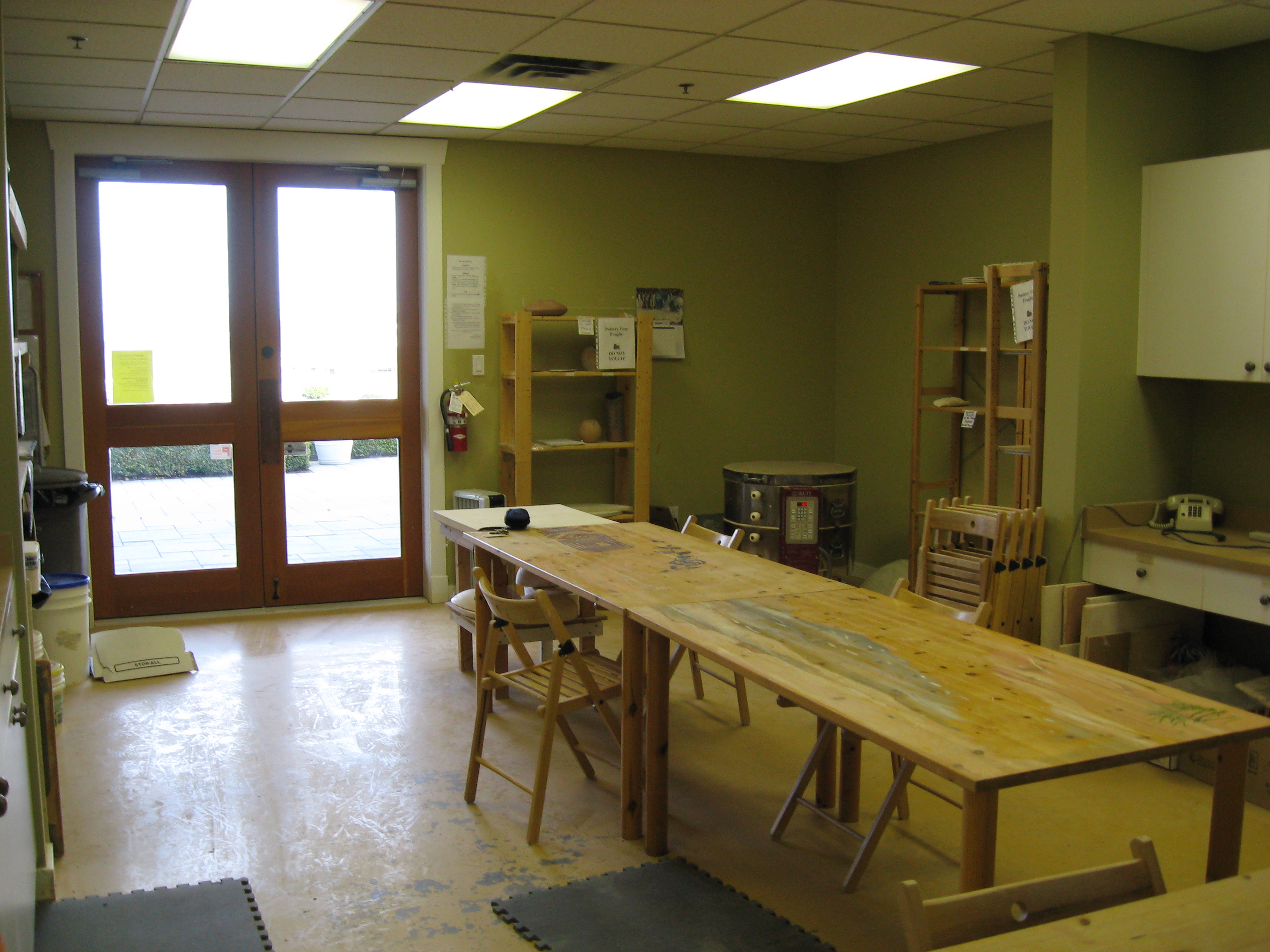
You’ve seen the photos on Pinterest. Those pristine, white-walled spaces where every single marker is color-coded and there isn't a stray drop of glue in sight. It’s a lie. Honestly, most of those "perfect" setups are actually terrible for real work. If you’re terrified of getting paint on the floor, you aren't going to paint.
An arts and crafts room shouldn't be a museum. It’s a workshop. It’s a place where the physical environment is supposed to reduce the friction between "I have an idea" and "I am making the thing." If you have to dig through three plastic bins just to find a pair of fabric scissors, your creative momentum is already dead. That’s just science—or at least, it’s how the brain handles executive function and task initiation.
Why Most Hobby Spaces Fail
The biggest mistake people make is prioritizing aesthetics over ergonomics. You see a cute vintage desk at a flea market and think it’s perfect for your arts and crafts room. Then you sit at it for two hours and your back feels like it’s being poked by hot needles because the desk height doesn't match your chair.
Standard desks are usually 29 to 30 inches high. That is fine for typing. It is miserable for cutting patterns, weeding vinyl, or assembling jewelry. For those tasks, you actually want a counter-height surface—around 36 inches—so you can alternate between sitting on a stool and standing up. Movement is key. If you stay locked in one position, your focus drifts.
Lighting is the other silent killer. Most spare bedrooms have a single, depressing "boob light" in the center of the ceiling. It’s garbage. It creates shadows exactly where you’re trying to see fine details. You need a mix of ambient light and dedicated task lighting. Look for bulbs with a High Color Rendering Index (CRI). A CRI of 90 or above ensures that the "midnight blue" yarn you’re buying actually looks blue when you get it under the sun, rather than a muddy black.
The Storage Paradox: Out of Sight, Out of Mind
There is a concept in organizational psychology called "visual abundance." For some people, seeing all their supplies at once is inspiring. For others, it’s a sensory nightmare that leads to paralysis. You have to know which one you are before you buy a single shelf.
If you are a "macro-organizer," you need big bins. You don't care about the specific shade of green; you just want all the green stuff in one spot. If you try to force yourself into a micro-organized system with 50 tiny drawers, you will never put anything away. The mess will migrate to your tabletop. Eventually, you’ll be crafting in a six-inch square of space surrounded by piles of shame.
I’ve seen people spend thousands on custom cabinetry only to realize they hate reaching behind doors. Open shelving or pegboards are often better. The pegboard is a classic for a reason. It’s infinitely adaptable. Brands like Wall Control make metal ones that are way sturdier than the old fiberboard stuff that sags after a year. You can hang heavy tools, baskets for ribbons, or even a tablet mount so you can watch tutorials while you work.
Surfaces That Actually Work
Let’s talk about the table. If you're doing messy stuff—think resin, acrylic pouring, or heavy-duty gluing—you need a sacrificial surface.
- Self-healing mats: Essential for quilters and paper crafters. Get the biggest one that fits your table.
- Silicone mats: Total lifesaver for glue guns and resin. Dried spills just peel right off.
- Butcher block: Heavy, stable, and looks better as it gets beat up.
- Tempered glass: Great for mixing paints directly on the table, but it’s cold and loud.
Don’t buy a cheap folding card table. They wobble. If your table wobbles while you’re trying to draw a straight line or use a rotary cutter, you’re going to lose your mind.
Ventilation and the Stuff Nobody Mentions
Everyone focuses on the "arts" part and forgets the "safety" part. If your arts and crafts room is in a basement or a room without windows, you are asking for trouble.
Spray adhesives, resin, and even some markers off-gas VOCs (volatile organic compounds). According to the Consumer Product Safety Commission (CPSC), long-term exposure to certain craft chemicals without proper ventilation can lead to chronic respiratory issues. If you can’t install an exhaust fan, at least invest in a high-quality air purifier with a carbon filter specifically designed for chemicals, not just dust.
And flooring? Carpet is the enemy. It swallows beads, hides pins that will later find your feet, and soaks up spilled ink. Hardwood, laminate, or even those interlocking foam gym mats are better. If you’re renting and stuck with carpet, go to a home improvement store and buy a giant sheet of linoleum or a "chair mat" designed for office use to protect your security deposit.
The Psychology of the "Zone"
There’s a reason professional artists often have a "dirty" zone and a "clean" zone. Even in a small arts and crafts room, you should try to segment the space.
Your computer or planning area should be separate from your "wet" media area. Mixing electronics with watercolor or glitter is a recipe for an expensive disaster. Even a small physical gap—like a different rug or a separate small table—tells your brain that you are switching modes. This is what psychologists call "environmental cueing." It helps you get into a flow state faster.
Don't forget a "work in progress" (WIP) station. This is the biggest oversight in most room designs. Where does the half-finished painting go while it dries? Where do you put the sewing project when you need the table to cut something else? A dedicated drying rack or a tiered rolling cart (like the RÅSKOG from IKEA that everyone owns) works perfectly for this. It keeps the project safe but off your main workspace.
Real-World Examples of Smart Spaces
Take a look at how professional textile artists like Sheila Hicks or contemporary painters set up. Their spaces are rarely "pretty" in the traditional sense. They are functional. They use industrial shelving because it holds 500 pounds of fabric without bowing. They use jars because they are clear and cheap.
The best arts and crafts room I ever saw belonged to a professional bookbinder. It wasn't large. It was a 10x10 spare bedroom. But everything was on wheels. The tables, the storage, even the heavy paper press. This meant she could reconfigure the entire room in three minutes depending on whether she was marbling paper or stitching spines. Mobility is the ultimate "hack" for small spaces.
Sourcing Supplies Without Breaking the Bank
You don’t need to buy everything from a "craft store." In fact, you shouldn't. "Craft" storage is often overpriced and made of flimsy plastic.
- Hardware stores: Toolboxes are better for heavy supplies than plastic craft bins. Magnetic tool strips are amazing for holding scissors and metal rulers.
- Kitchen supply stores: Stainless steel bowls are great for mixing, and spice racks are the perfect size for glitter or small paint bottles.
- Thrift stores: Old dressers can be converted into "map draws" for flat paper storage.
Actionable Steps to Fix Your Space Right Now
If you’re staring at a cluttered mess and feeling overwhelmed, don't try to renovate the whole room this weekend. Start small.
First, purge the guilt. We all have that bag of knitting supplies for a hobby we hated or a box of "cool rocks" we never painted. If you haven't touched it in two years, it’s not a supply; it’s clutter. Donate it to a local school or a creative reuse center.
Next, evaluate your lighting. Switch your bulbs to 5000K (daylight) color temperature. It will instantly change how you see your work. It might feel "cold" at first, but your color accuracy will skyrocket.
Then, fix your height. If your table is too low, buy some bed risers. It’s a $15 fix that will save your lower back. Once you can comfortably stand and work, you’ll find you have much more energy for longer sessions.
Finally, create a "landing strip." This is a small area near the door for new supplies you haven't processed yet. It prevents the "bag on the floor" syndrome that eventually eats the whole room.
A functional arts and crafts room is a living thing. It should change as your skills change. Don't be afraid to move the furniture once a month until it feels right. The goal isn't a room that looks good on Instagram; the goal is a room that makes you want to create something. Go get messy.
Next Steps for Your Workspace
- Measure your current work surface: If it's under 30 inches and you're tall, look into adjustable leg trestles.
- Audit your lighting: Check the CRI and Kelvin rating on your bulbs; aim for 90+ CRI and 5000K for the best color results.
- Implement a "WIP" zone: Clear one shelf or get a rolling cart specifically for projects that aren't finished yet so they don't clutter your main desk.
- Vertical check: Install one pegboard or a set of floating shelves to get your most-used tools off the table surface and into your line of sight.