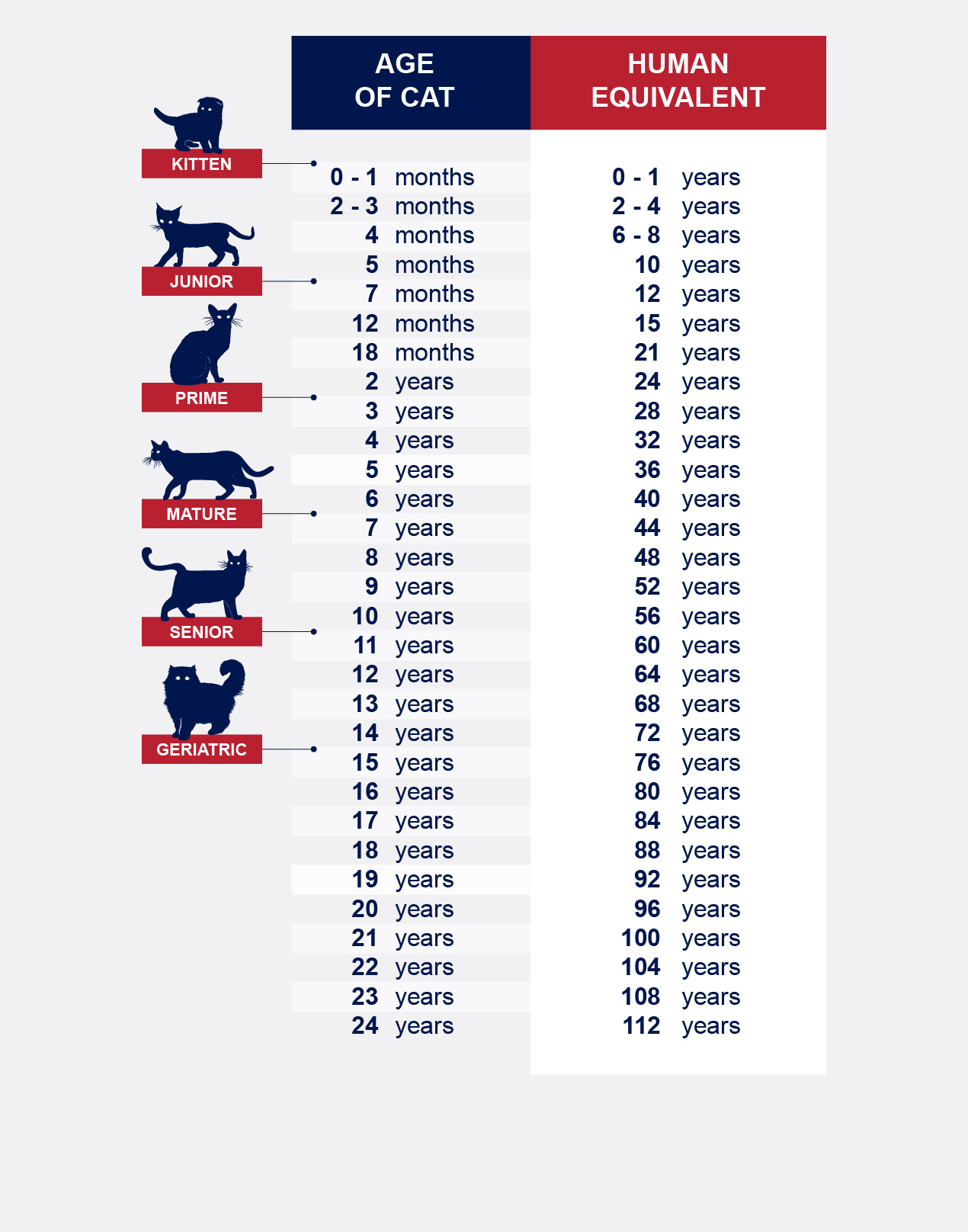
Ever looked at your cat and wondered why they suddenly stopped doing zoomies at 3:00 AM? Or why they seem just a little more "set in their ways" than they were last summer? Well, your 4 year old cat in human years is actually hitting their stride as a full-blown adult. They aren't a kitten anymore. Not even close. If your cat was a person, they’d probably be worrying about their 401(k) or wondering if they should start a podcast.
Most people think the "seven years for every one year" rule applies to cats just like dogs. It doesn't. That math is honestly a mess and totally ignores how fast felines actually mature.
Cats front-load their aging. A one-year-old cat is roughly 15 in human terms. By age two, they’ve already hit 24. After that, things finally start to level out into a predictable rhythm of about four human years for every one calendar year. So, when your cat blows out four candles on their birthday cake, they are effectively 32 human years old.
The math behind the 4 year old cat in human years
The American Animal Hospital Association (AAHA) and the American Association of Feline Practitioners (AAFP) have spent a lot of time debunking the simple "multiply by seven" myth. They look at physical development and life stages instead of just raw numbers.
Think about it this way. A 12-month-old cat can have kittens of its own. If you used the "seven-year rule," that would make them a seven-year-old child. That obviously makes no sense. By the time they hit age four, they’ve moved past the chaotic "teenager" phase of 18 to 24 months and are sitting squarely in the "Young Adult" category. This phase lasts until they are about six.
At 32, a human is usually at their physical peak but starting to feel the first tiny hints that they aren't invincible. Your cat is the same. Their reflexes are still elite. Their muscle tone is usually great. But they’ve swapped the mindless, frantic energy of a kitten for a more calculated, "is this worth the effort?" kind of vibe.
Why the 30s matter for cats
This is a weirdly overlooked age. We pay a ton of attention to kittens because they’re cute and high-maintenance. We pay attention to senior cats (ages 11+) because they get frail. But the four-year-old? They’re just... there.
Being 32 in human years means your cat is "established." They know the house rules. They know exactly which cabinet the treats are in. They’ve developed a personality that is likely never going to change.
If you notice a 4-year-old cat sleeping more, don't panic. They’re just leaning into their adult routine. While a kitten might sleep 20 hours because they’re growing, a 32-year-old cat sleeps because they’ve mastered the art of the afternoon nap. It’s a luxury, not a medical crisis—usually.
Health milestones you can't ignore at 32
By the time a cat reaches the equivalent of their early 30s, certain biological "clocks" start ticking. Dental health is the big one. Honestly, it’s the thing most owners miss.
According to the Cornell Feline Health Center, between 50% and 90% of cats older than four years suffer from some form of dental disease. In human terms, imagine not brushing your teeth for 32 years. It’s not just about bad breath. Gingivitis and periodontal disease in cats can lead to heart and kidney issues because bacteria from the mouth enters the bloodstream.
If your 4 year old cat in human years is suddenly a messy eater or seems grumpy, check their gums. Redness at the gum line is a red flag.
The weight creep
Metabolism slows down. It happens to us, and it happens to them.
A four-year-old cat is at a high risk for "creeping obesity." Because they aren't sprinting up the curtains anymore, those extra calories from the high-protein kitten food you might have kept them on (or just too many treats) start to settle.
An overweight 32-year-old cat is on a fast track to feline diabetes. You should be able to feel their ribs without poking through a layer of foam padding. If they look like a loaf of bread from above, it’s time to scale back the kibble.
Behavioral shifts: The "Quiet Adult" phase
At this age, social dynamics change. If you have a multi-cat household, you might notice the four-year-old becoming more assertive—or more reclusive.
In the wild, a cat this age would be a prime hunter. In your living room, they express this through "patrolling." They have specific routes. They have a specific chair.
You’ve probably noticed they are more affectionate on their terms now. A kitten wants attention 24/7. A 32-year-old human-equivalent cat wants a head scratch at 7:15 PM while you’re watching TV, and then they want to be left alone to contemplate the wall.
- Play style changes: They prefer "intellectual" play. Instead of chasing a laser for twenty minutes until they pant, they might prefer a puzzle feeder or a toy they have to stalk and "kill" once.
- Predictability: This is the age where your cat becomes your shadow. They know your schedule better than you do.
- Stress sensitivity: Interestingly, adult cats can be more prone to stress-induced cystitis or urinary issues than kittens. Changes in the home (new furniture, a new baby, a different brand of litter) can trigger physical illness in a 32-year-old cat more easily because they are so deeply invested in their environment.
The indoor vs. outdoor aging gap
We have to talk about the lifespan gap because it changes how we view these human-year conversions.
An indoor-only cat can easily live to 15 or 20. For them, 4 years old is just the beginning of a very long, stable plateau.
Outdoor cats, unfortunately, age much faster in practical terms. They face predators, cars, and parasites. The "wear and tear" on an outdoor cat at age 4 might make them look and feel more like a 50-year-old human. If your cat spends time outside, that 32-year-old estimate is a best-case scenario. Their biological age might actually be higher due to environmental stress.
Real talk: What you should do right now
Knowing your cat is 32 in human years isn't just a fun party trick. It’s a roadmap for keeping them around for another 15 years.
First, get their teeth checked. If you haven't had a professional cleaning done, this is the year to do it before real damage sets in. It’s cheaper to clean teeth now than to extract them when the cat is "50."
Second, check the protein-to-fat ratio in their food. Most "adult" maintenance blends are fine, but if your cat is strictly indoors, they might need a "weight management" formula even if they aren't "fat" yet. Prevention is everything.
Third, keep them moving. Since they won't initiate play as much as they used to, you have to be the instigator. Five minutes of active hunting play twice a day keeps their joints lubricated and their brain sharp.
Fourth, blood work. Ask your vet for a "baseline" senior panel. Even though 4 isn't senior, having a record of what their "normal" kidney and liver values look like at age 32 makes it much easier to spot trouble when they hit 60 or 70 in human years.
Your cat is in the prime of their life. They are old enough to be "smart" but young enough to be healthy. Treat them like a 30-something athlete—high-quality fuel, regular checkups, and just enough exercise to keep the "dad bod" at bay.
Next Steps for Your 32-Year-Old (4-Year-Old) Cat:
- Schedule a dental exam: Look for "tarter" or "redness." Early intervention saves thousands of dollars in extractions later.
- Audit their diet: Switch from free-feeding to scheduled meals to prevent the "30s spread."
- Introduce "verticality": If they are getting bored, add a wall shelf or a taller tree. Adult cats love a high vantage point to survey their "kingdom."
- Monitor hydration: Ensure they have multiple water sources or consider adding wet food to their diet to support kidney health as they move deeper into adulthood.