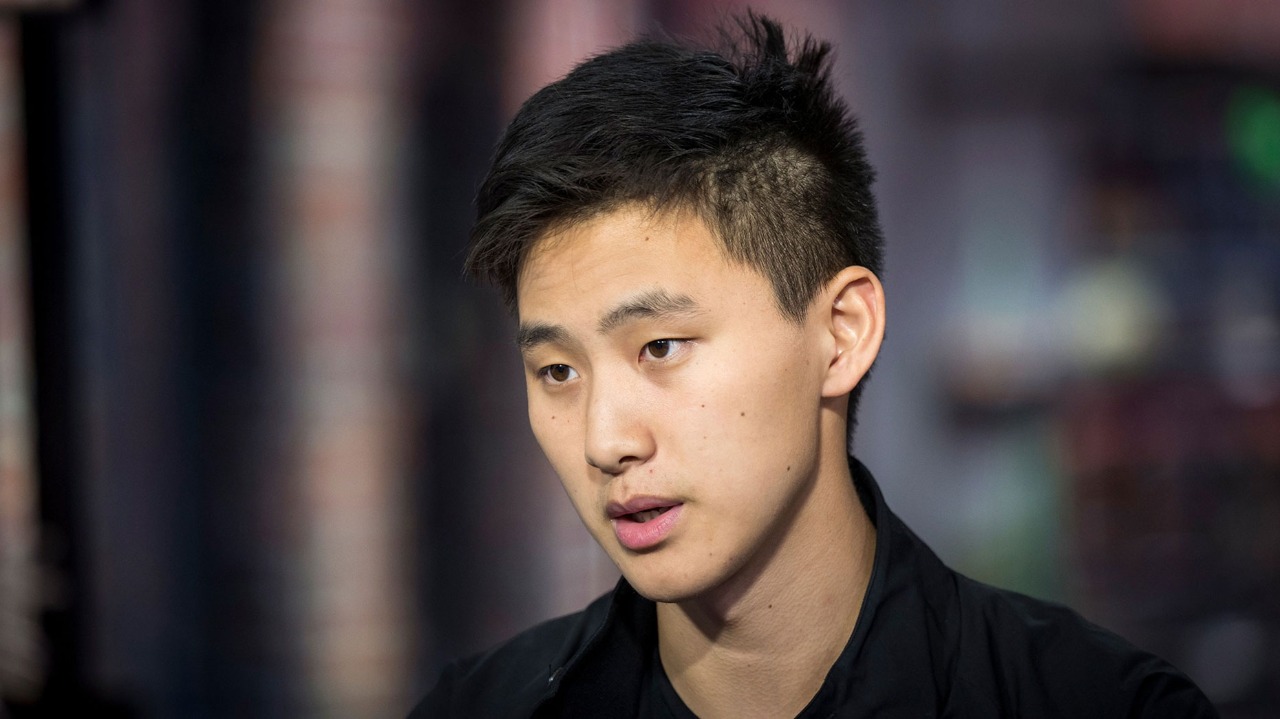
Money moves fast, but Silicon Valley moves faster. If you’re looking for the youngest self made billionaire, the answer usually changes by the time you've finished your morning coffee. Right now, in early 2026, the spotlight isn't just on one person; it’s on a trio of 22-year-olds who basically broke the record books.
We're talking about Brendan Foody, Adarsh Hiremath, and Surya Midha. These guys founded Mercor, an AI recruiting startup, and as of late 2025, they’ve reached a staggering $10 billion valuation. That puts them at a younger age than Mark Zuckerberg was when he first hit the ten-digit mark at 23. It's kinda wild to think about. While most 22-year-olds are figuring out how to pay off student loans or fluffing up their first entry-level resume, these three are running a company that helps the biggest AI labs in the world find and train talent.
The New Guard: How Mercor Changed the Game
Honestly, the story of Mercor is sort of a "right place, right time" situation met with insane technical execution. Foody, Hiremath, and Midha weren't just random classmates; they were high school debate partners from the Bay Area. They’ve been arguing and building together since they were kids.
They dropped out of college—Harvard and Georgetown, specifically—after snagging the Thiel Fellowship. You know the one: Peter Thiel gives you $100,000 to quit school and build something instead. It worked. Mercor started by matching Indian engineers with US startups, but it morphed into an AI-driven behemoth that uses automated interviews to vet talent.
Why the title keeps shifting
Before the Mercor trio took the crown, the title of youngest self made billionaire felt like a game of musical chairs.
- Shayne Coplan: The CEO of Polymarket held the title for about three weeks in 2025 after a massive investment from the owners of the New York Stock Exchange.
- Alexandr Wang: The founder of Scale AI held the spot for a solid 18 months. He’s still a massive player, currently serving as Meta’s Chief AI Officer after they bought a huge stake in his company.
- Lucy Guo: Wang’s co-founder at Scale AI also hit billionaire status recently, becoming the world's youngest self-made female billionaire at 30, even surpassing Taylor Swift’s wealth in that specific category.
What it actually takes to get there
It’s easy to look at a $10 billion valuation and think it’s all "paper wealth," and technically, it is. But the "self-made" label is what people get hung up on. To be clear, these aren't kids who inherited a real estate empire. They built software.
The common thread here isn't just "being smart." It's about spotting a massive infrastructure gap. Alexandr Wang realized AI needed labeled data, so he built Scale. The Mercor guys realized AI companies needed a better way to hire at scale, so they built a platform for it. Basically, they aren't just building "cool apps"—they are building the pipes that make the rest of the AI industry function.
The "Thiel Effect" and the Dropout Culture
Is college a waste of time if you want to be the youngest self made billionaire? Looking at the current list, you might think so. Almost every name mentioned—Wang, Guo, Foody, Hiremath, Midha—dropped out of elite universities.
But don't get it twisted. These people were already high achievers before they quit. Hiremath was doing research for Larry Summers at Harvard. Wang was a prodigy at MIT. The "dropout" narrative is real, but it's usually backed by a safety net of extreme talent and early access to venture capital.
The Reality of Net Worth in 2026
We should probably talk about how these numbers are calculated. When Forbes or Bloomberg says someone is a billionaire, they are usually looking at the valuation of the last funding round.
For example, if Mercor raises $350 million at a $10 billion valuation, and the founders own 20% each, they are "worth" $2 billion on paper. It doesn't mean they have $2 billion in a checking account. They can't just go out and buy a fleet of private jets without selling shares or taking out loans against them.
Actionable Insights for Aspiring Founders
If you're sitting there thinking you missed the boat because you're already 25, relax. The "youngest" title is a vanity metric. However, there are real patterns you can steal from these winners:
- Solve Infrastructure Problems: Don't build the AI; build the tool that helps other people build the AI. That’s where the most "sticky" value is right now.
- Find Your "Debate Partners": Every person on this list had a co-founder or a tight-knit circle they had known for years. Trust is a shortcut in business.
- Capitalize on Hype, but Deliver on Utility: Polymarket grew because of the election cycle. Mercor grew because of the AI talent war. Find the current "war" and provide the ammunition.
- Equity is Everything: The reason these founders hit billionaire status so young is that they kept a significant portion of their company. If you dilute your ownership too early by taking too much VC money at a low valuation, you’ll never hit these heights.
The tech world is currently obsessed with youth, but wealth is a long game. Whether it’s the Mercor trio or the next 19-year-old in a garage, the title of youngest self made billionaire will always be temporary. What matters is who builds the companies that are still around in twenty years.
To track these shifts in real-time, your best bet is following the Forbes Real-Time Billionaires List or keeping an eye on SEC Form 4 filings for newly public founders. The landscape in 2026 is moving at the speed of light, so keep your eyes on the seed rounds—that's where the next record-breaker is hiding.