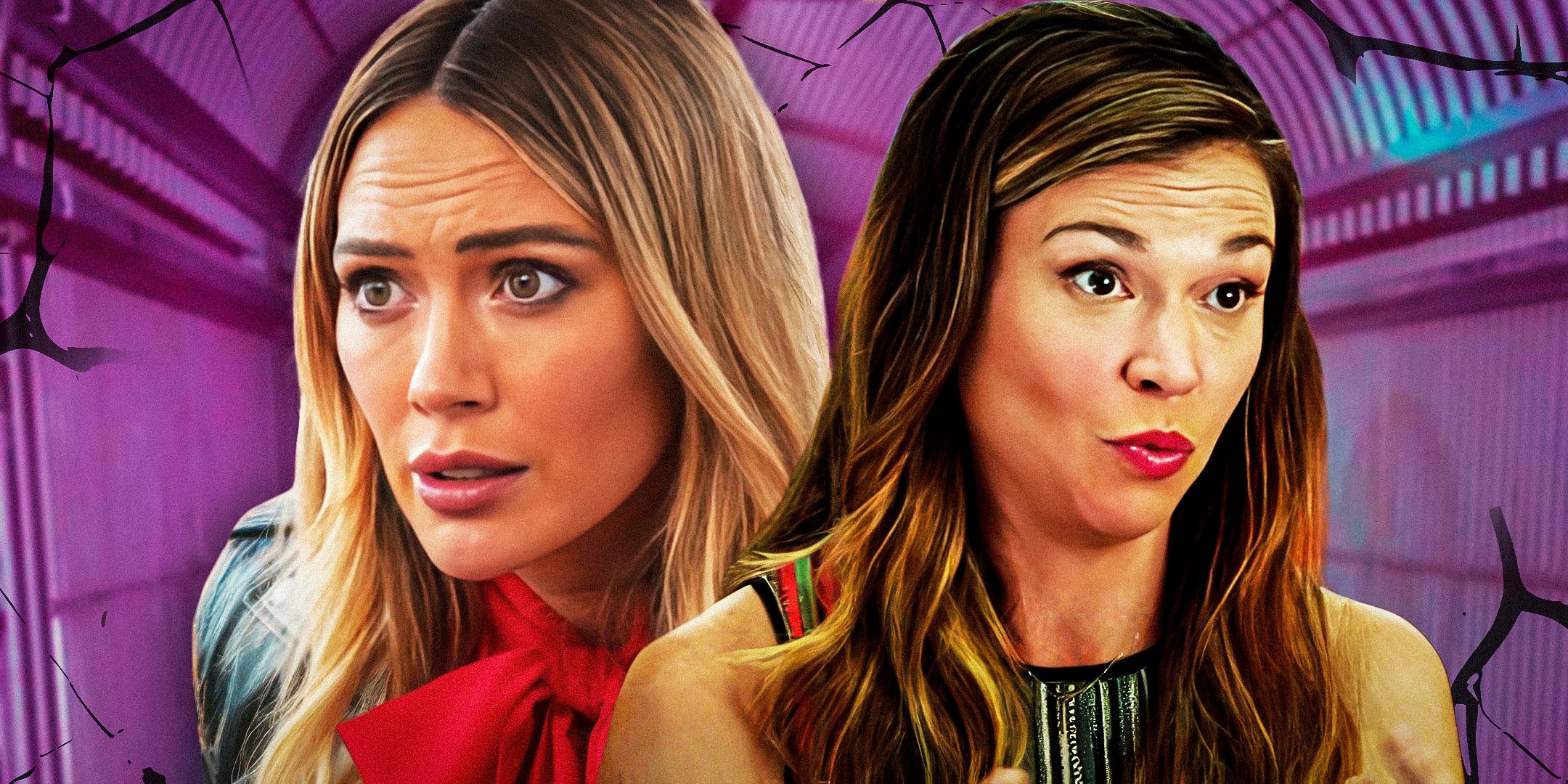
If you spent seven seasons of Younger screaming at your TV every time Charles Brooks looked at Liza Miller with those "I love literature and also you" eyes, you aren't alone. For years, the debate between Team Josh and Team Charles divided the internet more than a political election. One side wanted the pulse-pounding, Brooklyn-tattoo-shop heat. The other wanted the sophisticated, midtown Manhattan, "we can discuss Proust over scotch" stability.
But then the series finale happened.
Honestly, it was a mess for a lot of people. After seven years of build-up, watching Liza and Charles crumble in the final eleven minutes felt like a slap in the face to anyone who spent $15.99 a month on a streaming sub just to see them happy. But if we look at the facts—and I mean the actual, messy character traits the show spent years establishing—their breakup wasn't just a plot twist. It was inevitable.
The Marriage Proposal That Changed Everything
The beginning of the end really started at Diana’s wedding. Remember that? Charles drops to one knee, the lighting is perfect, and every Team Charles fan is holding their breath. But Liza says no. Not because she doesn't love him, but because she’s been through the marriage ringer. She’s "older." She’s done the suburban life, the divorce, the whole thing.
Charles, however, is a traditionalist. He’s the head of a legacy publishing house. To him, love has a specific shape, and that shape is a wedding ring. When Liza suggests they just be "happily unmarried," he can't wrap his head around it. He literally leaves her standing at a carousel. It was cold. It was rigid. And it was exactly who Charles Brooks has always been.
Why the "Yaddo" Incident Was the Final Nail
Fast forward to the series finale, "Older." After a whole season of Charles dating the chaotic Quinn Tyler (which, let’s be real, was a weird rebound), he and Liza finally reconcile. They’re in bed, everything seems fine, and then the conversation turns to Yaddo.
For those who don't spend their lives in the publishing world, Yaddo is a prestigious artists' retreat. Liza secretly submitted Charles’s manuscript there because she believed in his talent. He got in. But instead of being grateful, Charles turned it into a "test."
He asked her: "If I hadn't gotten into Yaddo, would you have let me know?"
Liza, being honest for once, said she might not have. She wanted to protect his feelings. Charles’s reaction? He basically told her that their relationship was just a series of "little secrets." That one moment revealed the fundamental flaw in their dynamic: Charles could never, ever get over the fact that Liza lied about her age to get her job.
The Trust Gap
- Charles saw the lie as a moral failing. He viewed it as a stain on her character that poisoned everything else.
- Liza saw the lie as a survival tactic. She was a 40-year-old divorced mom who couldn't get an entry-level job. She did what she had to do.
- The Power Dynamic: Even when he promoted her to Editor-in-Chief at the very end, he was still the one "giving" her the power. He could never quite meet her as an equal partner because he was always judging her.
Darren Star’s Vision for the Ending
Show creator Darren Star, the guy who gave us Sex and the City, has been pretty vocal about why he ended things this way. In interviews with TVLine and US Weekly after the finale, he explained that the show was never actually about which guy Liza chose. It was about her journey to find herself and her career.
He pointed out that Liza and Charles were often "projecting" who they wanted the other person to be. Charles wanted a companion who fit into his high-society, traditional world. Liza wanted a guy who made her feel like she had "reclaimed" the life she lost during her years as a housewife. When they finally stood face-to-face without the projections, they didn't actually fit.
What Really Happened with Josh?
While the Charles fans were mourning, the Josh fans got a massive "I told you so." The final scene of the series isn't a wedding; it's Liza back at the same bar where the pilot started. She can't get the bartender's attention, she waves her shoe (a classic Liza move), and there he is. Josh.
He says the line that launched a thousand ships: "I've been right here, by your side all along."
It’s an ambiguous ending. It doesn't mean they're getting married tomorrow. But it suggests that while Charles was a person who "tested" her, Josh was the person who "accepted" her. Age lie and all.
Lessons from the Liza and Charles Saga
If we’re being objective, the relationship between Liza and Charles was a beautiful literary romance that worked better on paper than in reality. They shared a love for the written word, sure. But you can't build a life with someone who is constantly waiting for you to slip up so they can prove they were right not to trust you.
How to know if your relationship is headed for a "Charles" ending:
- Testing vs. Trusting: If your partner "tests" your honesty instead of talking to you, that's a massive red flag.
- Values Mismatch: If one person needs marriage for validation and the other sees it as a trap, you're at a stalemate.
- The "Pedestal" Problem: If you fell in love with a version of someone that doesn't exist, the reality will always be a disappointment.
Liza Miller ended the show as the Editor-in-Chief of Empirical. She got the career she lied for. She lost the "perfect" guy, but she found a version of herself that didn't need to hide behind a birth date. In the end, maybe that was the point of being Younger all along.
If you’re still reeling from the finale, the best thing you can do is re-watch Season 1. Notice how the power dynamics are set up from day one. You'll see the cracks in the foundation way before the proposal ever happened. Or, just go follow Nico Tortorella on Instagram and pretend Team Josh won the whole thing. It’s a lot less stressful.



