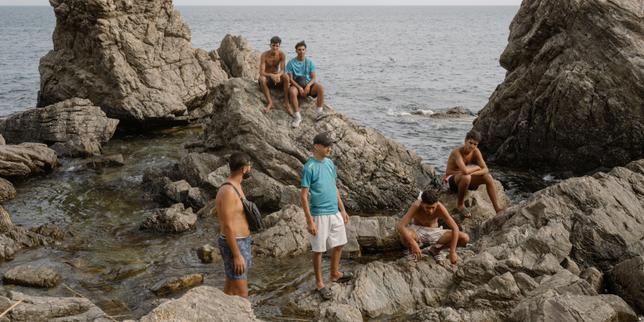
Desperation doesn't wait for a political summit. When thousands of young people converge on the northern coast of Morocco with makeshift flotation devices, eyes fixed on the Spanish enclave of Ceuta, they aren't looking at statistics. They are looking at a dead end.
The recent surge toward the border exposed a raw, pulsing reality that official economic growth reports prefer to ignore. You can talk about national GDP increases all day long, but it won't change the daily grind for a physics graduate working a low-wage factory shift or a young person watching their options shrink to zero. If you enjoyed this post, you might want to read: this related article.
The Spark Behind the Surge
Social media doesn't create migration waves on its own, but it acts like gasoline on a smoldering fire. When rumors spread across digital feeds claiming that the borders are wide open, desperation takes the steering wheel.
Take people like Ayoub Akbili. He held a degree in physics, yet he spent his days in a car parts factory trying to piece together a living and support his family. He wasn't a career smuggler or a hardened criminal. He was simply a young man trapped by an economy where wages fail to keep pace with the cost of living. When he saw digital posts flashing promises of a quick passage toward Europe, the calculus changed in an instant. For another perspective on this development, see the recent update from NBC News.
The crowd mentality takes over fast. Street corners in towns near the border fill up within hours. Friends pull friends along. Soccer players, students, and workers drop what they're doing because the alternative—staying put—feels like a slow sentence of professional and personal decay.
What the Economic Numbers Miss
On paper, Morocco makes impressive strides as an industrial hub. The automotive sector expands, investments flow in, and macro numbers look healthy. But local realities tell a different story.
- High unemployment rates leave roughly one in three young people without a stable path.
- Low median wages make basic milestones like housing or supporting aging parents nearly impossible.
- A growing sense of alienation keeps youth detached from institutional promises.
When growth fails to translate into well-paying jobs with upward mobility, the psychological barrier against illegal migration crumbles. People start calculating risks differently. Drowning in the cold waters off the coast begins to look like a logical gamble compared to a lifetime of quiet stagnation.
The Human Cost at the Border
The physical reality of trying to breach Ceuta is unforgiving. Heavy police presence, tear gas, and brutal currents turn a desperate dash into a tragic bottleneck. Official figures point to dozens of fatalities during peak surges, while human rights organizations report even higher tolls.
Families are left searching hospitals and morgues for relatives who left home with nothing more than a smartphone and a prayer. Phones ring out to empty rooms. The tragedy doesn't stop at the shoreline; it echoes back into neighborhoods across cities like Tangier and Khenifra, where grieving relatives question how the system failed their children so completely.
Where Policy Falls Short
Governments in Rabat and Madrid routinely point fingers at human smuggling rings and viral misinformation. Security forces reinforce fences, patrol beaches, and stage mass expulsions. Yet, tightening border controls treats only the symptom while leaving the disease untouched.
You cannot police away a lack of hope. As long as young people feel entirely cut off from a prosperous future at home, no amount of razor wire or police deterrence will stop them from eyeing the horizon. Real stability requires structural reforms that build genuine local opportunity, bridging the gap between national economic metrics and the empty pockets of the generation living through them.