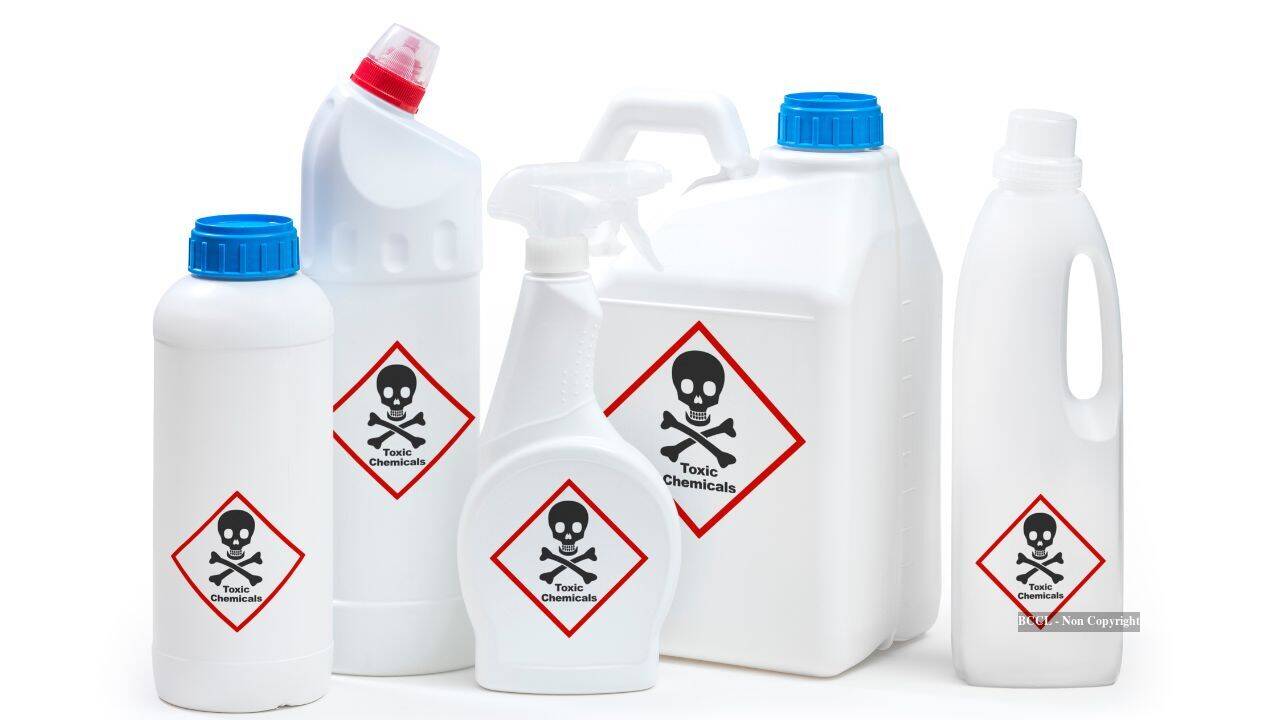
You can find PFAS compounds in almost everything. Nonstick pans, waterproof jackets, and firefighting foam all rely on these stubborn synthetic materials. They earn the nickname "forever chemicals" because they refuse to break down. Their carbon-fluorine bonds are basically indestructible under normal conditions. Traditional water treatment plants usually just trap them using activated carbon filters or reverse osmosis membranes. That strategy merely moves the contamination around. It creates a toxic waste stream that still needs disposal.
A breakthrough from engineering labs at Yale University changes the calculus entirely. Instead of just catching PFAS, researchers figured out how to chemically re-engineer them. This new approach makes removal and destruction a single, integrated process.
Making PFAS Too Big to Hide
Susanna Maisto, a doctoral researcher in chemical and environmental engineering at Yale, decided to tackle the problem from a molecular angle. She looked at perfluorocarboxylic acids, a widespread subclass of PFAS, and asked a simple question. Could these molecules be altered so they stop acting like typical water-soluble contaminants?
Her team used a chemical reaction involving octanol, a substance related to ordinary alcohol. This esterification process attaches octanol to the PFAS molecules. Doing so roughly doubles their physical size.
"By reacting certain PFAS molecules with octanol, the method roughly doubles their size, causing them to drop out of water and become far easier to destroy."
That size change matters immensely. The modified molecules lose their solubility in water. They naturally separate, forming a distinct phase that operators can easily skim or settle out. Better yet, that exact same chemical modification weakens their stubborn resistance, making subsequent destruction steps far more effective.
Solving the Aqueous Chemistry Problem
Getting organic chemistry reactions to run smoothly inside water is notoriously difficult. Water usually interferes with or completely shuts down these molecular transformations. To get around this roadblock, the Yale team adapted an emulsion technique originally pioneered by University of Tokyo chemists back in 2004.
They suspend the PFAS into tiny droplets within the water phase. These droplets function as microscopic reactors. Inside these tiny pockets, the octanol and PFAS molecules can finally meet and react under conditions that open water would never allow.
Real-world waste streams are messy. They contain high levels of organic matter and varying salt concentrations. Laboratory tests showed that the reaction holds up remarkably well in dirty water matrices, though high salt levels introduce a minor drop in efficiency.
Beyond the Lab Bench
This chemical modification technique is just one front in Yale's broader assault on forever chemicals. Another recent study from Yale's Center for Natural Carbon Capture targeted PFAS contamination sprawling across millions of acres of agricultural farmland. Decades of using sewage sludge as fertilizer left millions of acres tainted with these toxins.
Conventional soil excavation costs up to one million dollars per acre, putting cleanup completely out of reach for most farmers. The Yale agricultural team designed a low-cost biological loop instead. Farmers plant hyperaccumulating crops like hemp or sunflowers that rapidly draw PFAS out of the dirt. At the same time, spreading crushed silicate or carbonate rocks raises the soil pH, boosting plant uptake while triggering enhanced weathering that pulls carbon dioxide out of the air.
Once harvested, these plants undergo high-temperature pyrolysis. The extreme heat destroys the accumulated PFAS completely, turning the biomass into stable biochar that gets safely returned to the soil. This dual-purpose strategy costs a fraction of traditional excavation and even generates potential income through carbon removal credits.
What Comes Next for Industrial Remediation
Municipalities and industrial plants face tightening environmental regulations regarding forever chemicals. Current disposal methods like high-temperature incineration remain expensive and heavily scrutinized. Technologies that alter molecules at the atomic level before they ever reach public waterways offer a realistic path forward.
Researchers are already looking at coupling these chemical transformation methods with advanced plasma reactors to completely shatter stubborn carbon-fluorine bonds. Moving away from passive filtration toward active chemical destruction marks a major turning point in environmental engineering. Stop treating forever chemicals as permanent fixtures of modern life and start breaking them down.