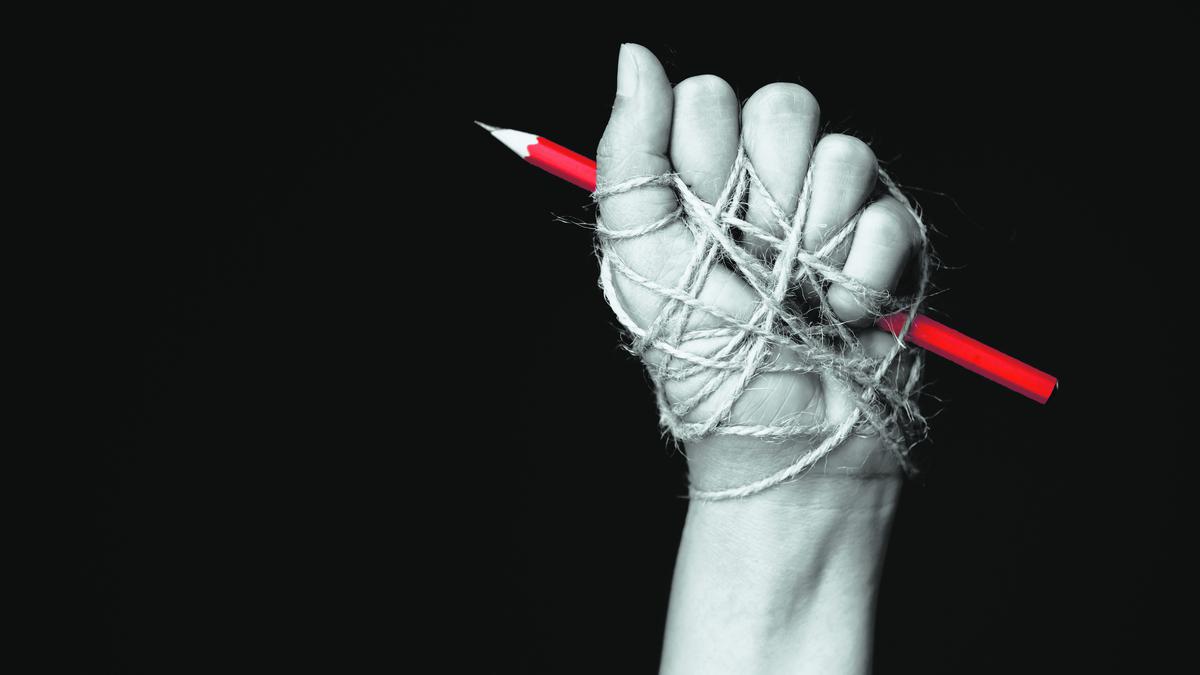
Every year on May 3, the media class puts on its finest formal wear, uncorks the champagne, and engages in a massive, self-congratulatory circle jerk. They call it World Press Freedom Day. They read solemn passages from the 1991 Windhoek Declaration as if it were holy scripture. They sign petitions, tweet hashtags, and demand that governments "foster" a safe environment for truth.
It is a comfortable, toothless ritual. And it is completely disconnected from how modern power actually operates.
The lazy consensus among legacy newsrooms and media NGOs is simple: press freedom is a noble, abstract ideal under siege by cartoonish, mustache-twirling autocrats. The solution, they claim, is more declarations, more international oversight, and a return to the "pluralistic" golden age promised by Windhoek.
They are wrong. They are fighting a war that ended thirty years ago.
By treating press freedom as a moral crusade rather than a brutal economic and geopolitical chess match, the media establishment has made itself obsolete. They are begging the very entities that strangle them for "permission" to exist.
The Windhoek Delusion: Why 1991 Is Not Coming Back
The Windhoek Declaration was born in a moment of extreme geopolitical naivety. The Berlin Wall had just fallen. The Soviet Union was collapsing. History was supposedly "over," and Western-style liberal democracy was the only game left in town.
In that context, a group of African journalists met in Namibia and declared that an independent, pluralistic press was the key to democratic development. It was a beautiful sentiment. It was also a product of a unipolar world that no longer exists.
The declaration assumed that if you broke state monopolies on printing presses and radio waves, truth would naturally prevail. It did not anticipate three structural shifts that destroyed this premise:
- The Private Monopoly Swap: We did not get pluralism. We swapped state-run propaganda ministries for algorithmic distribution networks owned by a handful of tech billionaires in Silicon Valley. The medium is no longer the message; the engagement algorithm is.
- The Weaponization of Capture: Modern autocrats do not need to send soldiers to smash printing presses anymore. That is messy and bad for foreign investment. Instead, they use regulatory strangulation, tax audits, and state-backed corporate buyouts to choke independent outlets slowly.
- The Death of the Business Model: Journalism used to be funded by local classified ads and subscriptions. That revenue is gone, swallowed by programmatic ad networks. What remains is a choice between state subsidies, billionaire philanthropy, or survival-mode rage-baiting.
I have watched publishers burn millions trying to build "independent, pluralistic" digital newsrooms while relying entirely on search and social algorithms for their traffic. They built their houses on rented land, using tools designed to maximize outrage rather than nuance. To celebrate Windhoek without addressing the raw economics of the modern internet is like celebrating a blueprint for a steam engine while standing in a nuclear power plant.
The Myth of the "Objective" Shield
The primary defense mechanism of the legacy media is the claim of absolute objectivity. The theory goes: if we are perfectly neutral, we are untouchable. If we present "both sides," we are serving the public interest.
This is a defensive crouch disguised as professionalism. It is also an active surrender.
In a hyper-polarized information market, "objectivity" is frequently weaponized to create a false equivalence. When one side is operating on verified reality and the other is manufacturing a firehose of falsehoods, treating both with equal gravity is not balance—it is complicity.
Consider how major Western outlets cover geopolitical conflicts. We see a sterile, passive language designed to offend no one in power. "Clashes erupt" rather than "police attack." "Loss of life" rather than "murder." This sanitized prose does not protect journalists; it merely bores the audience and alienates the very communities the press claims to defend.
The downside to abandoning this traditional stance is real. If you drop the mask of sterile neutrality, you will be accused of bias. You will lose access to official press briefings. You will lose the corporate sponsors who prefer their news safely bland. But the alternative is worse: a slow descent into irrelevance where nobody trusts you anyway.
The Deceptive Safety of NGO Metrics
Organizations like Reporters Without Borders (RSF) publish annual indices that rank countries on press freedom. Legacy media treats these rankings like the ultimate scorecard.
But these indices often measure the wrong things. They focus heavily on legal frameworks and physical safety. While these are undeniably vital, they fail to capture the subtle, insidious ways press freedom is eroded in seemingly "free" countries.
Let us run a thought experiment.
The Invisible Muzzle
Imagine Country A. It has absolute constitutional protections for journalists. No reporter is in jail. No websites are blocked. It ranks in the top 10 of every press freedom index.
However, 90% of the media companies in Country A are owned by three conglomerates. These conglomerates rely on government tax breaks and massive real estate contracts to survive. The editors of these papers know, without ever being told, that investigating the zoning laws or the defense budget will result in their parent companies losing those contracts.
Now look at Country B. It has a messy, combative, highly partisan media landscape. Journalists are routinely sued for defamation by thin-skinned politicians. It ranks 80th on the index. Yet, because of a decentralized web of crowdfunded, independent outlets, corruption is exposed daily, and public officials are forced to resign.
Which country actually has a freer press?
The index-obsessed crowd will always choose Country A because the paperwork looks clean. They mistake the absence of overt violence for the presence of actual freedom.
Stop Asking for Permission
The fundamental flaw of World Press Freedom Day is that it is addressed to the wrong audience. The petitions are directed at governments, international bodies, and regulatory agencies.
This is a fool's errand. Power does not concede power voluntarily. If a government has the capacity to grant you press freedom, it has the capacity to take it away.
True media independence is not granted; it is taken. It is built on three unromantic, difficult pillars:
1. Financial Sovereignty
If your business model relies on advertising grants from local oligarchs, state-subsidized notices, or the shifting benevolence of tech platforms, you are not free. You are on a leash. The only press freedom that matters is the one funded directly by the audience or built on decentralized, un-deplatformable infrastructure.
2. Tactical Asymmetry
Stop trying to play by the rules of legacy access journalism. Access is a drug used by political machines to domesticate reporters. If you need to sit in a White House or presidential palace briefing room to get your story, you are not a journalist; you are a stenographer. The best reporting of the last decade has come from open-source intelligence (OSINT), leaked documents, and deep-web investigations—none of which require a press pass or an invitation to a state dinner.
3. Radical Transparency
Instead of hiding behind the facade of institutional authority, modern journalists must show their work. Publish the raw datasets. Upload the unedited audio files. Explain the financial backing of your own outlet. Trust is no longer inherited through a masthead; it is earned transactionally with every single piece of reporting.
The next time May 3 rolls around, skip the panel discussions. Turn off the speeches about the "vital role of the fourth estate". Those ceremonies are designed to make the participants feel important while the actual machinery of information control grinds on uninterrupted.
We do not need more declarations. We need better business models, tougher journalists, and an absolute refusal to ask the state for permission to tell the truth.