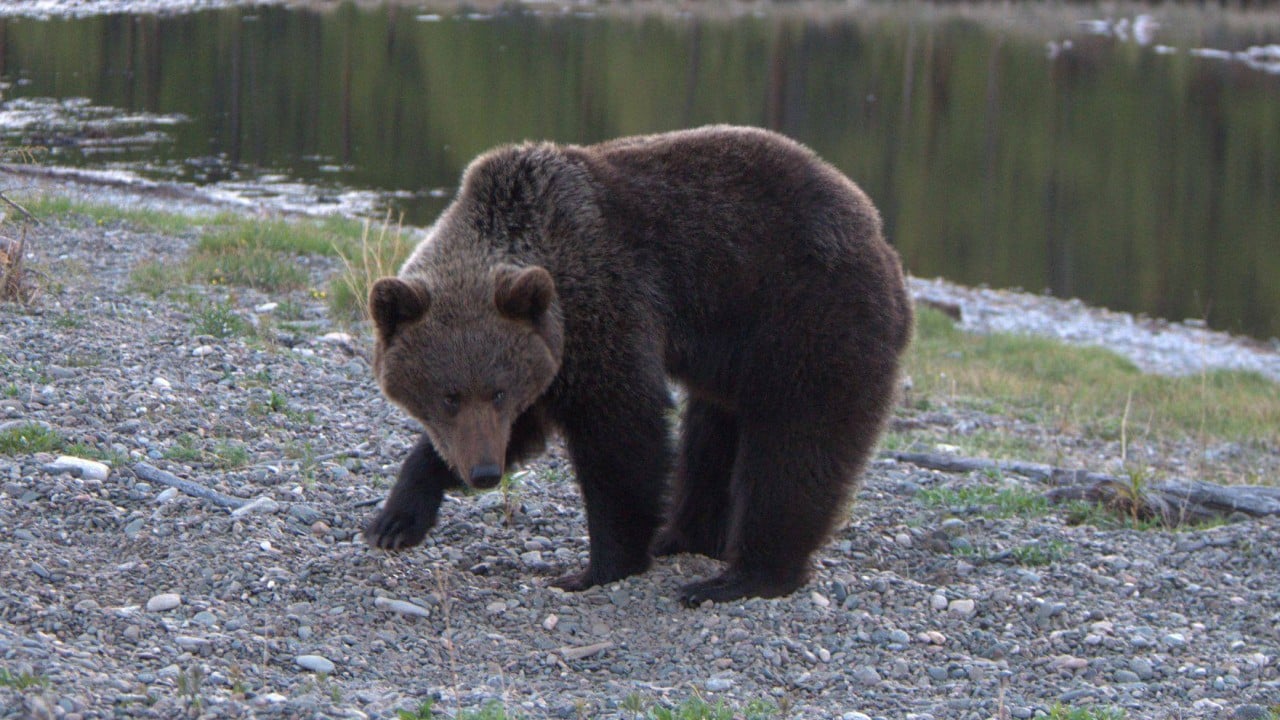
The porch light in a remote Kamchatka village does not exist to welcome guests. It exists to sweep the edge of the birch forest before you step outside with a bucket of kitchen scraps.
If you have ever stood on the wooden steps of a dacha in the Russian Far East at dusk, you know the specific, prickling silence that precedes an encounter. The wind drops. The sled dogs stop barking and press their bellies flat against the frozen dirt. Then comes the smell—a heavy, wet-wool musk mixed with crushed pine needles and river mud. Meanwhile, you can find related events here: The Real Reason Daily UPSC Current Affairs Compilations Are Failing Serious Aspirants.
For generations, the people living across Russia’s vast taiga maintained an unspoken treaty with Ursus arctos, the Eurasian brown bear. The humans took salmon from the rivers and berries from the bog; the bears kept to the deep timber. Everyone knew the rules. Everyone stayed on their side of the line.
That line is gone. To see the full picture, check out the detailed article by NBC News.
Following a string of fatal encounters that left 36 people dead, Russian authorities moved to authorize an unprecedented cull—a targeted reduction of up to 30 percent of the brown bear population in affected regions. On paper, in the sterile language of wildlife management decrees and municipal safety briefings, the math looks simple. Too many predators plus too many tragic deaths equals a necessary harvest.
Numbers, however, have a habit of hiding the blood on the snow. When you strip away the bureaucratic phrasing, you are left with a haunting question that keeps wildlife biologists and rural villagers awake at night: What happens when a nation decides to shoot its way out of an ecological breakdown it helped create?
Thirty-Six Empty Chairs
To understand why regional governors reached for their rifles, you have to sit at the kitchen tables where the policy was born.
Consider a hypothetical composite of the victims—let us call him Mikhail, a 58-year-old retired forestry worker living on the outskirts of a shrinking logging town in Siberia. Mikhail knew the woods better than the floorboards of his own hallway. He carried flare guns. He never walked downwind into thick alder brush without shouting. Yet on a late September morning, while gathering lingonberries less than four hundred yards from the municipal bus stop, he crossed paths with a lean, three-year-old male bear driven mad by an empty stomach.
Mikhail did not die because he was careless. He died because the bear was starving.
Across the eleven time zones of the Russian Federation, 36 families endured versions of that exact nightmare. These were not reckless tourists trying to snap selfies along a highway. They were berry pickers, fishermen, graveyard visitors, and commuters walking home from night shifts in towns where streetlights flicker and die by midnight.
Fear moves through small communities faster than winter frost. Once a bear loses its ancestral terror of human scent—once it realizes that a wooden shed holds dried fish or that a dumpster behind an apartment block offers an effortless thousand calories—the animal becomes a ghost that walks through walls. Parents stop letting their children walk to school. Elderly residents barricade their doors with heavy timber planks.
When local hunters are finally called in to track a "problem bear," the aftermath is grim. A single adult male can weigh upwards of seven hundred pounds, carrying four inches of dense fat beneath a coat thick enough to turn aside small-caliber rounds. Bringing one down at close range in dense brush is terrifying work. By the time the 36th fatality hit the regional news wires, public fury had boiled over into a single demand: Do something before the snow falls.
The Anatomy of a Shattered Treaty
If you ask a politician why the bears are invading towns, they will point to overpopulation. And to an extent, the raw figures back them up.
Russia holds the largest concentration of brown bears on Earth, with estimates hovering well past 250,000 individuals—more than half the global total. Over the past three decades, following the collapse of the Soviet Union, two quiet revolutions unfolded simultaneously across the countryside.
First, rural Russia emptied out. Thousands of collective farms, weather stations, and timber outposts were abandoned to the weeds. As human footprints vanished from millions of acres of wilderness, the forest reclaimed its territory, and wildlife rebounded.
Second, regulated sport hunting—once heavily subsidized and tightly organized by state hunting societies—collapsed under the weight of soaring permit costs, strict ammunition laws, and economic stagnation. Fewer hunters went into the deep taiga. Fewer dominant, older boars were harvested.
Here is where basic wildlife biology turns counterintuitive. Think of a healthy bear population like an apartment building with strict rules. Large, mature males claim the prime territories—the best salmon streams and richest berry ridges. They keep younger, aggressive males pushed to the margins, enforcing a rigid social order that keeps bears away from human settlements.
When trophy hunters selectively target only the biggest bears, or when the overall population swells beyond what the land can feed, that social order fractures. Younger bears get pushed out of the woods and straight into the suburbs.
Yet overpopulation is only half the story. The real problem lies elsewhere, hidden in the bellies of the animals being shot.
The Silent Famine in the Taiga
Every autumn, a brown bear enters a biological frenzy known as hyperphagia. For roughly two months before hibernation, its brain shuts off the signal that says I am full. To survive six months in a snow-covered den without eating, drinking, or urinating, a bear must consume up to 20,000 calories a day—the equivalent of eating forty cheeseburgers every twenty-four hours.
In a normal year, the Russian wilderness provides a staggered banquet: pine nuts in the high ridges, spawning salmon choking the coastal rivers, and endless carpets of cloudberries and cranberries across the tundra.
Lately, the banquet has been canceled.
Wildfires—driven by record-breaking Siberian heatwaves—have scorched tens of millions of acres of prime foraging habitat, turning ancient nut-bearing forests into blackened toothpicks. At the same time, industrial overfishing and illegal poaching have gutted the salmon runs in the Far East. Bears wait along riverbanks in August for fish that never arrive, because those fish were scooped up in drift nets miles offshore and packed into cans for export.
A starving bear does not hibernate. It cannot. Without a thick insulating layer of fat, falling asleep in a winter den is a death sentence; the animal will freeze to death before February.
So they stay awake. Known in Russian folklore as shatuny—literally "wanderers"—these sleepless, hollow-ribbed bears prowl the frozen landscape in the dead of winter. Driven by a primal, blinding hunger, their fear of fire, noise, and human scent evaporates entirely. They follow the smell of frying onions to village kitchens. They tear open livestock pens. They dig up shallow graves.
Authorizing a 30 percent cull treats a symptom of starvation with lead. It is the ecological equivalent of burning down a hospital because the waiting room is too crowded.
The Math of a 30 Percent Cull
Walk through the logistics of eliminating nearly a third of a regional bear population, and the neatness of the government decree quickly unravels.
Bears are not cattle standing in a fenced pasture. They are solitary, hyper-intelligent ghosts capable of covering thirty miles in a single night across terrain that would snap the axle of an all-terrain vehicle. To actually kill 30 percent of the bears in a vast region like Kamchatka or Krasnoyarsk requires an army of armed men scouring roadless swamps and mountain passes—an effort that costs millions of rubles regional budgets simply do not have.
Even more troubling is who gets shot when quotas are suddenly thrown open.
Desperate to hit their numbers, hunters rarely trek fifty miles into the roadless interior where the true surplus of wild bears lives. Instead, they hunt where the roads are. They shoot the bears closest to villages, logging camps, and river mouths.
Worse still, indiscriminate culling often strips out the exact animals that keep humans safe: the experienced adult females who teach their cubs to avoid roads, and the massive territorial males who patrol the buffer zones between town and wilderness. Leave a vacuum in prime habitat, and within weeks, two or three desperate sub-adults will rush in to claim the empty ground.
There is also the dark shadow of the illegal wildlife trade. Across borders in East Asia, bear gallbladders—prized in traditional medicine for their ursodeoxycholic acid—and bear paws fetch small fortunes on the black market. When the state declares open season and floods the woods with bounty hunters, oversight vanishes. Poachers gain legal cover to slaughter bears for parts, leaving skinned carcasses to rot in the snow while legitimate safety concerns go unaddressed.
What Actually Keeps the Wolves—and Bears—From the Door
If mass slaughter fails to stop the attacks, what does?
Look across the Bering Strait to Alaska, or examine the few Russian nature reserves where conflict has dropped to near zero despite booming bear numbers. The answer is neither glamorous nor satisfying to a public demanding immediate vengeance, because it requires changing human behavior rather than animal biology.
It starts with garbage.
In almost every documented case where a bear becomes habituated to a Russian town, the gateway drug is an open dumpster. Unfenced municipal landfills sitting half a mile from apartment blocks act as giant neon signs blinking Free Food across the taiga. Once a bear associates the smell of diesel exhaust and human voices with calorie-rich trash, that bear is effectively dead; it will keep returning until someone shoots it.
Replacing open metal bins with bear-proof steel containers, securing fish-processing waste with electric fencing, and enforcing strict fines against illegal dumping are unsexy, municipal chores. They do not make dramatic headlines. Yet wherever communities lock up their waste, bear break-ins plummet within a single season.
Then comes the river. Protecting coastal salmon spawning runs from industrial net-poaching puts natural calories back into the creeks, keeping bears fat, sleepy, and tucked safely into their winter dens from November until April.
Finally, specialized rapid-response teams—trained wildlife officers equipped with rubber bullets, bear spray, and Karelian bear dogs—can haze bold animals back into the timber before their curiosity turns lethal. A bear that gets blasted in the rump with non-lethal buckshot and chased by barking dogs at the edge of town learns a lesson it passes on to its offspring: Humans hurt. Stay in the trees.
The Quiet After the Shot
I still think about the old hunters in the northern villages—men with weather-beaten faces and calloused hands who spent forty winters reading tracks in the powder.
When you sit with them beside a cast-iron stove, drinking black tea thick with sugar, they do not speak of bears with hatred. Even after a neighbor is killed, their anger is rarely directed at the animal. They look at the clear-cut hills, the empty salmon rivers, and the overflowing trash pits behind the new mining camps, and they shake their heads.
A bear does not know what a property line is. It knows only the pull of its stomach and the approach of the frost.
When the rifles echo across the Russian valleys this season, thousands of brown bears will fall into the moss. Politicians will point to the tally sheets as proof of decisive action. For a few months, the woods will feel quieter, and villagers will walk to the bus stop with slightly lighter steps.
Yet somewhere deep in the burned-out timber, another cub is emerging from its den into a forest with no pine nuts and a river with no fish—already catching the faint, irresistible scent of woodsmoke and dinner drifting up from the valley below.



