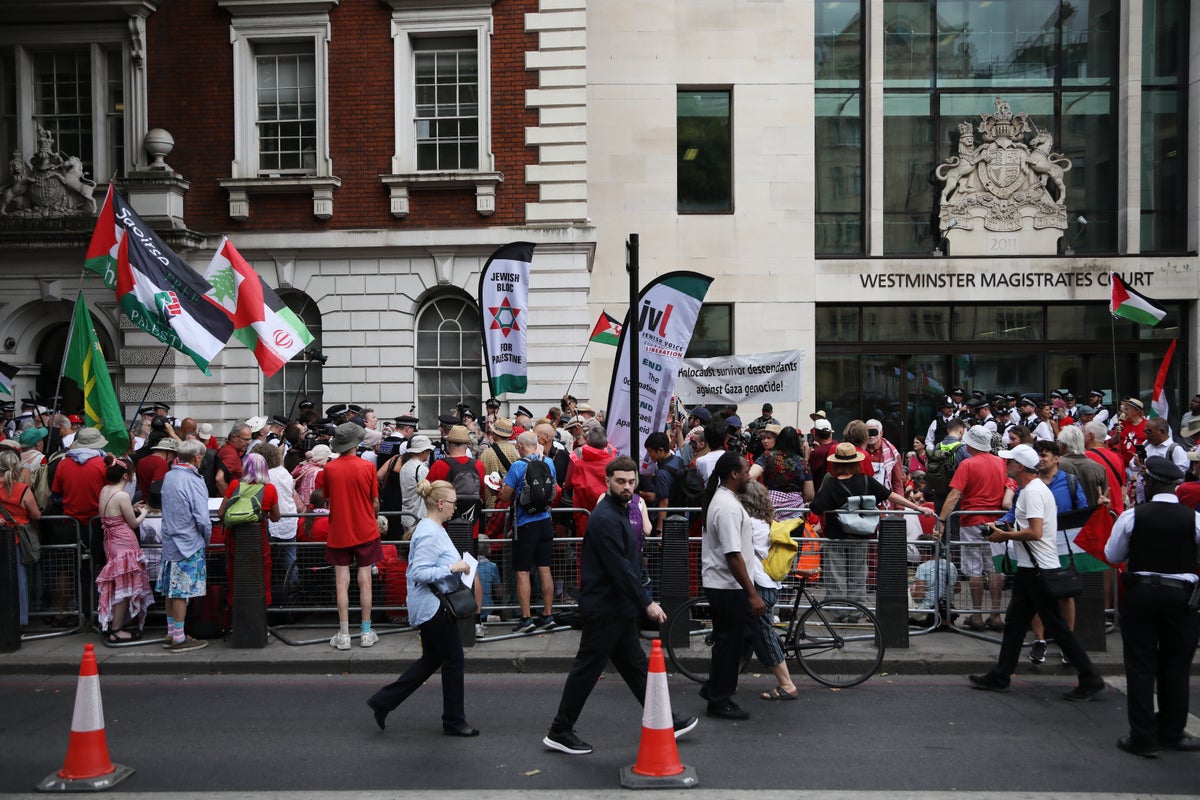
The United States Treasury Department officially designated the British direct-action network Palestine Action as a global terrorist organization, mirroring a controversial British policy framework that weaponizes counter-terrorism statutes against civil disobedience. Washington imposed immediate financial sanctions, freezing any assets within U.S. jurisdiction and criminalizing transactions between American entities and the movement. This escalation cements a transatlantic strategy aimed at criminalizing militant anti-war activism under the banner of national security.
Decades of observing state responses to social movements reveal a predictable arc. When conventional civil disobedience starts affecting balance sheets and military logistics, governments stop treating it as a nuisance and start treating it as an existential threat. Palestine Action was founded in London with a singular objective: dismantle the supply chain feeding Israel's military apparatus, specifically targeting facilities belonging to international defense electronics firm Elbit Systems. Their tactics involved occupying roofs, chaining themselves to gates, and occasionally smashing property or dousing facilities in red paint.
Property destruction is illegal. Vandalism carries statutory penalties under standard criminal codes. Yet, labeling property damage as transnational terrorism represents a radical departure in legal philosophy. This shift began across the Atlantic when British authorities proscribed the network under the Terrorism Act 2000 following an incident at a Royal Air Force base. Now, the White House has imported that precedent, utilizing post-9/11 executive authorities to treat decentralized activists with the same financial isolation tools once reserved for al-Qaeda and the Islamic State.
The Mechanics of Transnational Sanctions
Treasury Secretary Scott Bessent framed the sanctions as a direct warning to far-left networks and their financial enablers. The mechanism deployed is straightforward yet devastating for any modern political organization. By placing Palestine Action on the Office of Foreign Assets Control blacklist, the federal government cuts off digital fundraising pipelines, international solidarity transfers, and basic banking access.
This financial blockade relies on strict liability standards. Banks and payment processors operating globally must scrub their databases to ensure no accounts have tenuous links to the group or its prominent organizers. A donation processed through a standard fintech app can suddenly transform an ordinary citizen into a target of federal investigation. Secondary sanctions loom over foreign financial institutions that fail to comply, effectively globalizing American domestic policy priorities.
Alongside Palestine Action, the administration targeted Italy's Autistici Inventati collective and the international coalition Masar Badil. State Department officials argued that these networks share digital infrastructure or ideological alignment with domestic groups accused of leaking sensitive data or disrupting border infrastructure. The administrative state has built an interconnected dragnet where digital communication, property damage, and geopolitical protest blur into a single category of state subversion.
The Chilling Effect on Constitutional Protections
Civil liberties advocates immediately pointed out the friction between these designations and baseline constitutional guarantees. When a government can bypass traditional criminal prosecution—where defendants enjoy rights to a jury trial and proportional sentencing—and instead apply administrative terrorism labels, the entire architecture of dissent shifts.
The defense rests on an expansive interpretation of material support laws. If an activist group encourages tactics that involve damaging infrastructure, authorities argue that publicizing those actions constitutes material encouragement of terrorism. This logic creates a wide perimeter. Journalists, independent observers, and legal defense funds find themselves operating in a gray zone of potential liability.
In the United Kingdom, the legal battle over this precedent remains fierce. While the Court of Appeal upheld the initial British proscription, the case sits on the docket of the Supreme Court, where judges agreed to review whether the ban represents a disproportionate violation of free expression. The Trump administration chose not to wait for the conclusion of those judicial reviews. By codifying the designation in Washington, the White House preemptively insulated the policy from foreign judicial outcomes.
Redefining National Security
States rarely surrender emergency powers once acquired. The tools forged during the global war on terror are migrating inward, finding new application against domestic political friction points. Direct action campaigns focused on foreign policy conflicts test the limits of what liberal democracies will tolerate when economic and military alliances face sustained disruption.
The strategy behind the designation is less about eliminating a decentralized network of paint-wielding protesters and more about establishing a legal barrier. By drawing a bright line between protected speech and disruptive direct action, governments are signaling that economic interference with the defense sector will face the full weight of the national security apparatus.
The appeals in British courts will proceed, and legal challenges to the U.S. treasury orders will wind through federal district courts. Yet, the immediate objective of the state has already been achieved. Financial lifelines are severed, insurance rates for defense contractors are stabilized, and the cost of political dissent has risen exponentially.


