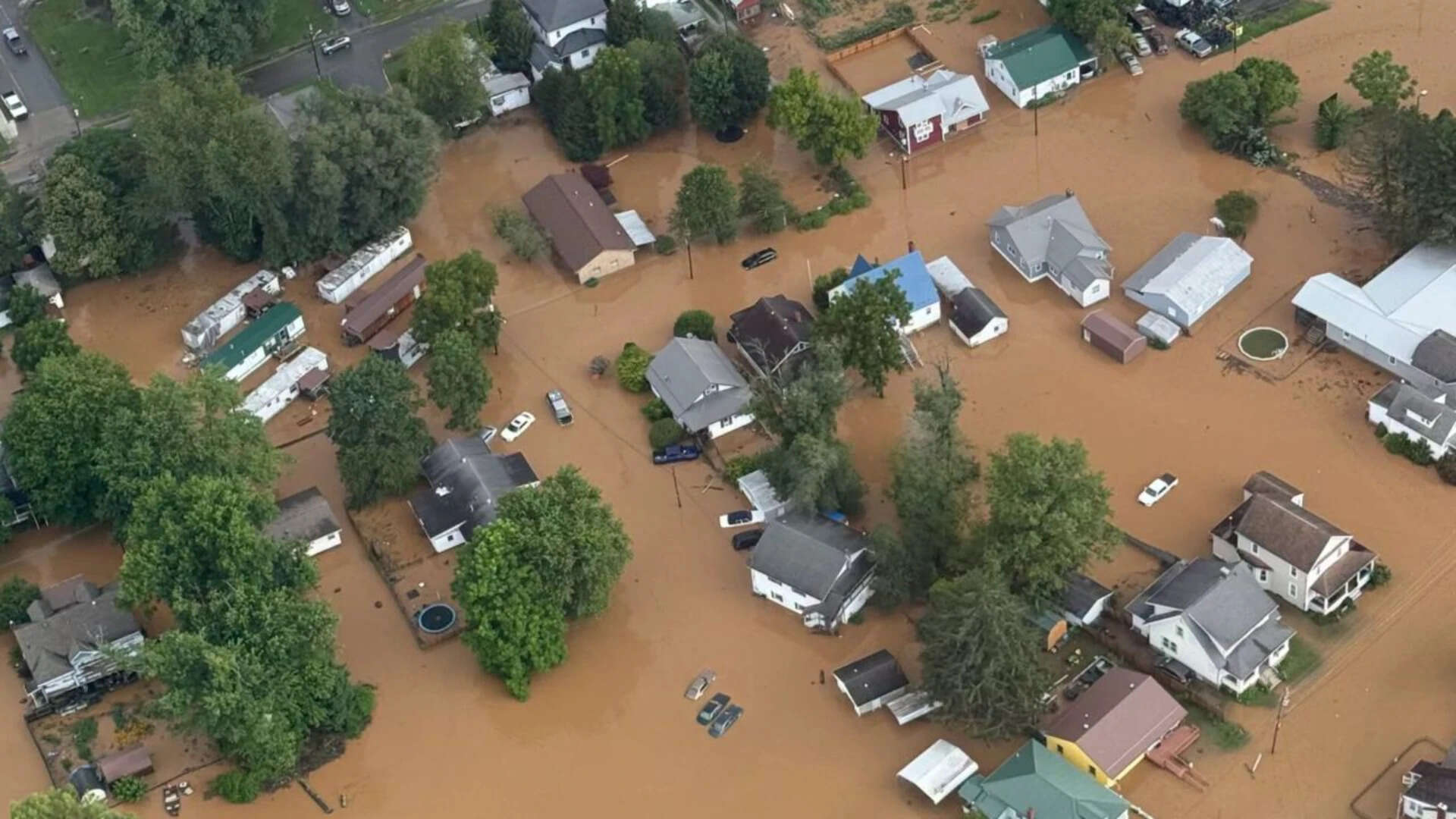
When four and a half inches of water drop from the sky in 37 minutes, gravity doesn't give you a grace period. That's exactly what happened in Upshur County, West Virginia, when severe storms battered the region.
Water didn't just pool. It rushed through streets, turned neighborhood roads into swift currents, and trapped drivers inside their cars. Recently making waves in this space: Strait of Hormuz Supply Shocks and Asian Energy Realignment.
Governor Patrick Morrisey issued a statewide emergency covering all 55 counties. Search teams mobilised across the region as rivers surged past historical benchmarks.
The Search Effort in Upshur County
State police located an overturned vehicle buried under heavy debris and churning water in Upshur County. Search-and-recovery teams haven't been able to inspect the vehicle safely yet. Officials believe it holds two people who were reported missing during the peak of the downpour. More insights regarding the matter are detailed by Associated Press.
Rescuers don't rush blindly into situations like this. The current is simply too fast, and floating logs and metal make early entry deadly for first responders.
More than 100 water rescues have taken place statewide. Emergency personnel used boats and high-water vehicles, while 19 helicopters from the National Guard and state police were deployed or held on standby.
For hundreds of families, the sudden rise of the water left almost no time to grab possessions or evacuate safely. Three emergency shelters hosted over 100 displaced residents during the worst hours of the deluge.
National Guard Mobilization and Damage Across Counties
The state initially sent roughly 100 National Guard troops to hard-hit northern counties. As the scale of destruction became obvious, another 400 soldiers were called in, bringing the total response force to 500 personnel.
Troops are clearing heavy timber, hauling debris off blocked roads, and assisting local police with door-to-door welfare checks.
The worst damage concentrated in three main counties:
- Upshur County, where record rainfall overwhelmed localized drainage systems within minutes.
- Lewis County, where flash flooding inundated local businesses and private properties.
- Pleasants County, where mudslides wiped out secondary roads and cut off isolated homes.
Major transit routes suffered severe delays and closures, including stretches of Interstate 79 and U.S. Route 48. In Fayetteville, a massive sinkhole opened up and swallowed a car parked outside a local establishment.
Why The Rain Was So Destructive
This was not a standard summer thunderstorm. The ground across West Virginia was already saturated from earlier rainstorms that dumped over two inches of rain days prior.
When the new storm system stalled over the mountainous terrain, the soil couldn't absorb another drop.
Data from a U.S. Geological Survey gauge at Sand Run near Buckhannon showed water levels surging past historic records set during the devastating 1985 flood event.
When 7 inches of rain hits steep, saturated hillsides, the run-off travels directly into narrow valleys. Drainage ditches fill instantly. Creek beds overflow.
You end up with thousands of gallons of fast-moving water looking for the lowest point available, which often happens to be someone's living room or a main thoroughfare.
Immediate Action Steps for West Virginia Residents
If you live in affected areas or near swollen tributaries, recovery and safety precautions require immediate focus.
First, report all structural damage to state emergency portals. Governor Morrisey urged residents to complete online damage assessments so federal aid applications can move forward quickly.
Second, stay off roads with standing water. It takes less than 12 inches of moving water to sweep a standard car off the road. Saturated soil also creates ongoing mudslide risks along mountain cuts even after rain stops.
Third, treat remaining utility outages with extreme caution. Over 6,000 homes lost power during the storm's peak. If you're running a backup generator, keep it outdoors and far away from windows to prevent dangerous carbon monoxide build-up.