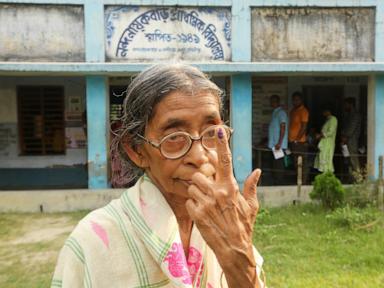
The lines at polling stations across West Bengal aren't just long this morning. They're tense. Thousands of people are standing under a bruising sun to cast their ballots, but the mood is different from the last election cycle. This isn't just about who leads the state or represents the constituency in New Delhi. For a significant chunk of the population, today is about proving they still exist in the eyes of the government.
Following a sweeping national voter list purge that saw millions of names struck from the rolls, West Bengal has become the ultimate testing ground for Indian democracy. Critics call the cleanup a targeted strike against specific communities. Supporters argue it’s a necessary step to fix a system riddled with ghost voters and illegal entries. Regardless of which side you lean toward, the reality on the ground is messy. People who’ve voted for decades suddenly found their names missing when the draft lists went public months ago. Now, we’re seeing the fallout of that administrative upheaval as the first phase of voting kicks off.
The Chaos Behind the Cleaned Rolls
Election officials claim the purge was a technical necessity. They point to the need for "purity" in the electoral rolls, removing those who have passed away or moved. That sounds reasonable on paper. In practice, it’s been a nightmare. In districts like North 24 Parganas and Murshidabad, the sheer volume of deletions triggered a wave of panic that hasn't quite settled.
I’ve looked at the data coming out of the Election Commission of India (ECI) regional offices. The numbers show that West Bengal saw some of the highest rates of "corrections" in the country. This wasn't just a few thousand people. We’re talking about a scale that can actually swing an election result. When you remove tens of thousands of voters from a swing district, you aren't just cleaning a list. You’re reshaping the electorate.
The process relied heavily on door-to-door verification by Booth Level Officers (BLOs). Many of these workers are underpaid and overworked. Mistakes weren't just possible; they were inevitable. If you weren't home when the officer knocked, or if your document had a single letter misspelled, you risked being flagged. For a state with a history of political violence and high-stakes polarization, this bureaucratic "cleanup" feels like a tactical maneuver to many local residents.
Why West Bengal is the Eye of the Storm
You can't talk about West Bengal without talking about identity. The state shares a porous border with Bangladesh, making the issue of citizenship and "illegal immigrants" a constant political firebrand. The ruling party at the center has often pushed for a National Register of Citizens (NRC), and many see this voter list purge as a "backdoor NRC."
Local leaders from the Trinamool Congress (TMC) have been vocal. They’ve spent the last several weeks holding rallies not just to talk about roads or jobs, but to teach people how to check their names on the digital portal. On the other side, the Bharatiya Janata Party (BJP) maintains that the purge is about ensuring only legitimate Indian citizens decide the country's future.
This ideological chasm makes the act of voting today feel heavy. It’s not just a civic duty anymore. It’s a survival tactic. If your name is on that list and you have that ink on your finger, you’ve survived the purge. You’re "safe" for another cycle.
The Tech Glitch That Stripped Rights
Technology was supposed to make this easier. The ECI introduced several AI-driven tools to identify duplicate entries across different states. While the software is great at catching someone registered in both Kolkata and Delhi, it’s famously bad at handling the nuances of Indian names.
Names in West Bengal often have multiple English spellings for the same phonetic sound. "Mondal" vs "Mandal." "Chakraborty" vs "Chakrabarti." The automated systems often flagged these as discrepancies rather than variations. If the person didn't respond to a notice they might not have even received, they were gone.
I’ve spoken with legal experts who’ve been helping families file appeals. They’ve seen cases where entire households were deleted because the "head of the family" was deceased, and the system didn't know how to re-link the remaining members. It’s a cold, digital way to handle a very human right. The burden of proof was shifted entirely onto the citizen. You had to prove you deserved to be on the list, rather than the state proving you didn't.
Fear and the Turnout Factor
Early reports from the morning sessions show a high turnout. That’s typical for Bengal, but there’s a frantic energy to it today. People are showing up with folders full of documents—Aadhaar cards, ration cards, old land deeds—just in case the polling officer challenges their identity at the booth.
There’s a legitimate fear that "voter suppression" is the goal here. High turnout is usually seen as a sign of a healthy democracy. But if that turnout is driven by the fear of being erased from the system, it’s a sign of a deep-seated rot. People aren't just voting for a candidate. They're voting to affirm their status in society.
The political parties know this. They’ve deployed "booth agents" with their own copies of the revised lists, ready to argue every single rejection. It’s creating bottlenecks. In some booths in South Kolkata, the wait time has stretched to four hours. Tempers are short.
How to Check Your Status if You Haven't Voted Yet
If you’re in a phase that hasn’t gone to the polls yet, don't wait until election morning. The "purge" is done, but there are still narrow windows for corrections or using alternative identification if your entry has a minor error.
- Use the Voter Helpline App. It’s the fastest way to see if your EPIC number is still active.
- Don't rely on your old voter ID card alone. If your name isn't on the current electoral roll held by the presiding officer at the booth, the physical card in your pocket means nothing.
- Check the "Deleted" list specifically. Most local government websites have a PDF of names that were removed. If you find yourself there, you need to contact the Electoral Registration Officer (ERO) immediately.
- Bring backup. Even if you have your voter ID, bring your Aadhaar or PAN card. If there’s a dispute over a spelling mistake on the roll, having a secondary government document can sometimes save your vote.
The reality is that once the voting begins, your options shrink. The time for bureaucratic appeals has largely passed for those in the current phase. Now, it's just about showing up and hoping the system didn't swallow your data.
This election will likely be remembered for the millions of people who didn't get to vote. While the headlines will focus on who won and who lost, the real story is in the gaps in those lists. A democracy is only as strong as its smallest voice, and right now, many of those voices have been muted by a spreadsheet. If you're on the list, go vote. It’s a privilege that was taken away from a lot of your neighbors this year.