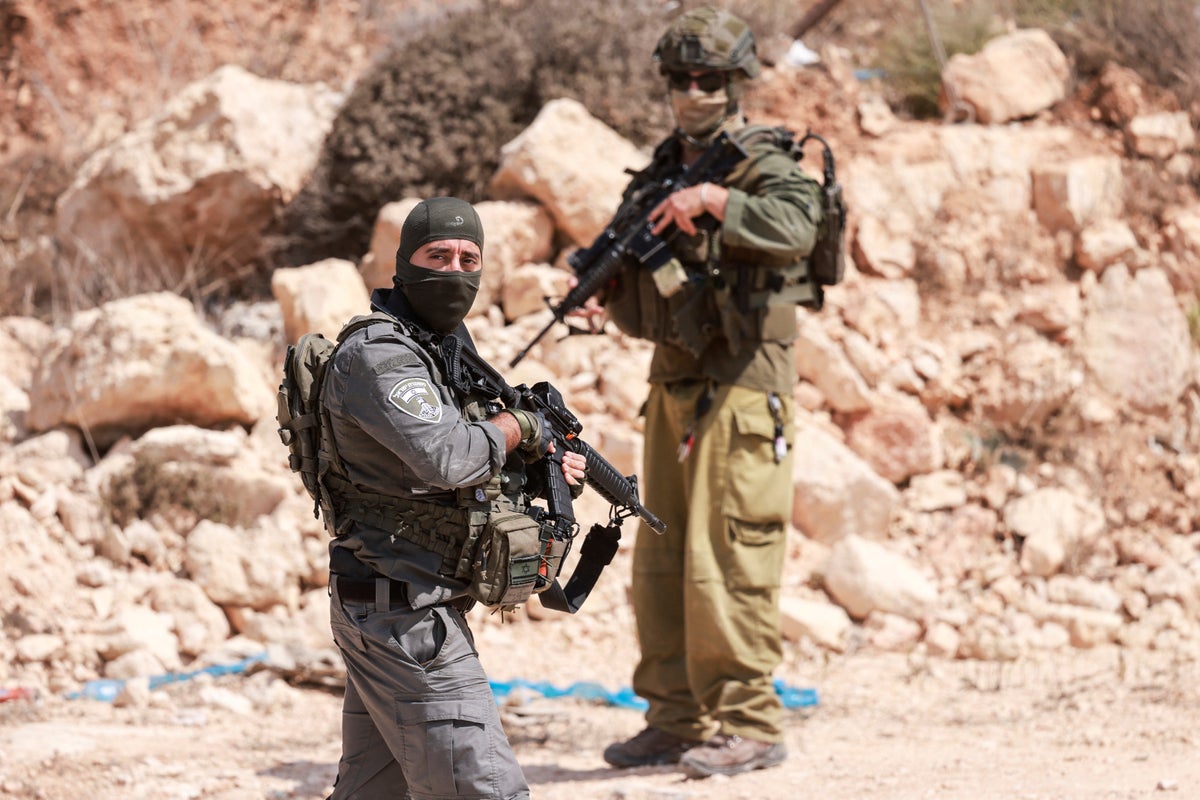
Every single headline written about the West Bank follows the exact same mechanical script. Tragedy strikes, the blame gets automatically assigned based on pre-programmed political tribalism, and the international commentariat treats a localized kinetic nightmare like a static football game. The conventional framing treats complex, multi-layered security failures as moral melodramas. That intellectual laziness is precisely why the violence never stops.
When two teenagers are killed in a chaotic clash involving Israeli settlers and military forces, the default media reflex is to isolate the incident from the systemic engine driving it. Commentators scream about occupation or terrorism, depending on which cable news network funds their pension, while ignoring the structural governance vacuum turning Area C into an administrative meat grinder. If you want to understand why young lives are being extinguished in the hills of Samaria and Judea, you have to stop looking at the symptoms and start dissecting the catastrophic institutional failure governing every inch of that territory.
The Myth of the Monolithic Actor
The lazy consensus relies on a comfortable fiction: that every side acts with unified command and singular ideological purity. The media loves neat boxes. They want you to believe the Israeli military operates as a hive mind, that every settler is an ideologue with a rifle, and that local Palestinian youth are merely passive victims of an overarching apparatus.
Reality is far more fractured and infinitely more dangerous.
I have spent years analyzing asymmetric conflict zones, and the single biggest analytical error observers make is projecting state-level rational actors onto chaotic, decentralized flashpoints. The West Bank is not governed by clean institutional hierarchies. It is a fragmented jigsaw puzzle split into zones of overlapping, competing authorities where the rule of law collapsed long ago.
When friction erupts between radicalized civilian outposts and local Palestinian villages, you are witnessing the breakdown of state monopoly on violence. The Israeli state has repeatedly failed to police its own extremist fringe, allowing a lawless settler subculture to operate with impunity. Simultaneously, the Palestinian Authority has surrendered its administrative and security credibility in large swaths of the territory, leaving a vacuum quickly filled by armed local factions, clan warfare, and desperate teenagers caught in the crossfire.
Treating this as a simple bilateral dispute between two unified nations is intellectual malpractice. It is a multi-sided governance crisis where civilian safety has been completely sacrificed on the altar of perpetual political stalemate.
Dismantling the Legalistic Delusion
Let us address the core question that dominates every policy briefing: Can international law and diplomatic pressure fix the West Bank dynamic?
The brutal answer is no. Not in its current form.
For decades, international bodies have churned out resolutions, reports, and condemnation statements that treat the legal status of the territories as the primary lever for peace. This approach completely misunderstands human behavior under extreme security duress. When daily existence is defined by existential threat, roadside friction, and economic strangulation, legalistic arguments about fourth Geneva conventions bounce off actors who believe they are fighting for literal survival.
Imagine a scenario where every legal restriction, every checkpoint, and every administrative boundary is erased overnight without a fundamental restructuring of local security governance. You would not achieve peace; you would unleash an immediate, high-intensity civil war.
The obsession with legal definitions has blinded diplomats to the operational realities on the ground. Security precedes law. Until local populations—on both sides—feel physically secure from state and non-state violence, any grand political settlement is just expensive wallpaper pasted over a collapsing foundation.
The Economic Trap and the Politics of Despair
You cannot talk about youth casualties in the West Bank without looking at the economic dead end facing the younger generation. The local economy is structurally dependent, heavily restricted, and utterly incapable of providing meaningful futures for young men and women.
When you strip away economic mobility, educational prospects, and any sense of agency over one's destiny, you manufacture a pool of recruits primed for radicalization. On one side, bored, alienated youth from ideological outposts seek validation through territorial aggression. On the other side, teenagers with zero economic prospects watch their neighborhoods shrink under administrative pressure and find lethal validation in asymmetric resistance.
The political leaderships on both sides benefit from this desperation. A hopeless population is easy to mobilize, easy to control, and easy to feed into the perpetual cycle of outrage. The status quo is deeply dysfunctional for the people living it, but it is remarkably functional for the career politicians and ideological extremists who feed on the resulting friction.
Why the Standard Prescription Always Fails
Every time an escalation occurs, the international community rolls out the same tired playbook. They call for restraint, issue sternly worded communiques, and occasionally threaten minor sanctions that nobody takes seriously.
This approach is garbage because it treats the disease as a temporary fever rather than a chronic, multi-organ failure. Asking soldiers trained for high-threat counter-terrorism to act as community police in hostile civilian friction zones is a recipe for disaster. Expecting a fractured, corrupt civilian authority to maintain order without the trust of its populace is a delusion.
Fixing this requires an admission that almost no one in power wants to make: the current paradigm of management through crisis has completely exhausted its utility. You cannot "manage" an ongoing structural collapse forever. Eventually, the floor caves in.
The hard truth is that real security will never emerge from diplomatic theater or punitive headlines. It requires the total dismantling of lawless outposts, the aggressive prosecution of vigilante violence from any demographic, and the creation of economic and political horizons that give teenagers a reason to wake up in the morning besides survival or martyrdom.
Until leaders find the courage to confront their own extremists instead of exploiting them, the headlines will remain exactly the same, and another generation of kids will pay the price for institutional cowardice.


