Wait.
At 7:42 PM in São Paulo, the rain stops hitting the corrugated tin roof of a bakery on Avenida Celso Garcia, and for three seconds, nobody breathes. Behind the counter, seventy-two-year-old Dona Marilene keeps one flour-dusted thumb pressed against the glass of a cheap transistor radio, while her twenty-six-year-old grandson, Tiago, refreshes the Superior Electoral Court application on a cracked smartphone screen. Neither of them is looking at the other. They represent two halves of a country that has spent the last decade arguing over the same dinner table, divided not merely by party affiliation, but by two fundamentally incompatible memories of what survival looks like.
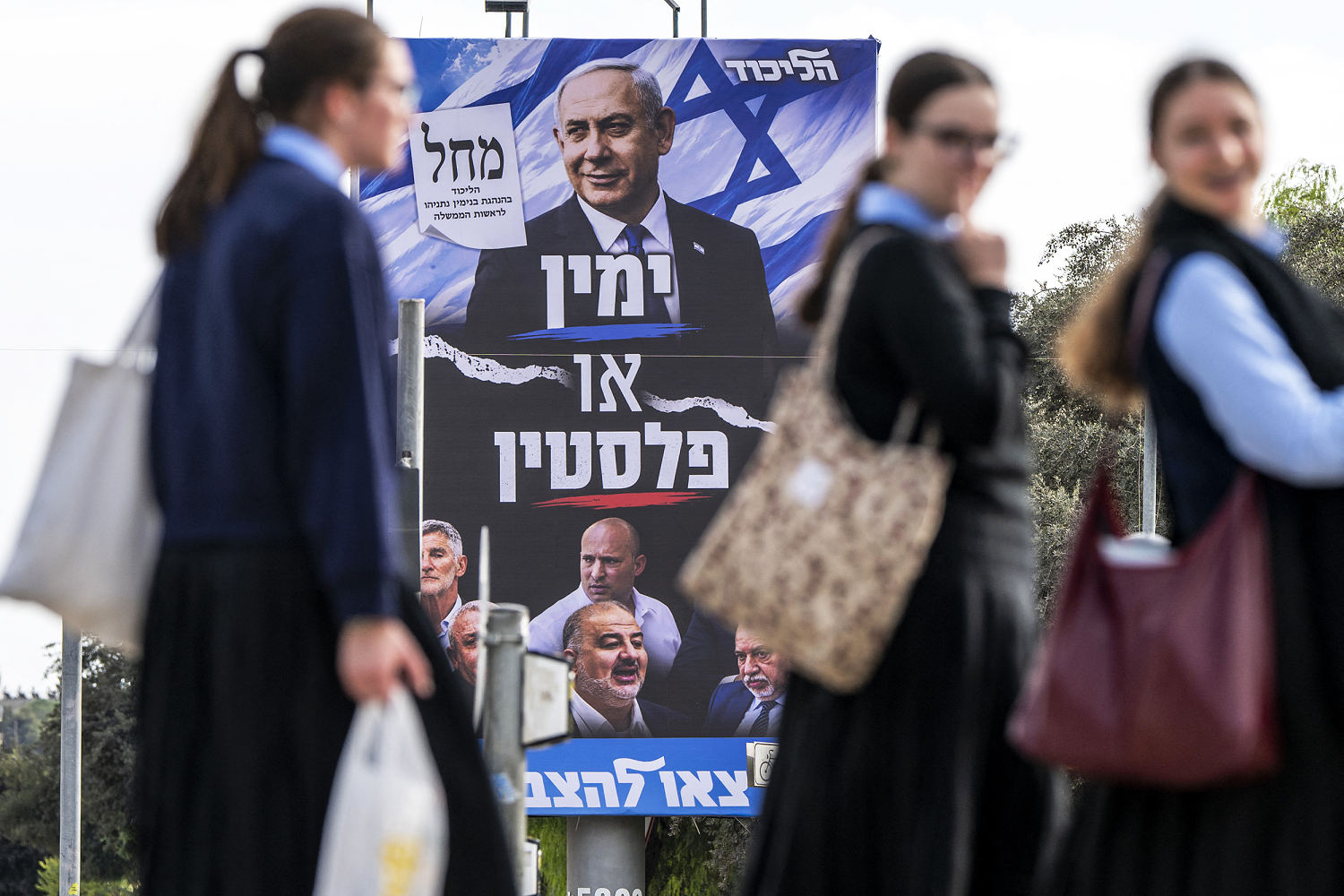
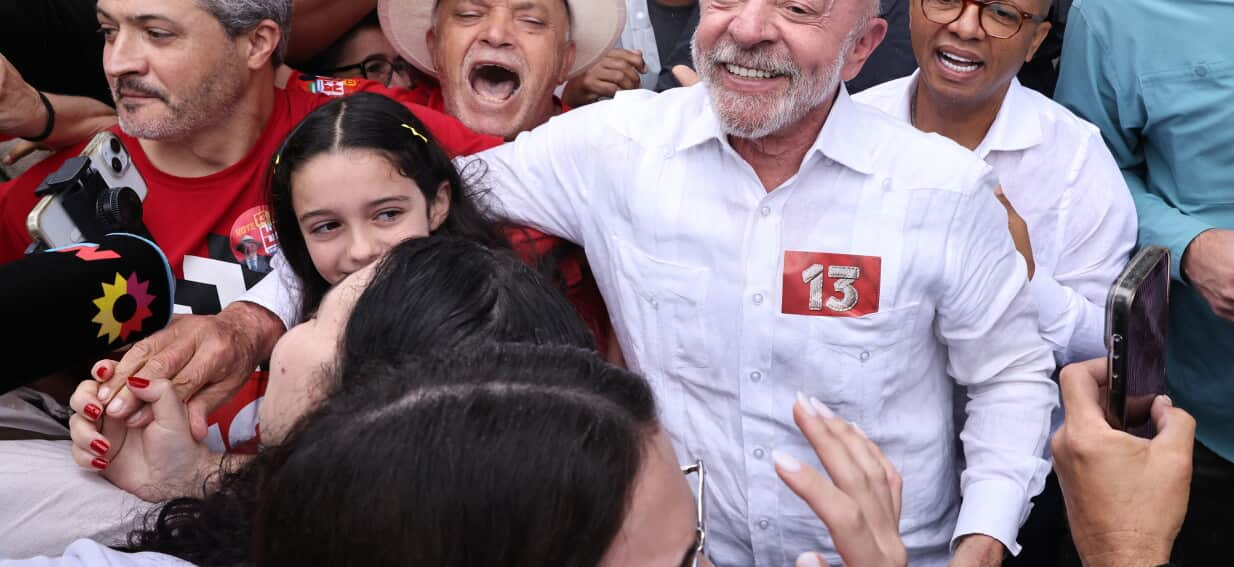
According to official tallies reported by major international outlets covering the 2026 Brazilian presidential runoff, voters returned Luiz Inácio Lula da Silva to the Palácio do Planalto for a fourth term, narrowly defeating the political successor backed by former president Jair Bolsonaro. On paper, the headline reads like a tidy historical footnote—a razor-thin margin in South America’s largest democracy, settled by electronic ballot boxes that tally over 120 million votes before midnight. Yet reducing a national reckoning to a percentage point misses the quiet, exhausting reality lived by the people standing in those voting lines.
To understand why a fraction of a percent feels like an earthquake in Brazil, you have to step away from Brasília’s modernist concrete plazas and sit at Marilene’s laminate table.
Two Kitchens, One Currency
In political reporting, analysts often describe Brazil’s electorate as "polarized," a clinical word that makes a deeply personal fracture sound like a battery diagram. Let us ground that abstraction in two hypothetical households—clearly imagined composites built from real demographic patterns documented by Brazilian polling institutes like Datafolha and Quaest.
Consider Marilene. She remembers the late 1990s and early 2000s not through macroeconomic charts, but through the weight of her grocery bag. When Lula first took office in 2003, federal cash-transfer programs like Bolsa Família and real increases in the minimum wage meant her family could afford meat more than twice a month and send Tiago to a technical college. For voters like Marilene, particularly across the Northeast and among lower-income households, Lula’s name is inseparable from institutional safety nets, public university expansion, and state-backed credit. When she entered the voting booth in 2026, she was not voting for an ideology; she was voting to protect the floor beneath her feet.
Now consider Tiago, her grandson, who runs a small motorcycle courier and parts-resale operation three neighborhoods over. His political education happened on WhatsApp groups and short-form video feeds between 2018 and 2026. To Tiago, the state rarely feels like a benefactor; it feels like a tollbooth. He sees payroll taxes, municipal permits, fuel price volatility, and an urban security crisis that forces him to lock his shop gate at dusk. When Jair Bolsonaro’s chosen heir campaigned on deregulation, fiscal restraint, tough-on-crime policing, and conservative social values, Tiago heard someone speaking his language. As political scientists at the Getulio Vargas Foundation have frequently noted in their analyses of Brazilian voting behavior, the modern right-wing coalition in Brazil draws immense strength from entrepreneurial aspiration, evangelical church networks, and deep skepticism toward traditional state intervention.
Between Marilene and Tiago sits the invisible stake of the 2026 election. Neither is a villain. Both are trying to calculate risk in an economy where inflation on basic staples can erase a month’s savings in a weekend.
The Architecture of a Deadlock
Why did the race tighten to a knife’s edge, even with an incumbent president presiding over steady, if unspectacular, growth? The answer lies in the mechanics of modern Brazilian politics—a system that functions less like a pendulum and more like a tug-of-war where both teams have dug their heels into concrete.
Think of Brazil’s electorate as an old suspension bridge carrying two heavy trucks moving in opposite directions. Every policy decision—whether raising the minimum wage, adjusting central bank interest rates, or funding environmental enforcement in the Amazon—shifts the tension on the cables. Pull too hard toward public spending, and financial markets in São Paulo’s Faria Lima district react with currency sell-offs and higher borrowing costs, which eventually trickle down to Tiago’s loan rates. Pull too hard toward austerity, and social programs contract, eroding the purchasing power that keeps Marilene’s bakery afloat.
During the 2026 campaign, both camps had to navigate this exact trap.
With Jair Bolsonaro legally barred from running due to prior electoral court rulings—a fact extensively documented by judicial records and international press—the Brazilian right faced a delicate test of transference. Could political loyalty be handed from a charismatic, combative populist to a designated heir without losing momentum? In Brazilian political history, anointing a successor is notoriously perilous. Lula himself learned that lesson in 2010 when Dilma Rousseff won on his coattails, only to face severe economic headwinds and impeachment six years later. In 2026, Bolsonaro’s endorsed successor managed to consolidate the core conservative base—agribusiness leaders in the Center-West, evangelical congregations across the Southeast, and anti-establishment voters—proving that Bolsonarismo had evolved from a personal movement into a durable political identity.
Yet durability is not the same thing as a majority.
Lula, campaigning at eighty-one years old, leaned heavily on institutional familiarity and a broad, sometimes uneasy centrist alliance. According to post-election assessments by outlets such as Reuters and the Associated Press, his victory hinged on retaining decisive margins in the Northeast while clawing back just enough moderate, undecided voters in swing states like Minas Gerais—a state that has correctly predicted every Brazilian presidential winner since the country’s return to democracy in 1985.
What the Ballot Box Does Not Resolve
I still remember standing outside a public school polling station in Belo Horizonte during a previous runoff, watching voters emerge from behind the cardboard privacy screens. You expect shouting. You expect flags, drumlines, maybe a confrontation near the gate. Instead, what strikes you most is the silence. People walk out into the humid afternoon sun, fold their paper voting receipts into their pockets, and walk home past neighbors wearing the opposite jersey.
That quietness can be deceptive. It hides the genuine uncertainty that follows every razor-thin election in Brazil.
Be honest about what a narrow victory actually buys a president in Brasília: not a blank check, and certainly not peace. Under Brazil’s multiparty presidential system—often termed presidencialismo de coalizão, or coalition presidentialism—winning the executive mansion is only half the equation. A president must govern alongside a Congress heavily influenced by the Centrão, a pragmatic bloc of centrist and conservative lawmakers who control committee chairs, budget amendments, and legislative survival.
In 2026, while voters narrowly rejected Bolsonaro’s heir for the presidency, conservative and center-right parties maintained formidable leverage in both the Chamber of Deputies and the Senate. That creates a structural friction that no campaign speech can wish away. Every tax reform, every environmental regulation, every social expenditure must pass through a legislature where the opposition holds real veto power.
For readers trying to make sense of what happens after the headlines fade, three realities define the post-election landscape:
- Governance requires constant negotiation. A fourth Lula term cannot rely on executive decrees alone; it demands daily transactional bargaining with lawmakers whose constituents voted for his rival.
- The right-wing movement remains intact. Losing a runoff by a narrow margin does not dismantle a political coalition. Bolsonaro’s movement now possesses governors, mayors, senators, and a disciplined media ecosystem capable of mounting immediate opposition.
- Economic patience is thin. Both working-class families and domestic investors are watching fiscal discipline closely. High interest rates and public debt constraints leave narrow room for expensive new promises.
The Morning After on Avenida Celso Garcia
By 9:15 PM, the Superior Electoral Court confirmed what the math had been whispering for an hour: Lula had crossed the mathematical threshold to win re-election. Outside, fireworks popped somewhere down the avenue, answered a block away by the low, defiant honk of a pickup truck horn.
Inside the bakery, Marilene untied her apron and set two small cups of black coffee on the counter. She did not gloat. At seventy-two, she has seen enough presidents come and go—military generals, technocrats, reformers, populists—to know that no politician arrives at the bakery at five in the morning to knead the dough.
Tiago took his cup, scrolling past the celebratory posts and angry memes flooding his feed, already calculating what diesel and spare tires would cost on Monday morning. Outside the glass door, the streetlamps buzzed against the damp air, casting two overlapping shadows across the wet asphalt—neither entirely in the light, neither willing to step off the curb.