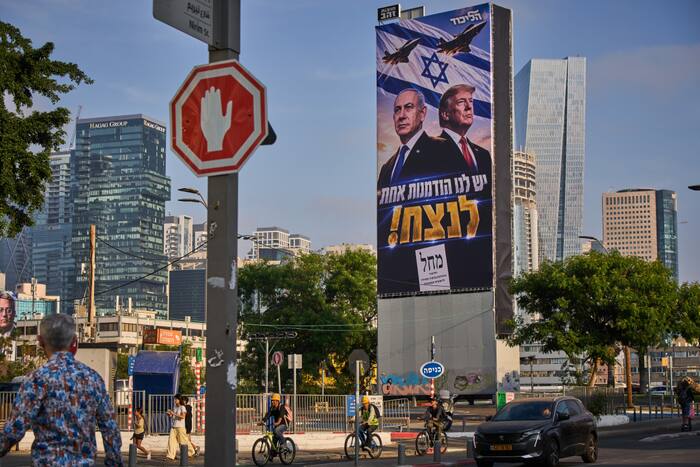
At seven in the morning in Jerusalem, the air still smells of damp limestone, diesel exhaust, and cardamom coffee. Before the heat rises off the stone walls and turns the streets into bright, glaring corridors, millions of people walk toward school gymnasiums and community centers carrying blue identity cards in their pockets.
They are going to drop a tiny slip of paper into a blue cardboard box.
On the surface, it looks like the quietest, most ordinary civic ritual on earth. Inside those polling stations, however, the quiet is deceptive. Every ballot folded between thumb and forefinger carries the weight of decades of survival, grief, rage, and an argument over what a country owes its own soul. For years, outsiders have reduced this recurring spectacle to a single name, framing every Israeli national election as an up-or-down referendum on Benjamin Netanyahu.
They are not entirely wrong. Yet reducing this moment to one man misses the tremor running beneath the pavement.
The Kitchen Table in Petah Tikva
To understand why a democracy can feel like a pressure cooker, forget the televised debates and step into a third-floor apartment in Petah Tikva, just east of Tel Aviv. Consider a hypothetical family—let us call them the Levi household—whose morning routine mirrors thousands of real ones across the coastal plain.
Yossi, sixty-two, spent thirty years driving supply trucks and remembers when a loaf of bread cost pocket change and the borders felt entirely different. To Yossi, leadership is not an abstract philosophy seminar; it is a shield. When rockets fall in the south or diplomats lecture from overseas capitals, Yossi wants a figure at the podium who speaks fluent American television, understands raw geopolitical power, and refuses to blink. For him, loyalty to Netanyahu is not blind devotion. It is an insurance policy paid for in hard-earned skepticism.
Across the kitchen table sits his daughter, Maya, twenty-nine, a software engineer who spent the last year marching down Kaplan Street in Tel Aviv waving a blue-and-white flag until her voice gave out. Maya loves the same country her father built, yet she sees a different threat altogether. She worries about the courts, the rising cost of groceries, the growing chasm between secular workers and religious communities exempt from military service, and a political culture that seems permanently stuck in emergency mode.
When Yossi looks at the ballot box, he sees protection. When Maya looks at the same box, she sees a future slipping out of reach.
Neither of them is a caricature. Both of them are terrified of losing the only home they have. That collision—happening simultaneously in apartments in Haifa, desert towns in the Negev, and hillside neighborhoods in the Galilee—is the real story behind the election headlines.
Why the Mathematics Never Seem to Settle
If you have ever watched Israeli election coverage from afar, you might have felt a sudden wave of vertigo. How does a nation of roughly ten million people end up holding repeated elections in rapid succession, only to wake up the next morning to the same deadlocked parliament?
Think of the Israeli Knesset less like a two-party tug-of-war and more like an intricate, unforgiving game of Tetris played with one hundred and twenty blocks.
Under Israel’s system of proportional representation, voters do not choose an individual representative from their neighborhood. Instead, they choose a party list. Any party that clears the electoral threshold of 3.25 percent wins seats proportional to its national vote share. Because no single party in the history of the state has ever won an outright majority of sixty-one seats on its own, every prime minister must build a coalition—a fragile bridge bolted together from ideological rivals, religious factions, centrist newcomers, and single-issue blocs.
Imagine trying to drive a car where four different passengers each hold a separate steering wheel, one controls the brakes, and any single passenger can jump out at sixty miles an hour and bring the vehicle to a halt. That is coalition politics in Jerusalem.
When the media frames an election as a referendum on Netanyahu, they are describing the gravitational pull he exerts over that entire system. For over a decade and a half across multiple terms, Israel’s longest-serving prime minister has been the sun around which every political planet orbits. Parties no longer define themselves merely as left or right on economic policy or border negotiations. Instead, the defining fault line became brutally binary: either you will sit in a government led by him, or you will not.
Once a political system organizes itself around a single personality, compromise becomes treason. A moderate right-wing politician who agrees with Netanyahu on security but disagrees on judicial reform suddenly finds no middle ground to stand on. Every negotiation turns into a zero-sum test of allegiance.
The Invisible Stakes Behind the Curtain
Walk past the long queues outside a Tel Aviv high school on election day, and you will hear voters arguing about the price of cottage cheese and housing mortgages right alongside debates over Iran’s nuclear program and judicial authority. It is easy to assume these are separate issues. In reality, they are wired into the same circuit.
Take the question of the Supreme Court and institutional checks and balances. To someone living outside the region, debates over judicial review sound like dry constitutional homework. Inside Israel, where there is no formal written constitution and only a single legislative chamber, the courts have historically served as the sole guardrail restraining whatever coalition holds sixty-one votes.
For supporters of the government’s right-wing and religious bloc, an unelected judiciary had overstepped its bounds, imposing secular, liberal values on a traditional majority and blocking elected leaders from governing. For millions of other citizens, weakening that court meant removing the last lock on the door protecting minority rights, free expression, and independent law enforcement—especially while a sitting prime minister stood trial on corruption charges he vehemently denies.
At the same time, another quiet fracture runs through the economy and the military. High-tech engineers, doctors, and reserve soldiers—the very people who generate a massive share of the country’s tax revenue and fill its combat units—have increasingly asked whether the social contract is breaking. When ultra-Orthodox communities grow rapidly while largely remaining outside the workforce and exempt from mandatory military service, resentment simmers beneath the surface. Yet those same religious parties are often the indispensable kingmakers who keep a coalition alive.
Every prime minister faces the same trap. Alienate the kingmakers, and your government collapses by Tuesday. Give them what they demand, and millions of secular and traditional voters feel like strangers in their own country.
Inside the Cardboard Booth
I remember standing outside a polling station in a mixed neighborhood during a tense election cycle, watching an elderly woman with a walker take nearly ten minutes to cross the courtyard. Nobody rushed her. A young man in a kippa held the heavy metal door open while a woman in sleeveless summer clothes carried her folding chair up the steps. For those thirty seconds, the shouting on the television panels vanished. There was only the scrape of rubber tips on concrete and a murmured thank you.
Then she stepped behind the blue cardboard privacy screen.
Inside that tiny booth lies a tray divided into small compartments, each stacked with white paper slips bearing one, two, or three Hebrew letters representing a registered party. There are no machines to tap, no pens to mark a box. You pick up the slip with the letters of your chosen party, slide it into a blue envelope, seal the flap, and drop it through the slot while a committee of rival party observers watches to make sure you only put one envelope in.
It is an analog act in a hyper-digital age, deliberately simple so that no hacker can alter a tally and no recount can be dismissed as a software glitch. Yet the simplicity of the paper slip hides the agony of the choice.
Consider a hypothetical voter named Tariq, a physician living in Nazareth, representing the roughly one-fifth of Israeli citizens who are Arab. On election morning, Tariq weighs two competing impulses. Stay home in protest, convinced that no coalition in Jerusalem will ever treat his community as full partners, or cast a ballot for an Arab-led faction in the hope that a handful of seats might block policies he fears? Turnout in Arab towns can swing the entire national math by several seats, yet apathy and disillusionment sit heavy on every household.
Or picture Rivka, a lifelong conservative voter in a West Bank community who has backed Likud since she was eighteen. She admires Netanyahu’s toughness on the world stage, yet she lies awake at night wondering if the constant turmoil, the bitter rhetoric, and the endless cycle of elections have exhausted the nation’s spirit. She stands in front of the tray of paper slips for a long time, her fingers hovering between habit and doubt.
The Exhaustion of Permanent Crisis
Democracies rarely break all at once. More often, they wear down like tires on rough asphalt, losing tread mile after mile until a sudden rainstorm sends the whole vehicle skidding.
When a country goes to the polls repeatedly within a handful of years, something subtle happens to the public imagination. Long-term planning dies first. Why overhaul an overburdened hospital system, reform education, or build new rail lines if the finance minister might be out of office before the concrete dries? Budgets stall. Civil servants freeze major decisions. Diplomats abroad hesitate to sign agreements with counterparts whose political lifespan might be measured in weeks.
Worse still is the emotional fatigue. Neighbors stop talking politics at Friday night dinners because the cost of an argument has grown too high. Families split along party lines. Words like "traitor" and "fascist" get thrown around with casual ease on radio call-in shows, dulling the language until genuine danger becomes harder to recognize.
And yet, despite the cynicism, they still show up. Turnout in Israeli elections routinely climbs toward seventy percent—a figure that would make election officials in Washington or London green with envy. Even when voters claim they have had enough, even when they swear every politician is out for themselves, they still walk down to the neighborhood school with their blue ID cards in hand.
They show up because in a small country surrounded by complicated history, indifference feels like a luxury nobody can afford.
When the Counting Begins
At ten o’clock at night, the polling stations close. The cardboard boxes are taped shut, signed by observers from across the political spectrum, and driven under guard to central counting halls. On television screens across the country, anchor desks light up with exit polls—colorful bar charts that promise certainty but usually deliver another cliffhanger.
For the next forty-eight hours, the real contest shifts from the streets to backroom offices where party leaders trade phone calls over cold coffee. Sixty-one seats. That is the magic number. Sixty-one out of one hundred and twenty unlocks the prime minister’s residence, the defense ministry, the treasury, and the power to shape the country’s direction for the next four years—or until the next coalition partner decides to pull the plug.
In the end, the headlines will declare a winner and a loser. Analysts in foreign capitals will write brisk summaries explaining what the result means for regional diplomacy, peace prospects, and strategic alliances. They will tally the seats won by Benjamin Netanyahu’s bloc and the seats won by his rivals, treating the outcome like a final score on a stadium board.
Back in Petah Tikva, though, the morning after the election looks much like the morning before. Yossi still wakes up at dawn to make his coffee. Maya still packs her laptop bag for the commute into Tel Aviv. Across the courtyard, the neighbors still nod to one another by the mailboxes, carefully avoiding eye contact just long enough to keep the peace.
The blue ballot boxes are stacked away in municipal storage rooms, empty once again, waiting for the next time a divided nation tries to fit ten million hopes onto a piece of paper no bigger than the palm of a hand.