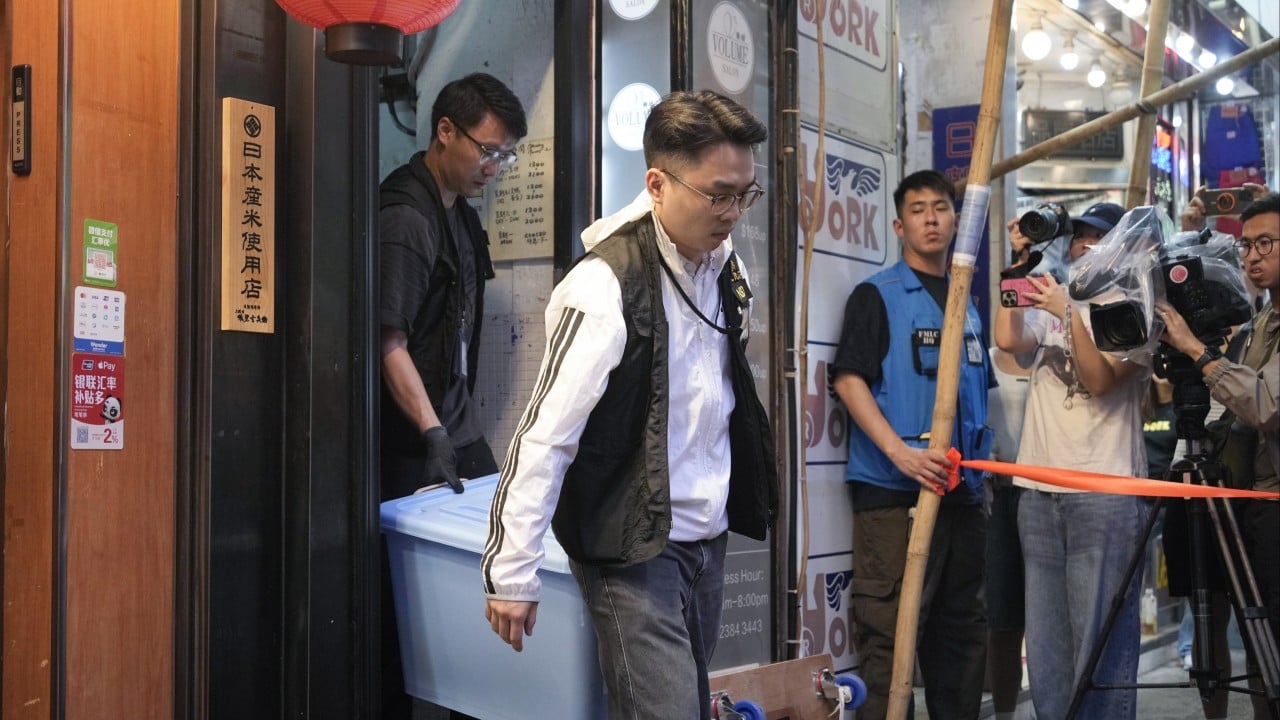
A book is surprisingly heavy when you are holding it in the dark, waiting for a knock on the door.
For Sum Wan-wah and Mandy Lau, that weight was never just physical. It was the weight of ink, of memory, and of a promise they made to themselves when the newsrooms they once worked in were forced to close. They were journalists who became booksellers because they believed that even if you silence the presses, you cannot easily burn every page. Recently making headlines in related news: The Anatomy of a Manufactured Election Bombshell.
Then came the afternoon of July 15, 2026.
The Prince Edward neighborhood of Hong Kong was slick with monsoon rain. Inside Have a Nice Stay, a cozy bookstore tucked away from the neon glare, the air smelled of paper and hand-drip coffee. It was a sanctuary. But sanctuaries in Hong Kong have become fragile things. More information into this topic are detailed by The Washington Post.
When the police arrived, they did not just bring handcuffs; they brought cardboard boxes. They packed up the shelves. They took the poetry, the history, the memoirs, and the essays. Five people—including Sum and Lau—were led away into the wet afternoon. The accusation? Displaying and selling "seditious" publications under the city's new Safeguarding National Security Ordinance.
Two days later, they were released on bail.
The headlines framed it as a standard legal update: suspects released, investigation ongoing, bail conditions met. But the dry language of court dockets misses the real story. It misses the silent, creeping terror of the "invisible red line" that every writer, reader, and shop owner in Hong Kong must now walk.
The Geography of Silence
To understand what is happening to Hong Kong’s independent bookstores, you have to understand the geography of the city.
In the high-rent districts of Central, the glittering towers of glass and steel remain unchanged. Money still moves. Corporate deals are still signed. But if you cross the harbor to Mong Kok or Sham Shui Po, you find a different city. Here, in the cramped upper-floor walk-ups, is where Hong Kong’s soul has historically lived.
These independent bookstores are not just retail shops. They are community centers. In a city where public squares have been emptied of debate, these small rooms are where people go to look at each other and realize they are not alone.
Consider a hypothetical reader—let us call her Yan. She does not buy radical pamphlets. She is an ordinary student who likes to read about sociology, local history, and how cities change. When Yan walks into a shop like Have a Nice Stay, she isn't looking to start a revolution. She is looking for her identity.
But under the current legal climate, even holding a book can feel like an act of defiance.
The authorities seized copies of various titles during the raid, including a book exploring identity and belonging under modern governance. The police stated the seized items incited hatred against the government and the judiciary. But the law does not provide a list of banned titles. The Secretary for Security has openly stated that creating such a list is pointless.
This leaves booksellers in a state of constant, exhausting guesswork.
Is a poetry collection about exile seditious? What about a history book analyzing the 1997 handover?
When the rules are intentionally vague, self-censorship becomes the only way to survive. You begin to weed your own garden. You pull books off the shelves, not because you want to, but because you picture the cardboard boxes waiting in the police vans.
The Price of Bail
Bail is often celebrated as a relief. The cell doors open. You walk out into the humid air and breathe.
But bail is not freedom.
It is a leash. It is a state of suspended animation where your passport is confiscated, your daily routine is monitored, and the threat of a seven-year prison sentence hangs over your head like a pendulum.
For the five booksellers arrested this week, the return to their shops is bittersweet. The physical space remains, but the atmosphere has changed. This was the third major raid on independent bookstores in just a few months. First it was Book Punch in March. Then Hunter Bookstore in June. Now, Have a Nice Stay and Greenfield Book Store.
The pattern is clear. The message is being delivered in broad daylight.
If you run a bookstore that encourages independent thought, you are being watched. If you import books from overseas, customs officials are inspecting the cargo. The very act of importing literature has become a potential crime.
It is a war of attrition against paper.
In a digital world, we often forget the power of the physical. We think information is safe because it exists in the cloud. But there is a unique vulnerability to a printed book. It requires physical space to exist. It must be shipped, stored, unpacked, and displayed. By targeting the physical nodes of this network—the shops, the shelves, the owners—the state is slowly but effectively dissolving the physical archives of Hong Kong's alternative histories.
The Empty Shelf
When you walk into an independent bookstore in Hong Kong today, the most striking thing you see is not what is on the shelves.
It is what is missing.
There are empty spaces where certain titles used to sit. Those gaps are physical representations of fear. They are silent markers of a changing city, telling a story far more powerful than any censored text ever could.
The five booksellers are back on the streets, but their shops are quiet. The rain continues to fall over Prince Edward. And on the shelves of the city, the remaining books sit in the dark, waiting to see who will be brave enough to open them next.