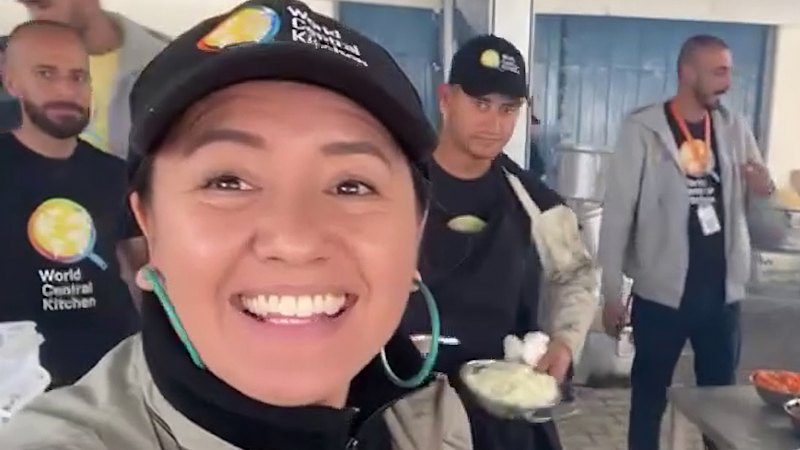
The screen glows in the darkened room, casting a cold blue hue over a family searching for an ending that refuses to materialize. Across an ocean, thousands of miles from the dust and rubble of a coordinated food delivery route, a brother looks at a photograph. In it, Lalzawmi Frankcom—known to the world and everyone who loved her simply as Zomi—is smiling. Her eyes are bright, reflecting the relentless optimism of someone who believed that a plate of hot food could bridge the chasms of human conflict.
She wore the vest of World Central Kitchen. She drove in a marked convoy. She filled out the forms, coordinated the coordinates, and trusted the invisible architecture of humanitarian protection designed to keep aid workers safe in active war zones.
Then came the sky falling down in a sequence of precise, calculated strikes.
We are told that war is chaos, a tumbling avalanche of miscalculations where mistakes are inevitable byproducts of fear and speed. Yet, when the smoke clears, what remains is not just rubble, but a paper trail of institutional reactions. Months bleed into years. Investigative panels write reports. Foreign ministers issue measured statements expressing deep regret. Families are handed findings that explain how errors happen, how procedures fail, and how military commanders are reprimanded or dismissed.
Dismissals. Reprimands. Internal reviews.
These are administrative comforts. They are words designed to sound like motion while standing perfectly still.
Consider what happens next in the quiet chambers of military justice. While high-profile probes are announced for certain tragedies, the ledger quietly draws a hard line elsewhere. The Israeli military completes its reviews, closing doors on criminal culpability for the April 2024 strike that extinguished seven lives on a Gaza road. The message delivered to a grieving family in Australia is stark: tragic error, yes. Criminal wrongdoing, no.
Justice requires a name, a courtroom, and a reckoning. It asks whether the deliberate deployment of lethal force against a clearly identified humanitarian convoy can be neatly filed away under administrative oversight.
Zomi's brother, Mal, sits with questions that standard diplomatic communiqués cannot answer. Why was key audio evidence withheld or left untranslated? Why do declarations signed by more than a hundred nations at the United Nations continue to run up against the stone wall of military impunity?
When a humanitarian worker is killed, the loss is not merely personal. It strikes at the fragile social contract that allows civilization to care for its most vulnerable. If the people who feed the starving can be targeted without legal consequence, the message to every aid worker stepping into the dark is terrifying. It tells them that their safety is conditional, their protection is an illusion, and their deaths are acceptable collateral damage in a ledger that never balances.
The official investigations are finished. The military files are closing. But the narrative of accountability remains unfinished, hanging heavy in the air like smoke after a blast, waiting for a truth that has not yet been allowed to speak.
Israel's ambassador defends investigation into death of Australian aid worker Zomi Frankcom
This video provides additional context regarding the diplomatic defense of the military investigation into Zomi Frankcom's death.
http://googleusercontent.com/youtube_content/1