The steel remembers. For nearly eight decades, the high mountain desert of Idaho has shaken under the tread of seventy-ton monsters. To understand the Idaho Army National Guard’s 116th Cavalry Brigade Combat Team—the proud "Snake River Regiment"—you have to understand the specific, deafening roar of an M1A2 Abrams main battle tank. You have to feel the earth vibrate through the soles of your boots from a mile away when a 120mm smoothbore cannon tears open the morning silence at the Orchard Combat Training Center.
For generations of Idaho Guardsmen, that brutal, heavy armor was a way of life. It was a heritage forged in 1949 and hardened through grueling deployments to places like Kirkuk, Iraq.
Now, the iron is going cold.
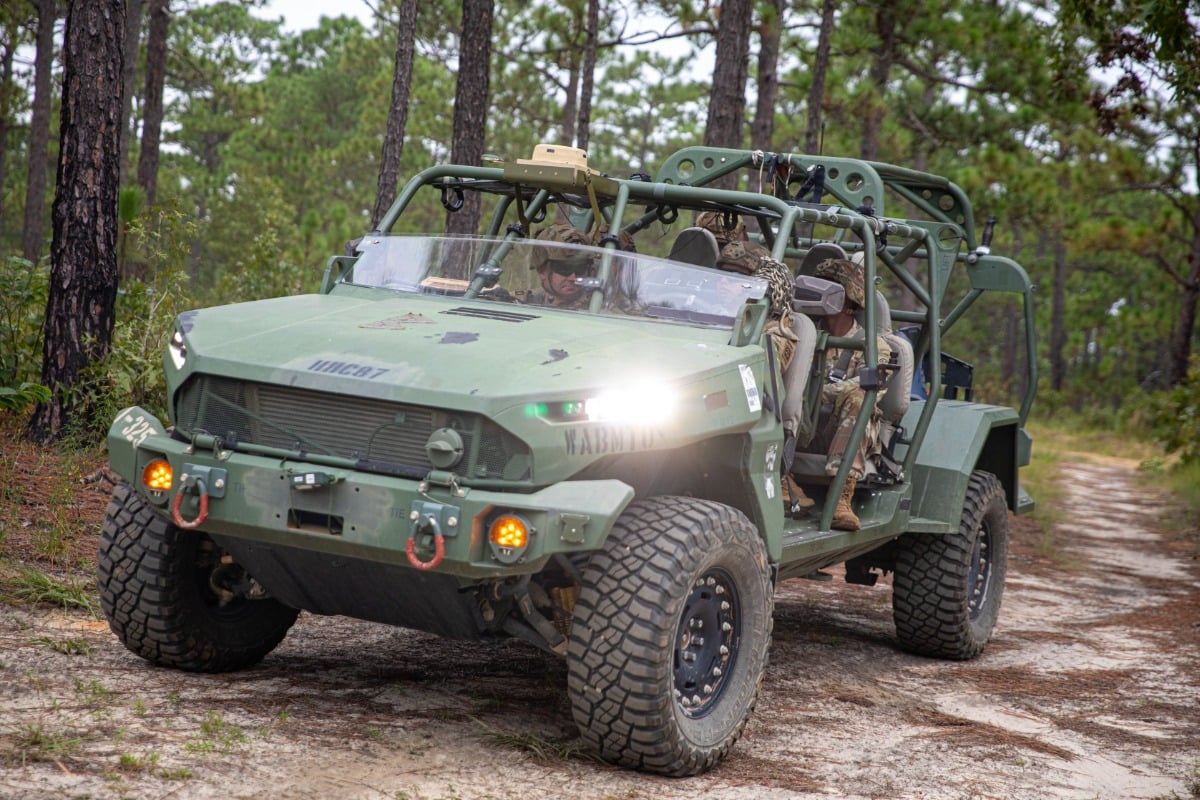
In a series of quiet, profoundly symbolic ceremonies across Gowen Field and various Idaho communities, the tanks and Bradley Fighting Vehicles are being turned in. In their place arrives a vehicle that looks, by comparison, almost fragile: the Infantry Squad Vehicle, built on a commercial mid-size truck chassis.
The heavy armor is gone. The era of the light cavalry has returned.
To the uninitiated, this looks like a retreat, a downsizing of American lethality. But look closer at how the modern battlefield has shattered old assumptions. The strategic pivot happening in Idaho is not a loss of teeth; it is a confession that in the wars of tomorrow, weight is a liability and speed is life.
Imagine an armored crewman who has spent fifteen years inside the belly of an Abrams. Let's call him Sergeant Miller—a composite of the seasoned tankers who have held the battalion guidons through these final months. Miller knows the exact smell of hot hydraulic fluid, the cramped security of a turret, and the absolute confidence that comes from sitting behind layers of depleted uranium armor. To Miller, the tank was an unyielding fortress.
But the fortress has a fatal flaw. It is trapped by geography.
An Abrams tank cannot cross a bridge that handles less than seventy tons. It consumes fuel at an agonizing rate of roughly two gallons per mile, requiring an endless, vulnerable umbilical cord of fuel trucks stretching across the landscape. Most importantly, getting a battalion of heavy armor across an ocean to confront a sudden global flashpoint requires weeks of logistical miracles, deep-water ports, and specialized heavy-lift aircraft.
The battlefield does not wait for miracles anymore.
Consider the reality of modern conflict. Loitering munitions—cheap, explosive drones guided by operators sitting miles away in a basement—can drop directly onto the thin top armor of a multimillion-dollar tank. Massive, slow-moving columns are spotted by commercial satellites long before they reach the front line. The heavy fist is still powerful, but only if it arrives in time, and only if it doesn't get isolated and starved of fuel.
The U.S. Army’s Transformation Initiative is the Pentagon's answer to this shift, and the 116th is leading the charge. The reorganization changes the very DNA of the unit, turning the 2nd Battalion, 116th Combined Arms Battalion into a mobile infantry battalion.
The replacement vehicle is essentially a stripped-down, military-grade truck designed to carry nine fully equipped soldiers through rugged terrain. It has no heavy cannon. It has no thick armor plate. If you hit it with an anti-tank missile, it will not survive.
So why make the swap?
Because you cannot hit what isn't there. The new vehicles can be slung underneath a Black Hawk helicopter or dropped out of the back of a C-130 transport plane directly into the rough, unforgiving backcountry. They can move at highway speeds, navigate narrow mountain passes that would choke a tank, and disperse into the landscape before an adversary even registers their presence.
The strategy has flipped. The old doctrine relied on absorbing the blow with heavy armor and crushing the enemy with sheer mass. The new doctrine relies on invisibility, radical agility, and lethal speed.
The transition is a massive logistical and psychological puzzle for the state. Guard members are fundamentally citizens who live in the communities they protect. They are mechanics in Twin Falls, farmers in the Snake River Valley, and teachers in Boise. They are people who pride themselves on mastering complex, massive machinery.
Asking a lifelong mechanic to stop maintaining a twin-turbocharged diesel tank engine and start working on a light utility platform requires a massive shift in mindset. Entire companies in northern Idaho are converting from logistics and engineering units into pure infantry. The shift ripples across nineteen different communities, moving support battalions to new facilities like the Jerome Readiness Center.
The tools are changing, but the human cost of adaptability remains high. It requires letting go of a proud identity to embrace an uncertain, fast-moving future.
The 116th Cavalry will keep its historic designation. The lineage connecting these modern soldiers to the horse-mounted troopers of 1920 remains unbroken. But the era of the armored titan is drawing to a close in the American West. The المستقبل belongs to the swift, the light, and the unburdened.


