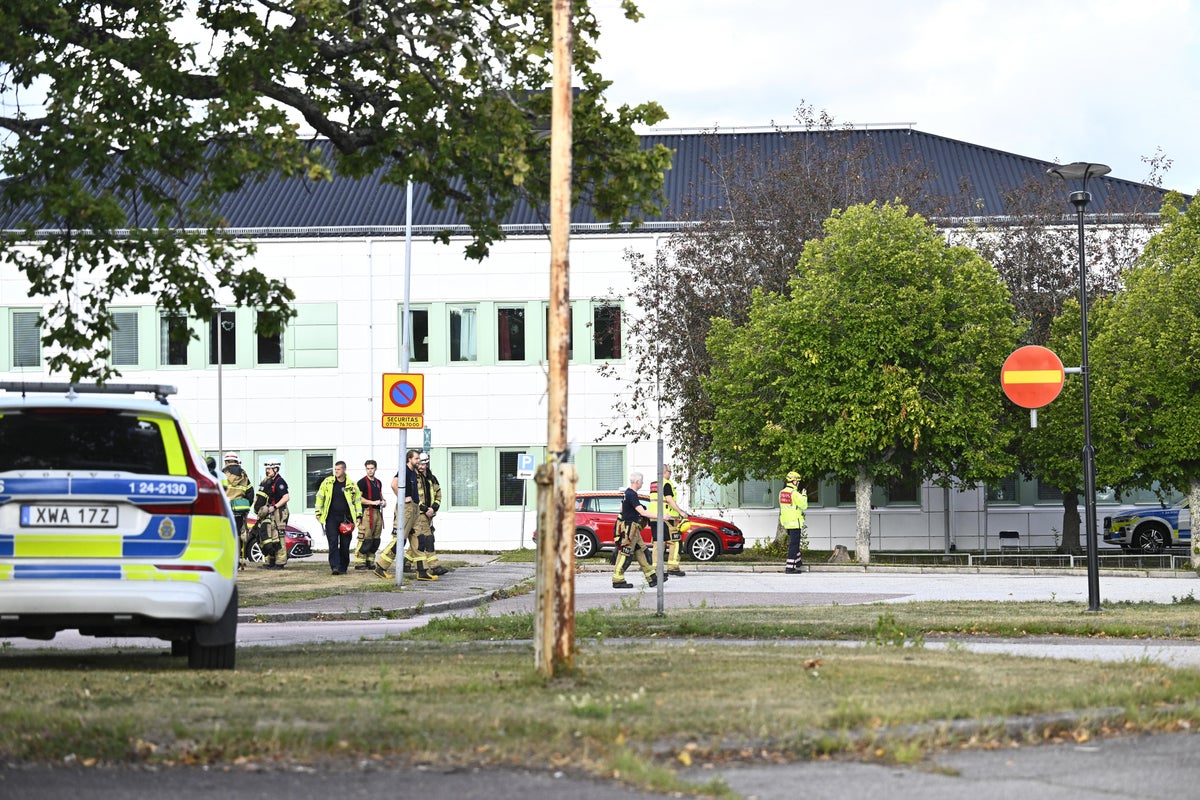
Another school, another predictable loop of institutional hand-wringing. When an 18-year-old former student armed with a sword walked into Brinell High School in Fagersta, Sweden, leaving one dead and multiple injured, the media script immediately kicked into autopilot. Political leaders tweeted boilerplate condolences, commentators rushed to microphones to demand tighter security protocols, and internet sleuths combed through peripheral social media profiles looking for ideological scapegoats.
Everyone is talking about the weapon. Almost nobody is talking about the structural failure of institutional tracking.
The lazy consensus in modern reporting treats targeted violence as an isolated meteorological event—a bolt of lightning hitting a schoolyard out of nowhere. This framework allows pundits to debate surface-level symptoms while ignoring the rotting foundation underneath. If we want to stop these incidents, we have to abandon the comforting fiction that administrative lockdowns and reactive policing can cure a crisis of alienation.
The Myth of the Hardened Perimeter
The immediate reaction to any school attack is a rush toward physical fortification. Officials talk about access controls, security guards, and metal detectors as if public schools can or should be converted into maximum-security facilities. This approach is lazy, expensive, and fundamentally ineffective.
Public institutions are designed for education and community integration, not defensive warfare. When you turn a high school into a fortress, you change the psychological environment for every student inside it. You signal to hundreds of kids that they are inmates in a holding pen. More importantly, physical barriers do nothing to stop a determined insider. In Fagersta, the perpetrator was a former student. He knew the layout. He knew the rhythms. A locked front door is a speed bump for someone intimately familiar with the building.
Focusing hardware solutions on software-level human breakdown is a category error. We are spending millions of dollars on architectural band-aids while completely ignoring the diagnostic failure of early intervention systems.
The Real Failure Is Predictable Disconnection
Let us look at the data points that actually matter. Perpetrators of targeted school violence rarely snap in a vacuum. They leave digital footprints, behavioral changes, and administrative red flags months before they ever pick up a weapon. In many cases, these individuals have prior brushes with the law or documented histories of acute social withdrawal.
Yet, institutional safety nets consistently drop the ball. School counselors are overwhelmed, carrying caseloads that make individual behavioral tracking impossible. Bureaucracies are structured to punish infractions rather than diagnose trajectories. When a student drops out or exhibits severe antisocial tendencies, the system breathes a sigh of relief that the problem has left the premises, rather than tracking that individual as a high-risk liability.
Imagine a scenario where every institutional dropout or expelled individual triggers an active, multi-year community health follow-up rather than a complete severance of ties.
We do not have a hardware deficit. We have a human intelligence and continuity deficit. When a school system washes its hands of a troubled teenager, it creates a blind spot where radicalization, grievance, and despair can fester unchecked.
Stop Treating Symptoms As Root Causes
Media coverage loves a simple narrative because simple narratives drive engagement. Was it a political manifesto? Was it a psychological break? Was it copycat behavior inspired by online forums? Analysts waste hours debating the specific flavor of toxicity that inspired the attacker, as if eliminating one particular online subculture will magically cure human malice.
Human beings have always possessed the capacity for violence. The variable that changes across societies is the density of social friction and the availability of intervention pathways. When social safety nets become administrative processing plants, individuals slip through the cracks and disappear into digital echo chambers where their worst impulses are validated.
If political leaders genuinely cared about preventing the next tragedy, they would stop issuing hollow statements of solidarity on social media and start overhauling the way local municipalities handle troubled youth who disconnect from mainstream society. That means funding real mental health infrastructure, lowering student-to-counselor ratios to realistic numbers, and maintaining mandatory institutional check-ins for high-risk dropouts.
Until we shift our focus from reactive perimeter defense to proactive human tracking, these tragedies will keep repeating with agonizing regularity. Stop hardening the schools. Fix the humans before they break.