Ink stains on the fingertips used to be the badge of honor for anyone willing to pull back the heavy velvet curtain of political power. You sat in cramped newsrooms, nursing lukewarm coffee from a chipped mug, waiting for a whisper to become a sentence. Today, the ink is mostly digital. The keyboards click at three in the morning, illuminating tired faces with the pale glow of monitors. But the risk remains entirely physical, deeply human, and acutely terrifying.
Consider what happens when a journalist stops being a neutral observer and becomes a target.
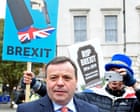
Arron Banks, a figure whose shadow looms large over the architecture of modern British populism and the tumultuous days of the Reform UK movement, recently found himself at the center of a different kind of exposure. Reports emerged detailing a quiet, calculated maneuver: the hiring of a private detective to look into a journalist who had dedicated months to investigating him and his political sphere.
Privately commissioned surveillance. The phrase itself tastes like copper.
Most people consume news like fast food. They unwrap the headline, consume the scandal in three quick bites, and toss the wrapper into the bin of yesterday’s Twitter feed. They rarely pause to think about the quiet violence of the mechanics behind the byline. They do not picture the empty street at dusk. They do not think about the sudden drop in the stomach when an unknown car lingers too long outside a family home.
Power does not like to be watched. Power prefers to hold the magnifying glass, never to sit beneath it.
When a major political donor or business titan feels the cold draft of public scrutiny, the instinct to push back is primal. Money buys access. Money buys influence. Sometimes, money buys a shield. But when the shield becomes an offensive weapon, the line between aggressive PR and intimidation blurs until it vanishes entirely.
Let us be honest about how this feels from the inside.
I remember the first time I realized someone was looking into me. It is a peculiar kind of vertigo. You are accustomed to asking the questions, to probing into bank accounts, offshore holdings, and text messages exchanged in the dead of night. You feel invincible behind your notebook. Then, the dynamic shifts. You notice the same face twice in a coffee shop three miles from your office. You find an unfamiliar email address pinging your server with too many questions about your personal life.
Fear is a quiet roommate. It does not crash through doors. It sits quietly in the corner of your study, whispering that perhaps you should drop the story. Perhaps the next paragraph is not worth the cost.
This is the invisible architecture of modern media pressure. It is not always a lawsuit threatening bankruptcy, though those happen daily. Sometimes, it is the shadow of private investigators digging through old tenancy agreements, checking divorce records, or sniffing around elderly parents' neighborhoods to find a pressure point.
Arron Banks is no stranger to the turbulence of litigation and public controversy. His name became synonymous with the seismic shifts of Brexit, bankrolling campaigns that rewrote the map of European politics. When journalists from major investigative outlets started peeling back the layers of his funding, his network, and his political ambitions, the friction was inevitable.
What makes the revelation of a private investigator so chilling is the asymmetry of the encounter.
The journalist has a laptop, a notebook, and a legal team whose patience is finite. The subject has an empire, deep pockets, and the ability to outsource the dirty work of curiosity to professionals whose loyalty belongs to the highest bidder.
Stop for a moment and look at the power balance.
On one side sits the public’s right to know. It is an abstract constitutional ideal, dusty and noble, printed in textbooks that gather lint. On the other side sits a man with millions at his disposal, deciding that the best defense is to turn the lens back onto the person holding the camera.
Private investigators do not wear trench coats anymore. They wear tailored suits or casual hoodies. They sit in modern office parks, tapping into data brokers, public records databases, and informal networks of informants. They map the routines of reporters. They look for debt, for old arguments, for anything that might discredit a stubborn investigator before a damning article hits the press.
Why does this matter to you, sitting miles away, scrolling through your phone on a crowded train?
Because when journalists are afraid, accountability dies in the dark.
Democracy does not perish in a sudden, dramatic explosion with tanks rolling down the mall. It rots quietly from the edges, starting precisely where the cost of telling the truth becomes too high for ordinary mortals to bear. If investigative reporters must constantly look over their shoulders, wondering if their private lives are being cataloged by hired guns, many will simply choose silence. They have families to protect. They have mortgage payments to make. They are human.
And that is the exact calculation behind these maneuvers. Make the cost of inquiry too high, and the questions stop.
The story of Arron Banks and the investigator he reportedly hired is not just a footnote in media gossip. It is a warning flare. It highlights an escalating cold war between moneyed political operators and the dwindling corps of watchdogs who refuse to look away.
We romanticize journalism in the movies. We picture grand editors shouting stop the presses, heroic reporters unravelling vast conspiracies with a phone call and a carton of Chinese takeout. We forget the mundane, grinding reality of it. We forget the loneliness of a reporter sitting alone in a small apartment at midnight, staring at a document that proves something powerful people lied about, knowing that the moment it publishes, the retaliation will begin.
When the powerful hire spies to look into the writers, the roles of victim and aggressor are deliberately muddied. The narrative gets twisted into a battle of personalities rather than a pursuit of facts. Was the reporting fair? Were the sources solid? Did the journalist cross an ethical line? These are valid questions, of course. Transparency must cut both ways.
Yet, there is a vast, unbridgeable canyon between editorial oversight and targeted personal surveillance.
One seeks accuracy. The other seeks leverage.
The public deserves to know the inner workings of political movements that seek to reshape society. Reform UK and its financiers did not emerge from a vacuum; they represent a potent current of public frustration and political ambition. To understand that current, we need unfiltered, fearless reporting. We need reporters who can follow the money without fear of what might be waiting for them in their rearview mirror.
When surveillance enters the journalistic equation, the atmosphere shifts from debate to deterrence.
Think of the journalist as a miner deep underground, tapping at the rock to see if the structure is solid. Hiring a private investigator is like standing at the mine shaft with a sledgehammer, waiting to see who emerges.
We must ask ourselves what kind of public sphere we actually want. Do we want a landscape where only the immensely wealthy can control the narrative, where anyone who dares to dig too deep finds their own grave being dug simultaneously? Or do we value the uncomfortable, messy, essential work of truth-seeking, even when it bruises the egos of those who command empires?
The details of the Banks investigation will fade from the feeds. New scandals will erupt by tomorrow afternoon. Another political figure will stumble; another corporate titan will fall.
Yet the shadow on the pavement remains.
Somewhere tonight, a reporter is typing a sentence that someone else desperately wishes they wouldn't. Somewhere out there, a phone is ringing with a tip, and a hand is trembling slightly before picking it up. The cost of the ink has never been higher, but the price of our silence is something we simply cannot afford to pay.