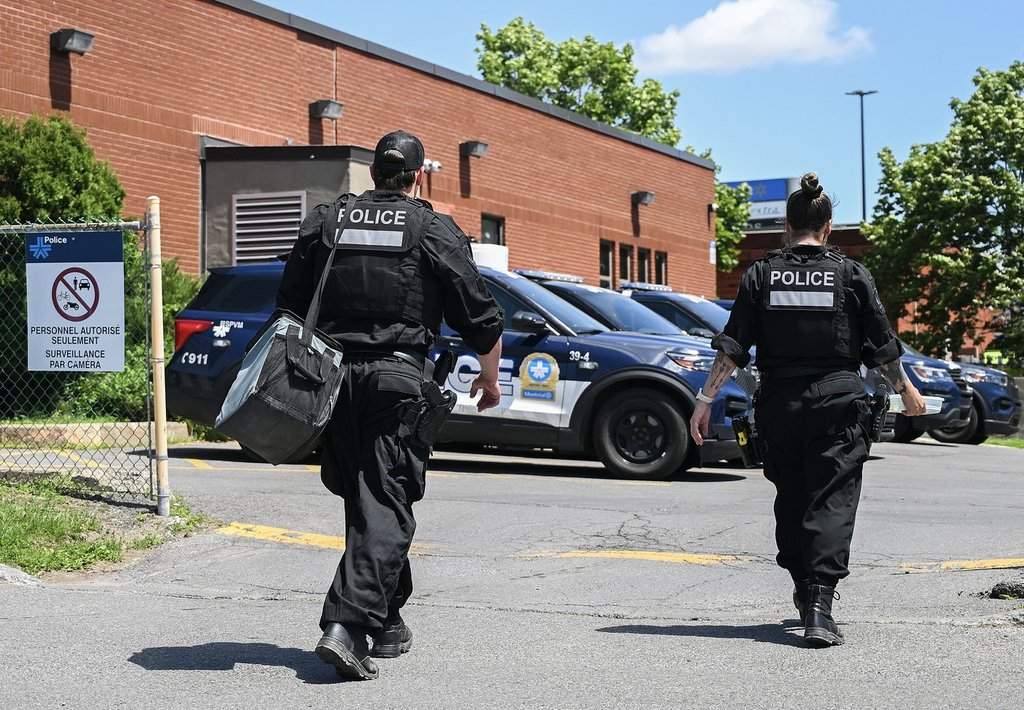
The footprint of military personnel stationed in the nation's capital has contracted significantly. Federal figures show that the number of National Guard troops deployed in Washington D.C. has officially dropped below 3,000, signaling a quiet structural shift in how federal authorities manage security infrastructure within the District.
This numerical milestone marks the end of an extended era of heightened military visibility that began following the civil unrest and legislative disruptions of recent years. For months, lawmakers, residents, and municipal officials grew accustomed to the omnipresent camouflage utilities, checkpoints, and tactical vehicles stationed near key federal installations. Now, as the headcounts recede, the underlying mechanics of capital defense are undergoing a pragmatic reassessment.
The Force Multiplier Myth
When thousands of armed personnel first flooded the grid, the deployment was framed by federal planners as an indispensable safeguard. Yet military analysts who have tracked urban security operations for decades recognized the tactical reality long before the numbers began to dwindle. Troops are fundamentally designed for deterrence, crisis response, and logistical support, not routine municipal policing or static guard duty.
Static positioning drains readiness. When guardsmen spend months standing
The Pentagon Draws Down Washington D.C. National Guard Numbers Amid Quiet Resistance
news
category: news
The number of National Guard troops deployed in Washington D.C. has officially dropped below the 3,000 threshold, marking a significant operational pivot away from the heavy militarized presence that became a fixture of the federal district. For months, the persistent patrols of armed service members stationed around transit hubs, federal monuments, and security checkpoints served as a stark visual reminder of an anxious federal government. Now, as force levels recede, a quieter struggle over civil-military authority, municipal autonomy, and federal overreach takes center stage.
Behind this troop reduction lies a complex tug-of-war between local civilian leadership, defense officials, and congressional oversight committees. While the public narrative frames the drawdown as a return to normalcy, the institutional friction tells a sharper story about how the federal government exercises police powers within a sovereign district that lacks statehood.
The Mechanics of the Drawdown
To understand why the headcount fell below 3,000, one must look closely at the logistical and financial strains of prolonged domestic deployments. National Guard units are structurally designed for episodic disaster relief or short-term civil support. They are not permanent urban constabularies.
Operating thousands of troops away from their home states for extended periods drains reserve budgets and creates severe readiness deficits for the units themselves. Weekend drill rotations morph into months-long active-duty disruptions for citizen-soldiers who left civilian careers, families, and local businesses behind. Governors across various states began applying quiet pressure back home, demanding the return of their personnel as domestic response needs grew in their own jurisdictions.
Furthermore, the Pentagon faced mounting questions from Capitol Hill regarding the legal authorities governing these domestic operations. Under the Posse Comitatus Act and Title 32 provisions, the National Guard occupies a unique hybrid space. When federalized or federally funded for domestic missions within the District of Columbia—where the President retains unique command authorities that do not apply in sovereign states—the line between military support and domestic policing blurs dangerously.
When troop levels hover in the thousands, the operational footprint begins to resemble an occupation force rather than a supportive security posture. Local business owners reported a chilling effect on tourism and downtown commerce. Visitors navigating concrete barriers and armed checkpoints experienced a city under siege rather than the nation's capital.
The District Perspective
Local authorities in Washington D.C. have long walked a tightrope. On one hand, municipal police departments face legitimate resource constraints and welcome federal backup during high-threat periods or major national events. On the other hand, the enduring presence of un-elected military personnel operating under federal command structures strips local residents of traditional democratic accountability.
When federal forces patrol street corners without local municipal oversight, questions of civil liberties inevitably arise. The drop below 3,000 troops represents a negotiated compromise. It satisfies federal demands to maintain a visible deterrent without entirely alienating local governance structures that have chafed under prolonged federal preemption.
Yet, this reduction does not signal a complete exit. The Department of Defense maintains a rapid-response capability nearby, ensuring that troop levels can scale back up within hours should threat assessments shift. This creates a permanent state of operational readiness that lingers just beneath the surface of the city's daily life.
Institutional Fatigue and Readiness Costs
The hidden cost of these sustained domestic missions is the erosion of core military capabilities. When combat arms units or military police spend months standing post at empty metro stations, their warfighting skills atrophy. Field training exercises are canceled. Equipment maintenance schedules slip.
Military analysts have long warned that treating the National Guard as a domestic standing army degrades its primary national defense function. A force trained to fight foreign adversaries loses its edge when deployed primarily for static crowd control and urban observation duties.
As the headcount settles below the 3,000 mark, the lingering question is not whether the numbers will drop further, but what precedent has been set for future federal interventions. The normalization of military personnel patrolling American streets under ambiguous legal authorities sets a troubling benchmark for civil liberties.
The security apparatus in Washington D.C. has contracted, but the systemic vulnerabilities that invited a heavy military footprint in the first place remain entirely unaddressed. Until policymakers resolve the tension between federal security demands and local self-governance, the next deployment is only ever a crisis away.