Two thousand kilometers. That is the distance separating the frozen, mud-choked trenches of eastern Ukraine from the warm, salt-crusted docks of Benghazi. On a map, they belong to entirely different worlds. One is a theater of grinding European attrition; the other is a sun-bleached Mediterranean harbor fractured by over a decade of civil division.
Yet on the night of November 22, 2026, that distance collapsed to zero.
Consider a hypothetical night watchman—let us call him Tariq—sipping sweet black tea near the perimeter of Benghazi’s naval base just before midnight. For years, Tariq has grown accustomed to the low, rhythmic thrum of foreign hulls slipping into port. He knows the silhouettes of the Russian vessels tied to the eastern Libyan authorities. To him, those ships are part of the local furniture, symbols of the quiet, transactional alliances that keep eastern Libya’s strongman, Field Marshal Khalifa Haftar, supplied and shielded. The war in Europe is something Tariq watches on a cracked smartphone screen between shifts.
Then the water begins to hum.
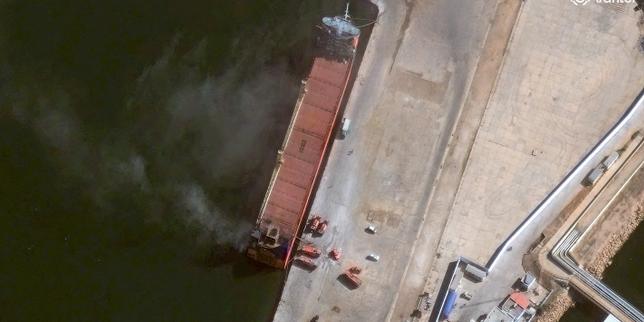
Low to the dark swells of the Mediterranean, seven sleek, unmanned surface vessels—Ukrainian Sea Baby naval drones—cut through the harbor entrance and the waters just offshore. There are no warning sirens. There is no declaration of war against Libya. Within moments, explosive impacts tear through the night, slamming into the Merkury, one of the Russian Navy’s newest corvettes, and a Russian container ship operating alongside it. Steel groans. Flames lick the diesel-slicked water. By dawn, the Merkury lies capsized in the harbor, a military helicopter is reduced to twisted scrap, and two Libyan naval officers are fatally wounded—collateral casualties of a European conflict that suddenly decided to knock on North Africa’s door.
The Shadow War Moves South
When President Volodymyr Zelenskyy stepped forward on Monday, November 23, to claim responsibility for the strike, the diplomatic shockwaves rippled far beyond the Mediterranean. For nearly five years, the world had treated the Russo-Ukrainian war as a geographically contained catastrophe. Even as drones struck oil refineries deep inside Russia or sank ships in the Black Sea, the fighting remained tethered to the borders of the former Soviet space.
Benghazi changed the geometry of the conflict.
To understand why Ukrainian naval drones were operating off the coast of Libya, you have to look at the invisible arteries feeding Moscow’s war machine. Russia’s military footprint in Africa—sustained through state-backed mercenaries, arms shipments, and resource extraction—does not run on magic. It runs on maritime logistics. Ports like Benghazi, controlled by Haftar’s Libyan National Army, serve as vital logistical hubs where Russian warships escort cargo vessels, refuel, and move weaponry across the Mediterranean and deep into the Sahel.
From Kiev’s perspective, the logic is brutally simple. A Russian corvette sitting in a Libyan harbor is not on vacation; it is an active instrument of a state trying to erase Ukraine from the map. Ukrainian Foreign Minister Andrii Sybiha framed the strike not as an escalation against Libya, but as an act of pure self-defense aimed strictly at military assets fueling Moscow’s aggression.
"No action by Ukraine has ever targeted Libya or the Libyan people," Sybiha insisted in the aftermath, offering condolences while standing firm on the legitimacy of the target.
Wait.
Can a country fighting for its survival legally blow up an enemy warship inside a neutral nation’s port?
The Thin Red Line of Neutrality
This is where the story stops being a tale of daring technological warfare and becomes a legal and geopolitical nightmare.
Think of international maritime law as a strict set of house rules during a neighborhood brawl. Under the Hague Conventions of 1907—specifically Hague XIII, the bedrock treaty governing naval warfare—neutral territory is supposed to be a sanctuary. A warring nation cannot turn a neutral harbor into a hunting ground. At the same time, the neutral host has a duty: it cannot allow a belligerent warship to linger indefinitely, rearm, or use its docks as a staging base. Generally, a warring vessel gets a strict 24-hour window in a neutral port unless storm damage keeps it tied to the pier.
In Benghazi, both sides of that fragile bargain appear to have frayed. Reports suggest the Merkury had been docked for several days, escorting Russian arms shipments to eastern Libyan forces—a clear violation of what a neutral port is meant to tolerate. Yet legal scholars, including experts analyzing the strike for Just Security, point out a glaring problem with Kiev’s execution. Before launching unmanned explosives into another country’s sovereign waters, a belligerent state is expected to demand that the neutral host expel the offending warship.
Ukraine did not ask. It simply struck.
And in doing so, Kiev inadvertently handed its adversaries a powerful diplomatic weapon while placing an already fractured nation on a knife’s edge.
A Country Divided Against Itself
To appreciate the sheer volatility of the Benghazi strike, you have to feel the daily fragility of modern Libya. Libya is not one functioning state; it is a nation split down the middle between two rival administrations staring at each other across a tense ceasefire.
In the west sits the internationally recognized Government of National Unity in Tripoli, led by Prime Minister Abdulhamid Dbeibah. In the east sits the parallel administration in Benghazi, backed by Haftar’s military apparatus and heavily reliant on Russian security partnerships. For years, ordinary Libyans have lived in the exhausting limbo of this stalemate, watching foreign powers treat their coastline like a chessboard.
Now, imagine the paranoia that erupts in Benghazi the morning after seven Ukrainian drones materialize out of the dark.
Ukraine’s Security Service, the SBU, claimed the drones were launched from a mysterious "mother ship" at sea. Eastern Libyan officials aren't buying it. Almost immediately, the Benghazi-based government lodged a formal complaint with the United Nations Secretary-General and the Security Council. Their accusation was explosive: they alleged that the drones were actually launched from western Libya—specifically from coastal strongholds like Misrata and Zawiya—and demanded an immediate UN investigation into the covert presence of Ukrainian military forces operating on Libyan soil.
Suddenly, a strike meant to cripple Russian naval logistics threatened to reignite Libya’s own civil war.
In Tripoli, officials scrambled to distance themselves from the blast. They denied any prior knowledge or collusion with Kiev, demanded formal explanations from Ukrainian diplomats, and issued a pointed warning about the danger of foreign forces operating "outside the authority of the state". Meanwhile, Moussa al-Koni, a member of Libya’s Presidential Council, did not mince words, condemning the attack as tantamount to a "declaration of war against the Libyan state".
Even Turkey—a key regional power that has historically backed Tripoli and supplied drones to Ukraine—stepped in to rebuke Kiev, stating flatly that carrying out hostile actions in neutral waters violates international law.
The Ghosts in the Harbor
Writing about modern proxy warfare requires an uncomfortable admission: the truth in places like Libya is deliberately shrouded in fog. We do not know with absolute certainty whether a disguised commercial vessel released those seven drones in international waters, or whether Ukrainian special operators—who have previously been accused of hunting Russian mercenaries in Sudan, Mali, and Niger—were quietly working out of a warehouse on the western Libyan coast.
What we do know is what happened to the human beings caught in the middle.
When Saddam Haftar, the deputy commander of eastern Libya’s forces and son of the Field Marshal, announced that two Libyan servicemen had died from their wounds following the naval base attack, the abstract geopolitical chessboard suddenly bled. Ten people were injured in the chaos—both Russians and Libyans. Those two Libyan officers did not invade Ukraine. They did not vote in Moscow or strategize in Kiev. They were standing guard in their own harbor when a war from another continent arrived at thirty knots.
The United Nations Support Mission in Libya (UNSMIL) captured the dread of the moment in a stark warning: "Libya cannot afford, and must not become, a battleground for foreign conflicts".
Yet the precedent is now set. Just days earlier, Ukrainian drones had struck a Russian cargo ship, the Sparta II, in the Gulf of Finland. Months before that, in March 2026, a Russian gas tanker suffered mysterious damage off the Libyan coast. The message emanating from Kiev is unmistakable: wherever Russian military vessels drop anchor—whether in the freezing Baltic or the warm harbors of North Africa—they are no longer safe.
The Ripple Effect Across the Sea
For Moscow, the capsized hull of the Merkury in Benghazi is a humiliating blow. Russia has spent years cultivating an image of invulnerability and decisive military backing across Africa, convincing local strongmen that a partnership with the Kremlin guarantees security. Watching one of Russia’s modern warships get crippled inside a friendly harbor shatters that aura overnight. Already, Russian convoys in the region have been forced to rethink their routes, looking over their shoulders in waters they once considered uncontested.
But victories won by bending the rules of international order carry a hidden price.
If belligerent nations begin treating neutral ports as fair game whenever an enemy vessel docks for fuel, the entire architecture of global maritime safety begins to buckle. Today it is a Russian corvette in Benghazi. Tomorrow, what stops another warring state from launching unmanned craft into a busy commercial port in the Red Sea, the Persian Gulf, or the South China Sea? Once the sanctuary of neutral waters is breached, every coastal nation becomes a potential hostage to someone else's war.
Back in Benghazi, the smoke over the naval base has cleared, replaced by heightened patrols, armored checkpoints, and the quiet, suffocating tension of a city waiting to see what happens next. The United Nations now faces the monumental task of investigating ghost drones and alleged foreign operatives in a country where rival governments cannot even agree on who holds legitimate power.
And somewhere along the water’s edge, as the Mediterranean tide laps rhythmically against the scorched concrete of the pier, the tilted silhouette of a Russian warship sits half-submerged in the Libyan sun—a jagged steel monument reminding everyone on shore that in the age of drone warfare, no harbor is ever truly far from the front line.