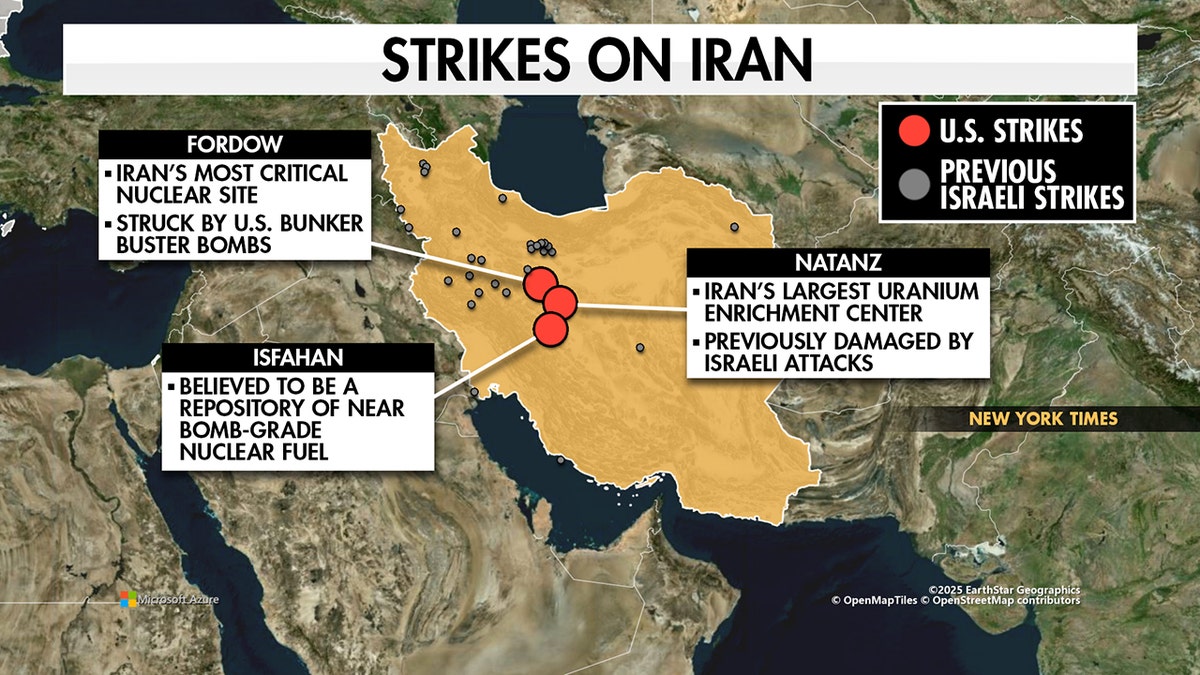
The "experts" are at it again. Pick up any mainstream foreign policy rag and you’ll find the same recycled warnings: an attack on Iran would spike oil prices, trigger a regional conflagration, and destabilize the global economy. It is the "lazy consensus" of a blob that has spent twenty years being wrong about everything from the Arab Spring to the durability of the Afghan National Army.
They are worried about the risks of an attack. They should be worried about the terminal decay of a status quo that treats inaction as a strategy. For a more detailed analysis into this area, we recommend: this related article.
The real danger isn't a kinetic strike. The danger is the continued delusion that "containment" is a low-risk alternative. It isn't. Containment is a high-interest credit card we’ve been swiping since 1979, and the bill is coming due with compound interest.
The Oil Price Myth That Keeps Generals Awake
The most common argument against escalation is the "energy apocalypse." The theory goes like this: Iran closes the Strait of Hormuz, oil hits $250 a barrel, and the global economy collapses. For further details on this issue, detailed reporting can be read on NPR.
It’s a ghost story.
First, closing the Strait of Hormuz is harder than people think. It’s not a garden hose you can just kink. It is a massive, deep-water shipping lane. To effectively "close" it, Iran would have to engage in a sustained naval and aerial campaign against the U.S. Fifth Fleet. In that scenario, the Iranian Navy lasts approximately forty-eight hours.
Second, the global energy map has shifted. The U.S. is now the world’s largest producer of crude. While a localized spike would happen, the idea that the world grinds to a halt assumes we are still living in 1973. We aren't. Markets price in geopolitical risk months in advance. The "shocks" we fear are usually already baked into the futures contracts.
I’ve sat in rooms with energy traders who laugh at these op-eds. They know that a definitive resolution to the Iranian "gray zone" conflict would actually lead to long-term price stability. Uncertainty is the real tax on the global economy, not a three-week spike during a tactical intervention.
The Proxy War Fallacy
Critics argue that an attack would "unleash" Iranian proxies like Hezbollah, the Houthis, and various militias in Iraq.
Newsflash: They are already unleashed.
We are currently watching the Houthis—a group the State Department tried to de-list as terrorists—effectively shut down Red Sea transit for a significant portion of global trade. We see Hezbollah holding the Lebanese-Israeli border hostage. We see drone strikes on American outposts in Jordan.
The "risk of escalation" argument assumes that if we do nothing, the proxies stay quiet. The opposite is true. Our hesitation is their fuel. Every time a Western power "urges restraint," the Quds Force views it as a green light.
Imagine a scenario where a corporation has a subsidiary that is bleeding money, leaking trade secrets, and suing the parent company. Would you say, "We shouldn't fire the CEO because he might get angry"? No. You cut the head off the snake.
The Nuclear Threshold Is Not a Moving Goalpost
We are told that military action would "fast-track" Iran’s nuclear program. This is the ultimate logical loop.
- We can't attack because they might build a bomb.
- They are building a bomb because we haven't stopped them.
- Therefore, we must wait until they have a bomb so we can't attack them.
It is a suicide pact disguised as diplomacy. The International Atomic Energy Agency (IAEA) has already noted that Iran’s stockpile of highly enriched uranium is at levels with no credible civilian use. The threshold isn't coming; we are standing on it.
The "experts" want to negotiate a new version of the JCPOA (Joint Comprehensive Plan of Action). They are trying to fix a broken engine with a fresh coat of paint. You cannot negotiate with a regime whose foundational identity is built on your destruction. That isn’t "hardline" rhetoric; it is a literal reading of the Iranian constitution.
The Cost of the "Forever Wait"
The U.S. military-industrial complex loves the current state of affairs. Why? Because a "simmering threat" justifies endless deployments, "freedom of navigation" patrols, and billion-dollar missile defense contracts.
But for the taxpayer and the strategic planner, the "Forever Wait" is more expensive than a decisive strike. We are spending billions to intercept $20,000 drones. That is an asymmetric defeat. We are trading expensive interceptors for cheap plywood and lawnmower engines.
If you want to talk about "risk," let’s talk about the risk of a hollowed-out Navy that can't protect trade routes because it’s too busy playing whack-a-mole with regional militias.
The Uncomfortable Truth About "Stability"
Stability is the favorite word of the cowardly. When an analyst says they want "stability" in the Middle East, they mean they want the current level of violence to remain predictable. They prefer a known evil to an unknown transition.
True leadership requires the stomach for temporary instability to achieve a permanent shift in the balance of power.
If the U.S. actually moved to dismantle Iran’s strategic capabilities—not a "regime change" invasion, but a targeted, devastating dismantling of their air defenses and enrichment sites—the regional power dynamic would reset overnight.
- The Gulf States would stop hedging their bets with Beijing and Moscow.
- The Proxies would find their funding and command structures severed.
- The Iranian People, who have been protesting in the streets despite brutal crackdowns, would see that the "Great Satan" isn't a paper tiger after all.
The Logistics of Reality
Let’s be clear: This isn't a call for "boots on the ground." That is the 2003 playbook, and it was a disaster. The technology of 2026 allows for a level of precision and distance that makes the "Saddam-style" invasion obsolete.
The fear-mongers want you to believe it’s either "status quo" or "World War III." It is a false binary designed to keep the current crop of consultants in business.
There is a third path: The surgical removal of the regime’s ability to project power.
Does this carry risks? Yes. Every action does. But the "experts" never quantify the risk of the current path. They don't calculate the cost of a nuclear-armed Iran triggering a Saudi nuclear program, leading to a multi-polar nuclear Middle East. They don't calculate the cost of the U.S. being permanently pushed out of the Persian Gulf.
Stop Asking the Wrong Question
The question isn't "What happens if we attack?"
The question is "What happens when we can no longer afford to wait?"
We have spent decades treating Iran like a problem that can be managed. It’s not a problem; it’s a predatory state that has accurately identified Western indecision as its greatest weapon.
If you're still reading the articles that talk about "the delicate balance of diplomacy," you’re reading fiction. The balance is gone. The scales have tipped.
Stop listening to the people who are afraid of the price of oil. Start listening to the people who understand the price of irrelevance.
History doesn't reward the cautious. It rewards those who recognize when the time for talk has ended. That time ended five years ago.
Stop playing defense in a game where the opponent doesn't recognize the rules.
Hit back. Or get out of the way.
Would you like me to analyze the specific failure points of current U.S. naval defenses against Iranian-made swarm drones?


