The fluorescent lights of a government back office do not usually suggest a battleground. They hum with a dull, clinical persistence, illuminating stacks of manila folders, half-empty mugs of lukewarm tea, and the quiet tap-tap-tap of keyboards. This is where the machinery of the state grinds along. It is unglamorous. It is deliberately slow.
But beneath that quiet surface, a massive financial fortress is being built, brick by British pound. Learn more on a related topic: this related article.
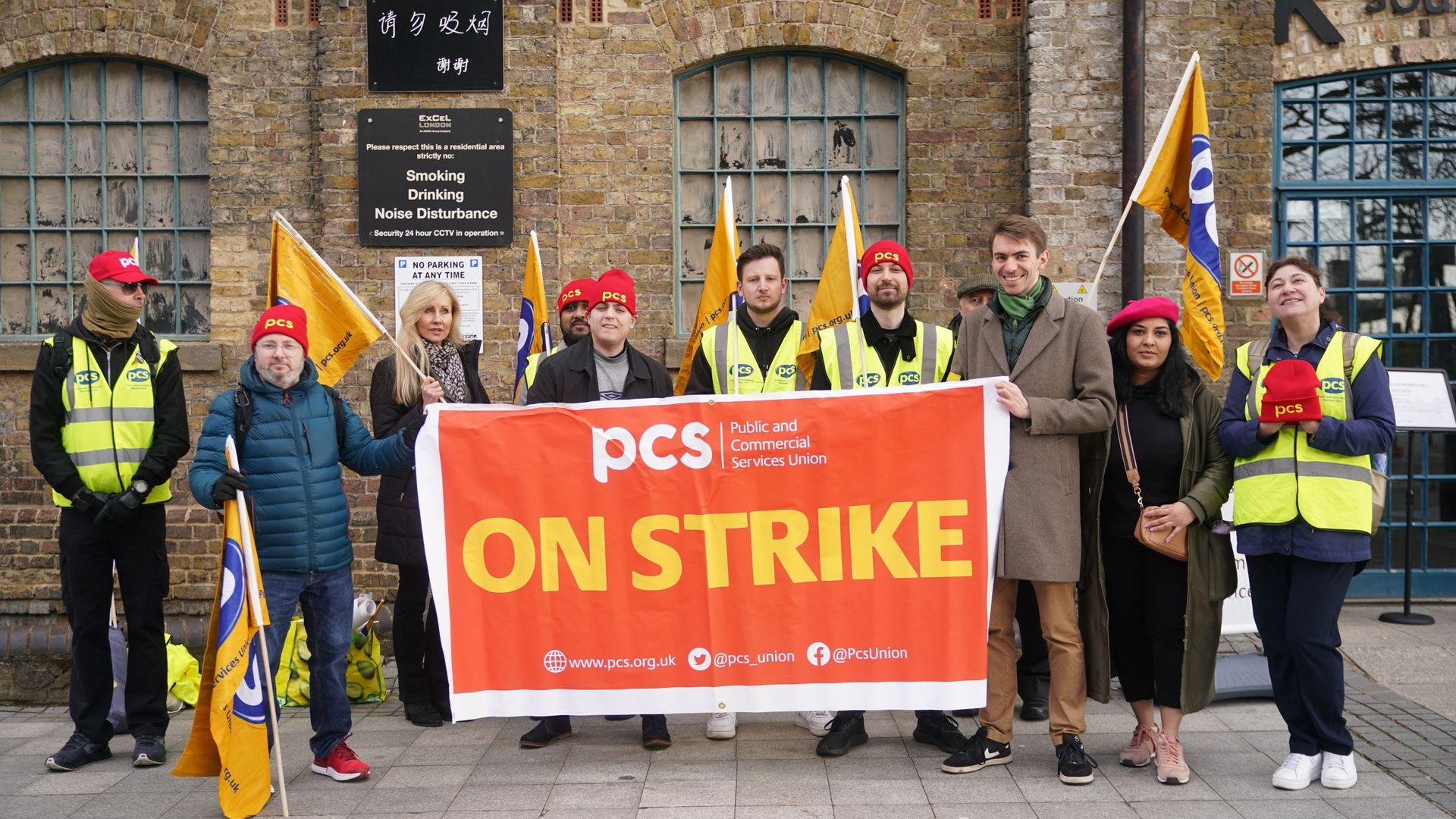
The Public and Commercial Services union (PCS), representing the vast army of civil servants who keep the UK running, just made a quiet but seismic decision. They voted to double their strike fund. It is a preemptive mobilization. They are preparing for a political storm that hasn't even made landfall yet, specifically eyeing the rising shadow of a Reform government.
To understand why this matters, look past the dry headlines about union balloting and ledger books. Consider a hypothetical civil servant—let's call her Sarah. Sarah is not a radical. She is a data analyst in her late forties, working for the Department for Work and Pensions. She has a mortgage, a teenage son who needs new football boots, and a radiator that makes an ominous clicking sound every time the heating kicks on. For Sarah, going on strike isn't a political statement. It is a terrifying financial precipice. Every day on the picket line is a day without pay. The rent doesn't care about union solidarity. More reporting by Associated Press delves into comparable views on the subject.
That is what a strike fund is for. It is the oxygen tank for people like Sarah when the air gets thin. By doubling it, the union is telling its members—and the politicians watching from across Whitehall—that they are ready to dig in for a long, brutal winter of discontent.
The Cold Math of a Standoff
Unions do not raise fees and hoard cash when they expect smooth sailing. They do it when they smell blood, or when they smell danger.
Historically, strike funds have been the ultimate metric of a union's leverage. If a union threatens a walkout but its coffers are empty, the government can simply play a game of attrition. They know the workers will starve out before the policy breaks. But when a fund doubles, the math changes. The calculus of power shifts.
The PCS is looking directly at the shifting political tides in the UK. The rise of Reform UK, with its unapologetically aggressive stance on shrinking the state, slicing through regulations, and tackling what it views as a bloated bureaucracy, has sent a shiver through the corridors of public service. It is an existential dread.
Imagine a boardroom where the goals are entirely inverted. On one side, you have a political movement that views the civil service not as an asset, but as an obstacle to be cleared. On the other side, you have hundreds of thousands of workers who view themselves as the thin line keeping public infrastructure from collapsing entirely.
When these two forces collide, compromise is rarely the first resort.
Inside the War Chest
How do you actually double a strike fund without triggering a revolt among your own members? You ask them to pay for the shield that will protect them.
The mechanism is simple, yet painful. It requires a temporary levy on membership fees, a collective sacrifice today to avoid absolute vulnerability tomorrow. For a low-wage worker in a regional passport office, even an extra pound or two a month is a tangible loss. It represents a coffee skipped, a minor luxury surrendered.
But the collective psychology of the civil service has shifted from complacency to survival mode.
Consider the historical context. For over a decade, public sector workers have watched their wages erode relative to inflation. They have endured austerity, restructuring, and a relentless public narrative that paints them as faceless, inefficient pen-pushers. The goodwill is gone. The reservoir of patience has run completely dry.
What remains is a hard-nosed realism. The union leadership knows that if a Reform-influenced or outright Reform government takes the reins, the traditional methods of negotiation—the polite meetings in wood-paneled rooms, the strongly worded letters—will be utterly useless. The only language that will matter is disruption.
And disruption costs money.
The Invisible Stakes of Efficiency
There is a popular myth that the civil service is a monolith of lazy bureaucrats protected by ironclad contracts. It is a useful political talking point, but it ignores the human reality of who actually loses when the state shrinks.
It is the person processing your passport so you can see your dying relative abroad. It is the caseworker managing an overwhelming caseload of vulnerable families. It is the IT specialist trying to keep ancient government databases from crashing under the weight of cyberattacks.
When a government vows to streamline the civil service, they are rarely talking about firing high-ranking mandarins in London. They are talking about cutting the muscle and bone of regional operations.
Let us use a metaphor to clarify what is happening here. Imagine an old, sprawling house. The roof leaks, the plumbing rattles, and the electrical wiring is questionable. The owner of the house decides the solution to his high utility bills is to simply stop paying for maintenance and fire the caretaker. For a few weeks, he saves money. He feels clever. Then, the first major storm hits. The roof caves in. The pipes burst. The cost to repair the disaster is ten times what the caretaker's salary would have been.
The PCS union views itself as that caretaker. They believe the political rhetoric surrounding the civil service is fundamentally dishonest, designed to score quick points with an angry electorate while leaving the actual machinery of the country broken beyond repair.
A Strategy Born of Fear and Focus
The decision to double the fund was not unanimous, nor was it met with celebration. It was accepted with a grim, heavy silence.
It reveals a profound lack of faith in the stability of the current political consensus. It tells us that the people who sit at the center of government operations do not believe the future will look like the past. They are preparing for a regime that is not interested in playing by the old rules of engagement.
This is not just about wages anymore. It is about control. It is about who gets to define what the British state looks like, who it serves, and how much it values the human beings who keep its gears turning.
Sarah looks at her computer screen, where a spreadsheet of pension allocations flickers in the dimming afternoon light. She knows about the vote. She knows her monthly union dues are going up. She doesn't like losing the money, not now, not with the price of groceries what they are.
But she also looks at the news on her phone during her break. She sees the speeches. She hears the promises to dismantle her world.
She presses the button to confirm her union membership renewal. She pays the levy. She buys her piece of the fortress.
The treasury of the union grows larger, heavier, and more potent by the hour. It sits there in the background of British politics, a silent, multi-million-pound guarantee that whenever the collision comes, the people in the fluorescent-lit rooms will not go quietly into the night.