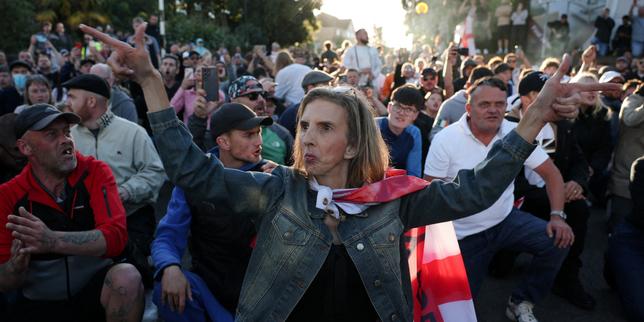
The media loop is entirely predictable. A video surfaces online. It depicts a horrific outcome—in this specific case, the tragic death of a student in the United Kingdom. Within hours, the footage clocks millions of views. Outrage mechanics take over. Activists mobilize, commentators pontificate, and eventually, crowds take to the streets, clashing with law enforcement and smashing storefronts. The prevailing narrative, parroted by standard news outlets, treats these riots as an inevitable, even righteous, expression of public grief and a demand for accountability.
That narrative is dangerously wrong.
Feeding the algorithmic outrage machine does not fast-track justice; it systematically derails it. The lazy consensus states that public fury forces the hands of complacent authorities. The reality, visible to anyone who has actually worked within the machinery of criminal justice or crisis management, is that trial-by-social-media compromises investigations, taints jury pools, and turns localized tragedies into weaponized political theater. We need to stop pretending that burning down a neighborhood is a valid form of civic oversight.
The Illusion of Clarity in a 15-Second Clip
The core flaw of the modern protest response is the unshakeable belief that a leaked video tells the whole story. It never does.
When a video drops, viewers assume they are witnessing an objective reality. They are actually witnessing a single perspective, stripped of pre-context, post-context, and the systemic protocols governing law enforcement responses. In the UK legal framework, rushing to judgment based on viral media frequently violates the strict sub judice rules designed to ensure a fair trial.
Consider what happens when a crowd demands immediate retributive action based on a trending clip:
- Evidence Contamination: Publicly releasing footage before formal witnesses are interviewed allows those witnesses to unconsciously alter their recollections to match the popular narrative.
- Jury Pool Pollution: Under UK law, high-profile cases can face severe delays or even collapse if a defense team can successfully argue that widespread media hysteria makes a fair, unbiased jury impossible to empanel.
- Investigative Distortion: Independent bodies, such as the Independent Office for Police Conduct (IOPC), are forced to reallocate resources toward managing public relations rather than executing meticulous, forensic deep dives.
I have spent years analyzing institutional responses to crises. Whenever a governing body reacts to the mob rather than the data, the resulting policies are reactionary, flawed, and ultimately struck down. True accountability is a slow, boring, and bureaucratic grind. It requires toxicology reports, radio transcripts, and forensic pathology. It cannot be compressed into a TikTok format.
People Also Ask: The Flawed Premise of Public Pressure
When events like this occur, search engines light up with predictable queries. Looking at the data, the underlying assumptions behind what people ask are fundamentally broken.
Doesn't public protest force the police to take investigations seriously?
No. This is a profound misunderstanding of how independent oversight functions in the UK. The police do not investigate themselves in high-stakes fatalities; independent bodies do. Public rioting does not speed up a forensic analysis or make a pathologist work faster. If anything, it slows the process down. Resources that should be deployed on the ground gathering evidence are instead diverted to riot control and protecting physical infrastructure from arson.
Why shouldn't the public see the video immediately if it proves wrongdoing?
Because raw footage is data, not a conclusion. A video might show a striking blow, but it does not show the underlying medical condition of the recipient, the preceding three minutes of escalation, or the specific legal statutes governing justifiable force. Demanding immediate release is a demand for entertainment masked as a demand for transparency.
The Operational Cost of Weaponized Grievance
Let’s talk about the cold operational realities that the standard press ignores. When protesters clash with police after a tragedy, who actually wins? Not the victim’s family. Not the local community.
The immediate consequence of civil unrest is the tactical retreat of policing from the very communities that require protection. When a precinct is forced into a defensive posture, response times for domestic abuse calls, violent assaults, and active robberies skyrocket. The hyper-focus on a singular, highly politicized event creates a vacuum where everyday crime flourishes.
Furthermore, the economic devastation inflicted on local high streets during these "uprisings" hits independent, immigrant-owned businesses hardest. Burning a local grocery store does absolutely nothing to reform police training modules or accelerate a judicial inquiry. It merely destroys the fragile economic fabric of the neighborhood.
[Outrage Cycle] -> [Algorithmic Amplification] -> [Civil Unrest] -> [Resource Diversion] -> [Delayed Justice]
The Bitter Truth About Activism Capitalists
We must confront the uncomfortable reality of the outrage ecosystem. There is a whole class of grifters—from professional agitators to monetization-driven social media accounts—who view a student’s death not as a tragedy, but as content.
They do not want a quiet, thorough judicial process because a quiet process cannot be monetized. They need the conflict. They need the flames. They frame any call for patience as a cover-up, intentionally poisoning public trust to maintain their own relevance and viewer metrics.
The downside of taking this contrarian stance is obvious: you get accused of defending institutional corruption or lacking empathy. But real empathy is focusing on the victim and ensuring that the subsequent legal proceedings are airtight, so that if wrongdoing occurred, the perpetrators actually go to prison. Hysterical mobs do not secure convictions; bulletproof case files do.
Stop participating in the digital colosseum. Stop sharing unverified clips. Stop validating property destruction as a form of grief. If you want justice for the dead, clear the streets, let the investigators do their jobs, and fight the battle where it actually matters: in a quiet, rigorous, and unemotional court of law.


