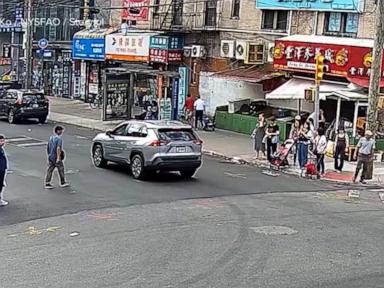
Every time a badge-wearing citizen yanks someone from a burning sedan in Brooklyn, the internet loses its collective mind. The footage hits local news desks by dawn, migrates to national feeds by lunch, and by dinner, we are inundated with a chorus of breathless praise. We treat an off-duty officer pulling a driver out of a crumpled heap of steel as proof that the entire system functions like a well-oiled machine of selflessness. It makes for fantastic television. It makes for terrible public policy.
We are gorging on viral sentimentality while ignoring structural decay. When a cop saves a life on their day off, it is an act of individual heroism. It is also an absolute indictment of the infrastructure around them. We have built an urban environment so hostile, a driving culture so reckless, and an emergency response framework so bottlenecked that we now rely on stochastic acts of off-duty bravery to bridge the gap between life and death.
Every viral rescue video serves a dual purpose. It warms our hearts and numbs our brains. It distracts us from asking why the driver lost control in the first place, why our streets remain drag strips disguised as avenues, and why we have outsourced basic civil protection to individual adrenaline spikes instead of competent urban engineering.
The Myth of the Accidental Savior
Let us dispense with the fairy tale that police academies train officers specifically for vehicular extraction choreography. They do not. When an off-duty officer acts in these moments, they are drawing on the exact same human survival instincts, situational awareness, and raw nerve that a construction worker, an off-duty paramedic, or an amateur boxer would use. The uniform gets the credit; the individual's nervous system does the work.
Yet the media apparatus immediately rushes to conflate personal grit with institutional excellence. When an agency elevates an off-duty rescue to public relations gold, it implicitly suggests that the badge itself confers superhuman capabilities. This is dangerous marketing. It personalizes systemic failure. By turning a localized traffic accident into a heartwarming human interest vignette, we absolve urban planners, transit authorities, and municipal leaders of their duty to design roads that do not require heroic intervention to survive.
If a bridge requires daily manual catching of falling debris to prevent casualties, you do not praise the guy with the butterfly net. You fix the bridge. But in our current media ecosystem, we prefer the guy with the net. He gives us a 30-second dopamine hit that requires zero tax increases or political fights.
Engineering Out the Need for Heroes
Look at the geometry of our thoroughfares. We build multi-lane urban highways that encourage drivers to treat local streets like Daytona. We tolerate aggressive tailgating, blatant red-light running, and distracted piloting that would get your license revoked in any functioning European capital. Then, when a vehicle inevitably launches over a curb and wraps around a pole, we cheer when a passing cop kicks the door open.
True safety is boring. True safety looks like narrowed lanes, raised crosswalks, automated speed enforcement that actually functions, and pedestrian-first corridor design. It looks like infrastructure that physically prevents catastrophic kinetic impacts rather than relying on an off-duty patrolman to sprint toward a smoking engine block.
When we celebrate the rescue, we implicitly accept the crash. We treat the wreckage as an act of God—an unavoidable tragedy that occasionally permits a heroic interlude—rather than the predictable mathematical outcome of bad street design and lax enforcement.
The PR Machine and the Badge
There is an institutional incentives loop here that nobody wants to talk about. Police departments are public relations operations with badge collections. When public trust fluctuates, nothing resets the narrative quite like a dashcam or bystander video of an officer running toward danger while off the clock.
This creates a perverse dynamic. The more chaotic and dangerous our streets become, the more opportunities arise for these cinematic moments of individual redemption. Nobody at a precinct headquarters is actively rooting for carnage, but the PR dividends of a dramatic rescue certainly soften the blow of a scathing oversight report or a failed precinct budget vote.
We are trapping ourselves in a loop where we accept deteriorating street conditions because the occasional rescue video provides an emotional palate cleanser. We trade systemic competence for viral spectacle.
Stop clicking the rescue clips. Stop treating basic human decency under duress as an institutional endorsement. Start demanding streets where nobody needs to be saved in the first place.