The cancellation of three Taylor Swift concerts in Vienna in August 2024 served as a harsh awakening for the entertainment world. For fans, it was the loss of a shared experience. For industry analysts and security professionals, it represented something far more dangerous. The thwarted attack revealed a vulnerability that many assumed had been addressed in the decades following the rise of global extremism. When authorities uncovered a plot to cause mass casualties at the Ernst Happel Stadium, they exposed how the digital environment facilitates the recruitment of teenagers, transforming isolated individuals into threats to public safety.
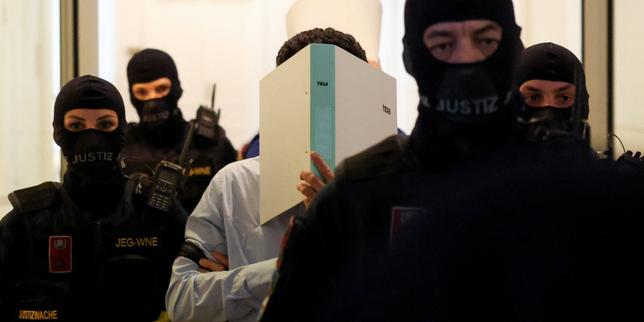
The opening of the trial against the primary suspect in Austria offers a window into this modern threat. It is not merely a criminal proceeding against a nineteen-year-old who pledged allegiance to the Islamic State. It is an examination of how radical ideology travels through encrypted messaging applications, finding fertile ground in the minds of the disillusioned. While the public looks at the canceled shows as a missed financial opportunity or a personal disappointment for the thousands who had traveled from across the globe, the legal proceedings demonstrate that the security threat was not just a theoretical risk. It was an active, coordinated plan that came dangerously close to fruition.
The suspect, an Austrian citizen of North Macedonian descent, spent months preparing. Investigators found chemical substances, detonators, and instructional materials that suggested an intent to target not only the concert attendees but the fans gathering outside the stadium. This specific detail highlights a shift in threat models. Modern attacks are increasingly focused on the "soft targets" surrounding major venues rather than trying to breach heavily fortified perimeters. As security measures inside stadiums become tighter, attackers have shifted their attention to the perimeter crowds, transportation hubs, and entrance lines where screening processes are often less intense.
Understanding how this radicalization occurred requires looking at the role of the internet as a conduit for hate. The suspect was not a career insurgent with years of field training. He was a teenager who consumed propaganda online, communicated with like-minded individuals in private channels, and eventually moved from online rhetoric to physical planning. This trajectory is becoming a standard operating procedure for extremist organizations. They no longer need to recruit in physical spaces, risking detection by local authorities. They can recruit from a distance, allowing local actors to manage the logistics of the attack themselves.
The effectiveness of the intelligence operation that stopped the Vienna plot is worth analyzing. International cooperation between the Austrian intelligence services, the CIA, and other global partners proved essential. The intelligence community picked up signals from encrypted traffic that alerted them to the plan. This level of cooperation is rare and difficult to maintain. It relies on the sharing of sensitive data, often gathered from private conversations, which raises ongoing questions about the balance between surveillance and individual privacy. However, in this instance, that surveillance provided the warning necessary to prevent a tragedy.
The consequences of this incident have rippled through the live entertainment sector. Promoters and venue operators are now facing an escalation in security costs that were already rising. The Vienna incident demonstrated that high-profile events are effectively magnets for those seeking to maximize shock value. When an artist reaches the level of fame that defines modern pop culture, the crowd becomes a target in itself. This means that venue security can no longer focus solely on the stage or the artist. They must treat the entire footprint of the event, including the surrounding city streets and transit routes, as an extension of the secure zone.
Many venues are struggling to adapt to this new reality. Physical barriers, drone detection systems, and advanced biometrics are now expected features of large-scale events. Yet, these measures are expensive and difficult to implement in older urban stadiums. The cost of such security often passes down to the consumer in the form of higher ticket prices and more rigorous entry requirements. This shift creates a tiered system where only major, well-funded events can afford the necessary protection, potentially pushing smaller artists and venues into a position of greater vulnerability.
The trial proceedings in Austria are also shedding light on the psychological state of the suspect. Defense lawyers are arguing that the teenager was not fully aware of the consequences or that he was under the influence of manipulative groups. Prosecution experts, however, are building a case based on the meticulous nature of the preparations. The evidence shows a clear progression from ideology to action. This is the crux of the current security debate. At what point does an online interest in extremist content translate into a criminal intent that the state must intervene to stop? The Austrian court is now tasked with navigating these complexities, balancing the need for public safety with the legal requirements of criminal accountability for a minor.
One overlooked factor in this narrative is the role of technology platforms. These companies face immense pressure to monitor and remove extremist content. However, the move toward fully encrypted platforms has created blind spots for intelligence agencies. When messages disappear and groups operate in total secrecy, the ability to stop a plot before it starts becomes a game of chance. The Vienna plot was stopped because the authorities were lucky enough to catch a digital breadcrumb, but we cannot rely on luck as a long-term strategy for public safety.
The economic fallout of the canceled concerts also deserves scrutiny. The loss of tourism revenue for Vienna was significant, but the long-term impact on fan confidence is arguably more important. If audiences begin to perceive large concerts as inherently unsafe, the industry risks a decline in attendance that could threaten the viability of global tours. Concerts are not just performances. They are economic engines for cities and central components of the cultural lives of millions. If the threat of terrorism dictates where artists can perform, then the attackers have already succeeded in limiting the scope of our social and cultural interactions.
Looking ahead, the focus must shift toward prevention and early intervention. Security measures at the stadium gate are the last line of defense. The first line of defense is the social fabric. Identifying young people who are being groomed by extremist groups before they decide to commit violence is a massive task. It requires the involvement of families, schools, and local communities, not just intelligence agencies. The radicalization process is a slow build, often characterized by isolation, changes in behavior, and the abandonment of previous social circles. Recognizing these signs and providing avenues for intervention could prevent future incidents before they ever reach the planning stage.
The Vienna incident is also a reminder that national borders are insufficient to contain this type of threat. Radicalization is a transnational phenomenon. A teenager in Austria can be influenced by videos uploaded from a different continent, instructed by someone in another country, and inspired by events occurring thousands of miles away. Dealing with this requires a level of global information sharing that transcends traditional political tensions. Intelligence services must find ways to work together even when their governments are at odds on other issues.
As the trial progresses, the legal system will have to address the question of sentencing and rehabilitation. Can a young person who has been fully consumed by a violent ideology be rehabilitated? Or does the nature of these crimes require long-term isolation for the protection of society? There are no easy answers. The legal system is designed to handle crimes that have already been committed, not to predict future behavior. Yet, the trial itself serves as a deterrent, demonstrating that plotting an attack will result in a heavy legal and social price.
The music industry is adapting to this environment in ways that are often invisible to the public. Behind the scenes, there is a constant flow of information between tour security teams, local law enforcement, and intelligence agencies. Risk assessments are performed for every stop on a tour. Threats are analyzed, potential scenarios are modeled, and response plans are refined. This has become an integral part of the tour production process, equal in importance to sound design or stage lighting. The fact that this is now the norm is perhaps the most striking change to the industry in the last decade.
The cancellation in Vienna did not just stop a concert. It highlighted the fragility of the public space in an era of digital extremism. The trial of the suspect serves as a focal point for our understanding of how these threats evolve. It is not just about the specific individual in the dock. It is about the environment that allowed him to believe he could carry out his plan, and the systems that are now working to ensure that the next person who tries is caught much earlier in the process. Justice, in this case, will be measured not just by the verdict, but by the ability of society to learn the lessons that this near-tragedy provided. We are forced to balance the preservation of our open, public culture with the harsh necessity of security that now defines our time. The shows will continue, but the shadow cast over them has become a permanent feature of the industry.