In the quiet halls of power, words are weighed like precious metals. Every syllable is calculated, every pause rehearsed.
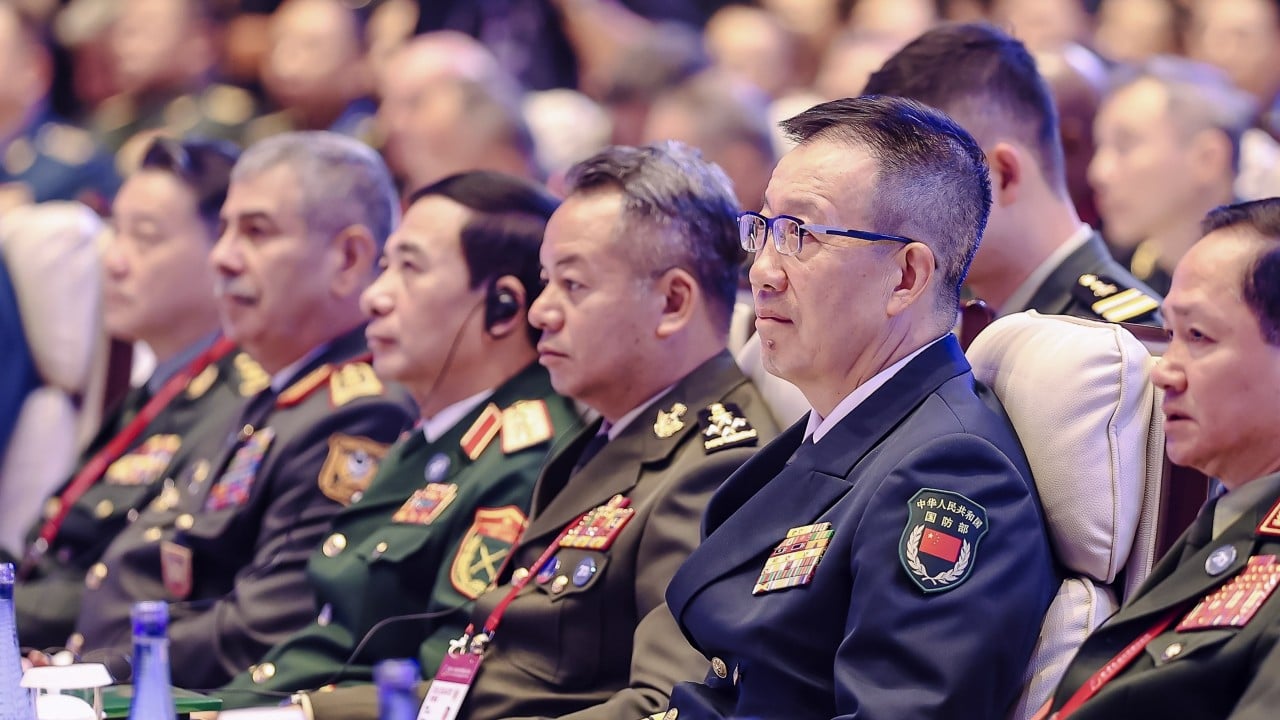
Step into the Xiangshan Forum in Beijing, where the air hums with the silent frequency of global anxiety. For months, the rhetoric between Washington and Beijing has played out like a slow-motion collision. Threats echoing across oceans. Trade barriers rising like ancient walls. Posturing in the South China Sea. The tension is palpable enough to choke on.
Then Chinese Defense Minister Dong Jun takes the podium.
He does not roar. He does not beat his chest. Instead, he softens. He speaks of shared futures, of communication, of finding common ground across a vast and stormy Pacific. It feels almost jarring. It feels like a sudden drop in barometric pressure before a cyclone makes landfall.
Why? Because just beyond the horizon, a shadow looms. The prospective return of Donald Trump to the White House casts an immense, unpredictable silhouette over every diplomatic calculation in the capital.
History teaches us a harsh lesson about great powers. They rarely stumble into war by accident; they march into it while convincing themselves they are merely holding an umbrella. Right now, both sides are desperately trying to figure out if the umbrella is big enough.
To understand why a softer tone matters, we have to look past the velvet drapery of diplomacy and into the mechanics of fear.
Imagine two men standing on opposite sides of a narrow bridge in the dark. Each holds a heavy lantern. Each is terrified that the other will strike first. Every time one shifts his weight, the other tightens his grip on the handle. That is the current geopolitical reality. The US-China relationship is trapped in a security dilemma where defensive preparations look offensive to the other side.
When Dong Jun chose moderation at the forum, he was not waving a white flag. He was cracking open a narrow window.
Consider what happens next. A high-stakes summit between Xi Jinping and Donald Trump is not just a diplomatic photo opportunity. It is a psychological pressure cooker. Trump operates on unpredictability, treating international relations like a high-stakes real estate negotiation where the first rule is to keep the opponent guessing. Beijing knows this. They know that a miscalculated insult or an uncalculated tariff could spiral into something irreversible.
So, China is adjusting its posture. They are offering an olive branch wrapped in velvet, hoping to blunt the sharp edges of an incoming administration that views the world through a transactional lens.
Yet, beneath this diplomatic charm offensive lies an unyielding core. Sovereignty is not negotiable. Taiwan remains the red line that cannot be crossed. Soft words do not mean soft borders.
I remember standing near the docks in Shenzhen years ago, watching container ships disappear into a thick maritime fog. You could hear the deep, rhythmic groans of their engines long before the hulls materialized out of the gray mist. That is how major geopolitical shifts occur. You hear the rumble of economic realignment, you feel the vibration of military posturing, and you pray the captain sees the rocks in time.
The upcoming summit between Xi and Trump is one of those massive vessels emerging from the fog.
If you strip away the polished communiqués and the diplomatic handshakes, you find a simple, terrifying human truth: both superpowers are exhausted. Cold wars are expensive. They drain treasuries, fracture supply chains, and keep millions of ordinary people wondering if tomorrow will bring prosperity or catastrophe.
Dong Jun’s softer line is an acknowledgment of that exhaustion. It is a calculated bid to manage the temperature of a boiling room.
Whether it works depends entirely on whether either side can step back from the edge of zero-sum thinking. Diplomacy is not about convincing the other guy that you agree with him. It is about convincing him that surviving together is infinitely better than destroying each other.
The fog is rolling in thick over the Pacific once more. The lanterns are lit. On the bridge, the two figures are finally close enough to see the expression in each other's eyes.