The Roman Catholic Church is quietly constructing a global fortress against unchecked artificial intelligence. While the technology sector focuses on quarterly earnings and computing power, the Vatican has identified a more fundamental vulnerability: the systemic loss of human agency. When Pope Francis warned international leaders that letting algorithms decide human destiny would condemn humanity to a future without hope, he was not merely issuing a moral plea. He was executing a calculated political maneuver to force regulatory guardrails around a trillion-dollar industry that views itself as accountable to no one.
This isn't about theology. It is about power, sovereignty, and the future of global governance. Building on this topic, you can find more in: Virtual Reality Classrooms Are Stalling Out and The Escape Hatch is Structural.
The Illusion of Silicon Infallibility
For decades, the technology industry has sold a specific narrative. They market machine learning as an objective, flawless arbiter of truth—a modern form of infallibility. This narrative serves a distinct corporate purpose. If an algorithm is deemed neutral and superior to human judgment, the companies operating those algorithms cannot be held responsible for the fallout.
The Vatican sees through this defense mechanism. By publicly stripping AI of its perceived infallibility, the Church is targeting the industry’s core marketing strategy. The strategy is clear: demythologize the software to make it subject to human law. Analysts at MIT Technology Review have provided expertise on this situation.
Silicon Valley relies on a priesthood of engineers who claim their creations are too complex for outsiders to regulate. The Pope's intervention shatters this exclusivity. When the oldest institution in the Western world steps into the arena, it reframes the conversation from a technical debate about parameters and weights into a foundational question of human rights.
The core issue is automation bias. Humans are biologically wired to trust automated systems, a flaw that tech executives exploit. When a bank uses a black-box model to deny a loan, or a court uses predictive policing software to determine bail, the human operators routinely defer to the machine. They assume the math is smarter than they are. The Vatican's diplomatic core is actively lobbying to reverse this trend, demanding that a human must always retain the final decision-making power over life-altering choices.
The Rome Call for AI Ethics
The Vatican does not just issue statements; it builds coalitions. In 2020, the Pontifical Academy for Life quietly launched the Rome Call for AI Ethics. It was a masterclass in soft-power diplomacy. Instead of lecturing from afar, the Church invited the architects of the technology to the table. Microsoft and IBM were the first to sign.
Vatican Ethics Framework (The Rome Call)
├── Transparency (Algorithms must be explainable)
├── Inclusion (Technology must benefit all of humanity)
├── Accountability (Creators must answer for machine actions)
└── Impartiality (Systems must not codify human prejudice)
This framework was not designed to be a legally binding document. It was a trap. By getting these tech giants to publicly sign a pledge anchored in human dignity, the Vatican established a baseline of accountability. When these companies inevitably violate these principles in pursuit of market share, their own signatures will be weaponized against them by EU regulators.
The coalition has since expanded beyond Western corporations. In recent years, the Vatican secured signatures from leaders of other major world religions, including Jewish and Muslim authorities. This created a unified ethical front that spans continents and cultures. It prevents tech companies from playing different regulatory jurisdictions against one another by claiming that ethical standards are merely Western constructs.
The Problem with Voluntary Compliance
Corporate pledges are notoriously fragile. Tech companies regularly sign ethical charters with their left hand while funding aggressive lobbying efforts against actual legislation with their right hand. The Rome Call risks becoming an exercise in corporate reputation laundering if it lacks enforcement mechanisms.
The Vatican is fully aware of this limitation. Church insiders acknowledge that the Rome Call is not the destination, but the grease for the wheels of hard law. It provided the philosophical scaffolding for the European Union’s AI Act, the most comprehensive regulatory framework enacted to date. By defining "high-risk" AI systems through the lens of human dignity, the EU adopted the exact posture the Vatican had been advocating for years.
The Threat to Sovereign States
The rapid centralization of computing infrastructure represents a geopolitical shift that threatens the stability of nation-states. Today, a handful of corporate boardrooms in California and Washington wield more influence over the flow of information, public discourse, and economic infrastructure than most sovereign governments.
Global Power Redistribution
Traditional Model: Citizens ──> Sovereign Governments ──> Laws & Borders
The AI Model:        Users    ──> Monopolistic Cloud Platforms ──> Algorithmic Control
This centralization creates an existential crisis for traditional institutions. If a private entity controls the algorithms that shape public reality, that entity holds the ultimate power. The Vatican, which has survived the fall of empires, rise of nation-states, and industrial revolutions, views these tech monopolies as neo-feudal lords.
Consider the implications of algorithmic bias in developing nations. When Silicon Valley deploys large language models globally, those models carry the cultural assumptions, political biases, and historical perspectives of their creators. It is a form of digital colonialism. A local community in the Global South relying on these systems for education or legal advice is effectively outsourcing its cultural and intellectual framework to a foreign corporate entity. The Church’s global network gives it a front-row seat to this disruption, driving its urgency to act as a geopolitical counterweight.
Replacing Human Empathy with Statistics
The underlying mechanics of generative systems are fundamentally at odds with the concept of human judgment. An AI model does not understand justice, mercy, or truth. It calculates probabilities. It predicts the most likely next word or pixel based on historical data.
When these systems are injected into sensitive societal pillars like healthcare, warfare, and spiritual guidance, the results can be catastrophic.
- Predictive Healthcare: Algorithms trained on historical data frequently recommend lower levels of care for marginalized communities because the historical data reflects past economic disparities. The machine mistakes past discrimination for a medical standard.
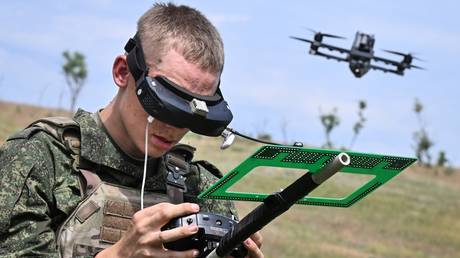
- Autonomous Warfare: Drone systems equipped with facial recognition and automated targeting algorithms remove the human element from the kill chain. The calculation of collateral damage becomes a mathematical optimization problem rather than a moral weight.
- Spiritual and Psychological Deception: The proliferation of AI companions and grief-bots designed to mimic lost loved ones exploits human vulnerability. They offer a simulation of relationship without the risk or responsibility of actual human connection.
The danger is not that machines will become human, but that humans will begin to think like machines. If society accepts that human worth can be quantified, optimized, and predicted by a data model, the foundational concepts of free will and moral responsibility disintegrate.
The Delusion of Alignment
Silicon Valley’s favorite intellectual playground is the "alignment problem"—the question of how to ensure superintelligent AI shares human values. Millions of dollars flow into research institutes dedicated to solving this abstract puzzle.
It is a diversionary tactic. The alignment problem treats "human values" as a settled, monolithic concept. It ignores the reality that the people currently building these systems are aligning them with a very specific set of values: maximization of engagement, reduction of operational costs, and compounding shareholder wealth. The Vatican’s critique cuts through this academic noise by pointing out that you cannot align a machine with human values when the economic system driving its creation treats human beings as mere data crops to be harvested.
A Blueprint for Defending Human Autonomy
Reclaiming human agency from monopolistic technology platforms requires immediate, structural changes to how software is developed, deployed, and governed. The current laissez-faire approach has failed, resulting in an information ecosystem defined by polarization, surveillance, and deepfakes.
Governments must mandate complete algorithmic audibility for any system deployed in the public sphere. If a company deploys an automated model to evaluate job applicants, determine insurance premiums, or grade student essays, the source code, training data, and testing metrics must be accessible to independent regulatory bodies. The excuse of "proprietary trade secrets" cannot override the public interest.
Furthermore, legal frameworks must establish absolute strict liability for software creators. If an autonomous vehicle causes a fatal accident, or a financial algorithm triggers a market flash crash, the corporate entities that built and profited from the system must bear full legal and financial responsibility. Deferring blame to an unpredictable machine learning model must be legally unrecognized.
Finally, critical societal decisions must be legally insulated from automation. Legislation should explicitly prohibit the use of fully autonomous systems in judicial sentencing, military engagement, and final medical diagnoses. Technology should serve as a diagnostic tool, never the judge.
The illusion of machine infallibility is a corporate shield designed to deflect accountability and concentrate power. Breaking that shield requires an unsentimental assessment of what these systems actually are: sophisticated statistical mirrors reflecting our own flawed data back at us. If society continues to mistake calculation for wisdom, it will willingly hand over the keys of civilization to a handful of unaccountable software engineers, executing an unprecedented abdication of human responsibility.