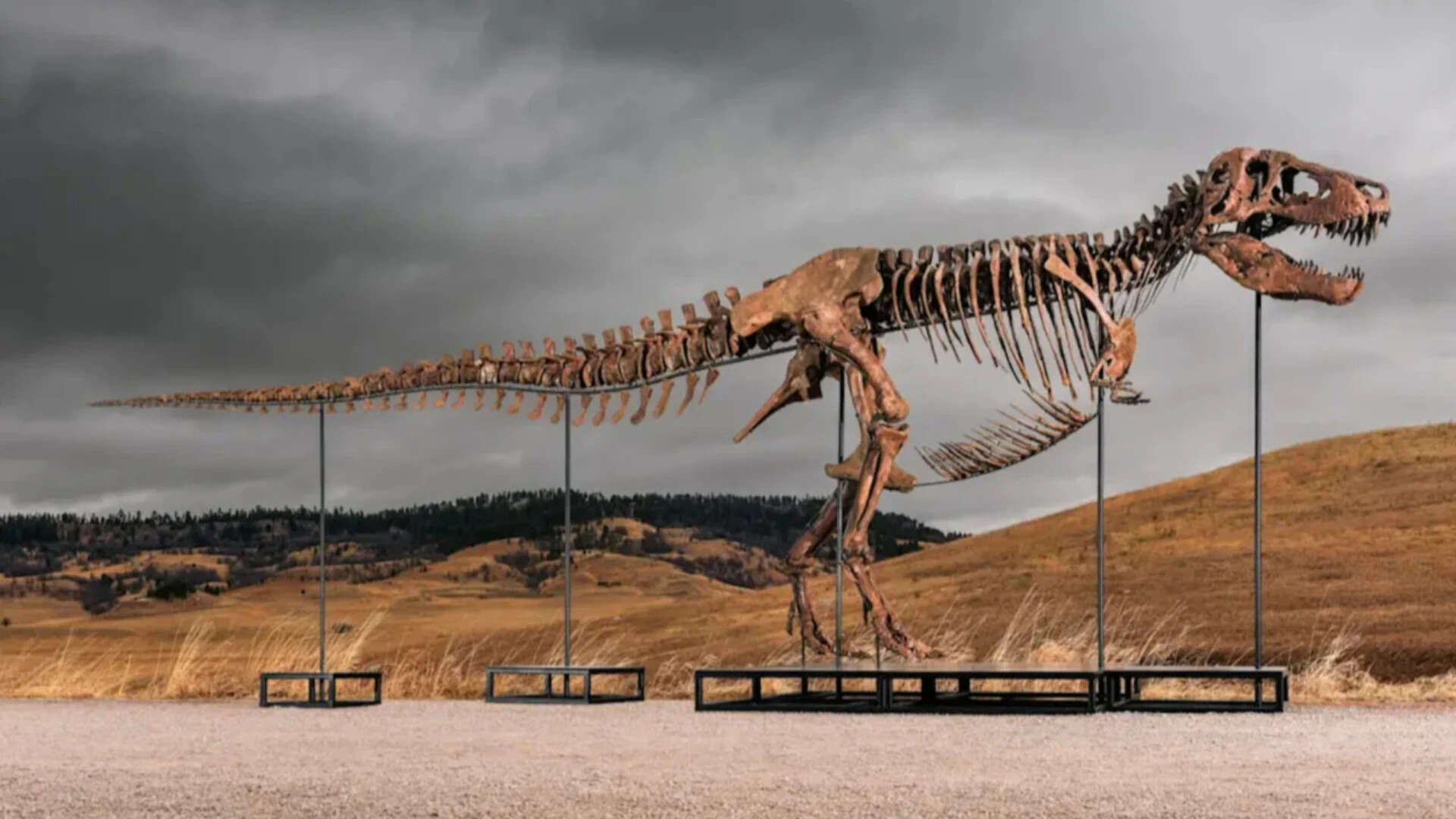
The multi-million-dollar valuation of apex theropod skeletons at public auction represents the intersection of extreme supply inelasticity and shifting capital allocation among high-net-worth individuals. When a major Tyrannosaurus rex specimen enters the market with an estimate reaching $30 million, the pricing is not driven by traditional scientific utility. Instead, it is governed by the economics of rare trophy assets. Understanding this market requires deconstructing the specific valuation variables, the structural supply constraints, and the financial externalities imposed on the broader scientific community.
The Four Pillars of Fossil Valuation
Quantifying the market value of a dinosaur skeleton relies on a distinct matrix of physical and historical metrics. Unlike contemporary art, where value correlates with artist attribution and exhibition history, a paleontological asset derives its baseline worth from taphonomic and excavation outcomes. Learn more on a related issue: this related article.
Completeness and Bone Count
A legally clear Tyrannosaurus rex skeleton consists of approximately 300 bones. The primary driver of value is the representation percentage of this total skeletal structure. Skeletons exceeding 50% completeness by bone count enter an exponential pricing tier. The distribution of those bones matters equally; a complete skull commands a disproportionate premium compared to a well-preserved vertebral column. The presence of dense, highly diagnostic elements—such as the dentary, surangular, and major limb bones—directly scales the baseline valuation.
Taphonomic Quality and Deformation
The geological forces acting upon the specimen over 66 million years dictate its aesthetic and structural viability. Skeletons subjected to extreme lithostatic pressure often suffer from severe crushing, shearing, or plastic deformation. Minimal distortion preserves the three-dimensional geometry of the bone, which reduces the manual restoration required and increases the asset's visual impact for private display or institutional exhibition. Additional reporting by Business Insider delves into comparable views on the subject.
Provenance and Legal Title
The asset's geographical origin determines its marketability. Within the United States, fossils discovered on federal or state land are legally protected and must remain in approved public repositories. Conversely, specimens excavated on private land with explicit landowner consent carry clear, unencumbered titles eligible for international commerce. A flawless chain of custody and verifiable legal title are mandatory prerequisites for any major auction house to mitigate litigation risk.
Presentation and Articulation
The physical mounting configuration influences the final hammer price. The engineering required to articulate a multi-ton fossil in a dynamic, anatomically accurate pose involves significant capital expenditure. Skeletons mounted using discrete, internal armatures that minimize visible steel infrastructure command higher valuations from buyers seeking immediate display readiness.
The Mechanics of Supply Inelasticity
The market for apex theropod fossils suffers from a permanent supply bottleneck. This scarcity is structural, driven by biology, geology, and legal frameworks.
First, apex predators occupy the top of the trophic pyramid. In any given Late Cretaceous ecosystem, the population density of Tyrannosaurus rex was orders of magnitude lower than that of contemporary herbivores like Triceratops or Edmontosaurus. The raw number of organisms available for fossilization was inherently limited from the outset.
Second, the geological window for extracting high-quality specimens is narrow. The late Maastrichtian deposits of the Hell Creek, Lance, and Scollard formations represent the primary global reservoirs for these specific assets. Erosion rates, overburden depth, and land accessibility restrict the rate of new discoveries.
Third, the friction of extraction prevents rapid market scaling. A professional excavation, stabilization, and preparation cycle for a large theropod requires thousands of hours of skilled labor over multiple years. Commercial operations cannot artificially accelerate this pipeline without risking catastrophic damage to the fragile specimen, ensuring that the annual volume of market-ready assets remains in the low single digits.
Demand Drivers and Capital Allocation
The buyers driving bids to the $30 million threshold operate outside the traditional bounds of museum acquisition budgets. Public institutions are systematically priced out of this market, as their acquisition funds rely on fixed endowments, state grants, or public donations that rarely scale to mid-eighty-figure sums.
The current demand profile is dominated by two distinct capital pools:
- High-Net-Worth Private Collectors: Sophisticated investors increasingly view natural history specimens as alternative luxury assets. These individuals categorize apex fossils alongside blue-chip post-war art, rare horology, and high-end real estate. The asset serves as a vehicle for capital preservation, status signaling, and portfolio diversification.
- Private Enterprise and Corporate Sovereign Entities: Commercial real estate developers, luxury hotel groups, and private museums use these specimens as anchor attractions to drive foot traffic, enhance brand equity, or anchor large-scale civic developments.
The transaction history of specimens like Sue in 1997 ($8.36 million) and Stan in 2020 ($31.8 million) establishes a clear trajectory. The appreciation curve reflects a structural shift where the asset class has transitioned from an esoteric scientific curiosity into a recognized vertical of the global alternative asset market.
Market Distortion and Scientific Externalities
The monetization of paleontological resources introduces severe market distortions that impact academic research. This friction manifests in three specific bottlenecks.
The primary friction is the inflation of commercial land-lease costs. As landowners become aware of multi-million-dollar auction results, the financial expectations for granting excavation access skyrocket. Commercial entities willing to pay high upfront fees or aggressive royalty percentages crowd out academic institutions, which operate on modest grant funding. This limits the ability of university researchers to conduct systematic field surveys.
The second limitation relates to data accessibility and peer review. Scientific consensus requires that specimens backing published hypotheses be permanently accessible in public, accredited repositories. When an asset enters a private collection, there is no guarantee of future access for the scientific community. If a privately held skeleton exhibits unique pathological features or novel morphological traits, those data points are effectively removed from the peer-reviewed record.
Finally, the focus on high-value apex taxa creates an artificial allocation of excavation labor. Commercial operations prioritize the extraction of charismatic megafauna—such as Tyrannosaurus rex and Triceratops—due to their clear ROI metrics. Smaller vertebrates, microfossils, plants, and stratigraphic data are frequently overlooked or discarded during accelerated excavations, resulting in the permanent loss of critical ecological and environmental data.
Asset Liquidity and Valuation Forecast
The liquidity of a $30 million fossil asset remains highly volatile compared to traditional financial instruments or established art markets. The pool of qualified buyers capable of absorbing a transaction of this scale is exceedingly small, meaning transaction velocity is low.
Furthermore, valuation volatility is tied to future scientific discoveries. While a highly complete T. rex commands a massive premium today, the unearthing of a more complete or historically significant specimen can instantly alter the relative scarcity metrics of the market. Prospective buyers must factor in these long-term preservation costs, climate-controlled storage requirements, and specialized insurance premiums when calculating the true cost of ownership. The market value is sustained entirely by the asset's ability to retain its status as the ultimate symbol of natural history prestige; any shift in collector sentiment toward alternative eras or taxa will immediately test the price floors established at auction.